


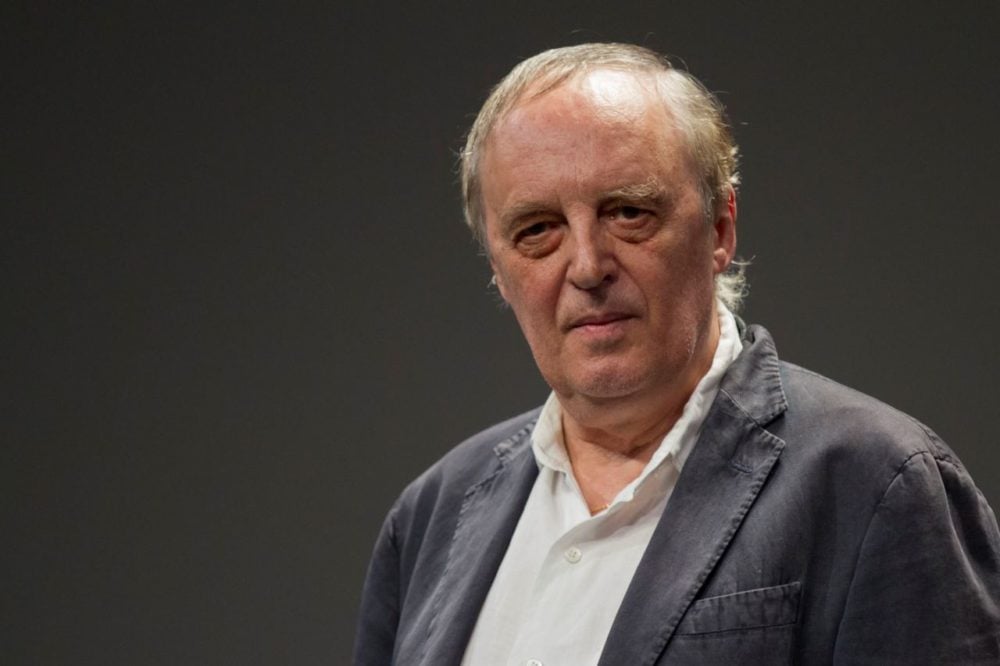
Dario Argento’s five favourite filmmakers and their best film

The Italian film director Dario Argento provided some of the horror genre’s most influential work during the 1970s and 1980s. His expertise style is in the subgenre known as Giallo, which is characterised by any slasher or psychological horrors that explore sexploitation and the supernatural.
His most iconic film is the 1977 supernatural Suspiria, starring Jessica Harper as a ballet dancer who becomes plagued by images of witchcraft after joining a pristine school. This film, alongside others including Inferno and Phenomena, has led Argento to be cited as the “Master of the Thrill” and one of the “Masters of Horror”, alongside Wes Craven and John Carpenter.
Argento has also worked with another Master of Horror, George A. Romero, as he served as Romero’s script consultant for Dawn of the Dead in the late ’70s. Argento’s most contemporary releases include Dracula 3D, and, most recently, Occhiali Neri/Black Glasses. He also appeared in an acting role in the 2021 psychological drama Vortex.
When looking at his creative pieces in the horror genre, it’s no surprise that Argento’s favourite films include horrors and thrillers. He sat down with Rotten Tomatoes to share his top five films of all time, which progressed into a ranking of his filmmakers with examples and what they mean to him.
The first entry on the director’s list is a classic filmmaker who made a landmark in horror. Alfred Hitchcock’s Psycho tells the story of a young woman who disappears after stealing money from her employer. Her lover and sister try to find her, their search leading them to the infamous Bates Motel, where they meet Norman Bates, a rather unorthodox personality.
Argento states, “it’s difficult to say five favourites because I saw too many films.” So instead, he compromises with “It’s better to say five directors, and why I love the films by these directors.” He discusses Alfred Hitchcock with “most of his films were a great influence on my old films, also. Sorry, it’s hard to pick individual films. It’s very, very difficult.”
Next up is Swedish filmmaker Ingmar Bergman who directed Hour of the Wolf. This film follows the disappearance of fictional painter Johan Borg, who lived on an island with his wife, Alma while battling frightening visions and insomnia.
The Italian director discusses Bergman with an admirable tone. He reveals that this director, most known for his profoundly personal meditations into the myriad struggles facing the psyche and the soul, “from the beginning, was one of the most interesting directors in the world for me.”
Luis Buñuel is third on Argento’s list. This Spanish-Mexican filmmaker is considered by many to be one of the greatest and most influential filmmakers of all time. This is exemplified in Un Chein Andalou, a surreal and silent description of events shown in a dream-like flow. This short film serves as an immediate case study in classic film studies.
Argento cites Buneul as a “fantastic, marvellous director”. To him, “his fantasy and surrealist work were so great, but also the period that was very interesting was the period when he was in Mexico. He did marvellous films in Mexico, too.”
The director continues his list with fellow Italian filmmaker Michelangelo Antonioni, who was most known for commenting on modernity through his films. Antonioni directed the 1966 film Blow-Up, which follows a successful London-based photographer who lives an ordinary life until he suddenly realises he may have caught a murder on film.
The Suspiria director reveals that as a filmmaker Antonioni “inspired me with lots of his films. He inspired many of my films, with the style and philosophy of his movies. They were important to my films.”
Fritz Lang concludes Argento’s list. The Austrian filmmaker is one of the best-known faces of Germany’s school of Expressionism and was dubbed the “Master of Darkness” by the BFI. This status is shown in his film M, where a serial killer who preys on children becomes the focus of a massive Berlin police manhunt.
Argento considers Lang to be “one of my favourite directors”. He states, “with Fritz Lang, there were lots of different periods, like when he was in Germany and then was in the United States; they were very different periods, and very interesting.”
The director also references Lang’s trademark creative movement: “He was an Expressionist, and then his films were very frightening when he was in the United States.”
Dario Argento’s five favourite filmmakers and their best film
- Alfred Hitchcock and Psycho (1960)
- Ingmar Bergman and Hour of the Wolf (1968)
- Luis Buñuel and Un Chein Andalou/An Andalusian Dog (1929)
- Michelangelo Antonioni and Blow-Up (1966)
- Fritz Lang and M (1931)
