


‘Suze’ movie review: a truly enjoyable comedy starring Michaela Watkins

Suze is a truly enjoyable comedy-drama that deals with an unlikely inter-generational friendship. The directing and screenwriting team of Dane Clark and Linsey Stewart created a perfect vehicle for stage and screen actress and improv comic Michaela Watkins, playing an empty-nest single mother who loses one parental responsibility only to be saddled with another. It is a combination comedy of manners and a personal growth story, as touching as it is genuinely funny.
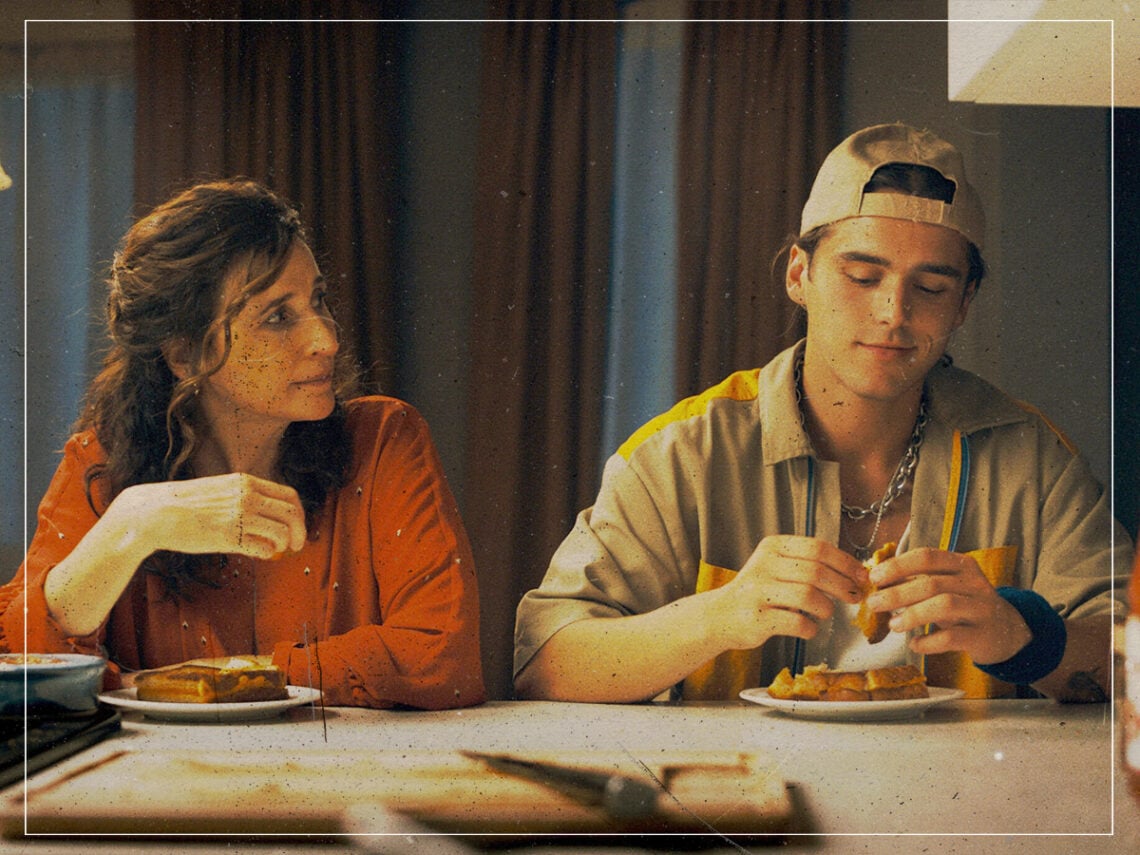
Single mother Susan (Michaela Watkins) or ‘Suze’, divorced from her unfaithful husband, is bracing herself to send her daughter, Brooke (Sara Waisglass), off to university. Susan, as affectionate to her daughter as Brooke is indifferent in return, is finding the idea of her only child growing up and leaving home difficult. Her brooding over her daughter’s absence is interrupted by the appearance of Brooke’s former boyfriend, Gage (Charlie Gillespie), who is heartbroken over being summarily dumped by Brooke.
Gage is as hilarious as he is annoying, full of youthful energy and awkwardness, lacking any kind of filter on his speech, and given to the worst of adolescent speech mannerisms. Susan takes pity on his obvious distress and reluctantly befriends him, but regrets it when Gage is injured due to an impulsive act, and his callous, macho father finds an excuse to leave Gage with Susan while he recuperates.
Much of the comedy comes from the interaction between the mature, sensible Susan and young Gage, who is erratic, emotional, and full of uninformed enthusiasm. The situation becomes a challenge for Susan, particularly when she is obliged to take him along to work, and her barely hidden exasperation and mildly sardonic responses make an amusing counterpoint to Gage’s conversation.
The two lead actors have wonderful chemistry, making their very different personalities and outlooks bounce off each other in a lively and funny first act. Soon, their relationship changes as it becomes apparent that Gage needs more than simple recuperation, and Susan takes a more maternal attitude toward him, trying to offer help and encouragement.
As a genuine friendship grows between the two, they share troubles and embark on one or two poorly planned and disastrous adventures. Not only does Susan manage to direct Gage away from the negative direction his life has taken, but Gage also helps Susan come to some realisations about her life, her daughter, and herself in a storyline that is touching but manages to avoid sentimentality.
Watkins, as Susan, is able to reveal the vulnerabilities in a determinedly reserved and pessimistic woman, while Gillespie’s Gage does a nice job of letting genuine troubles show through the character’s outward silliness. In finding both the humour and the dramatic potential in personal and generational differences, Suze recreates the buddy movie in a new and surprisingly successful way.
