


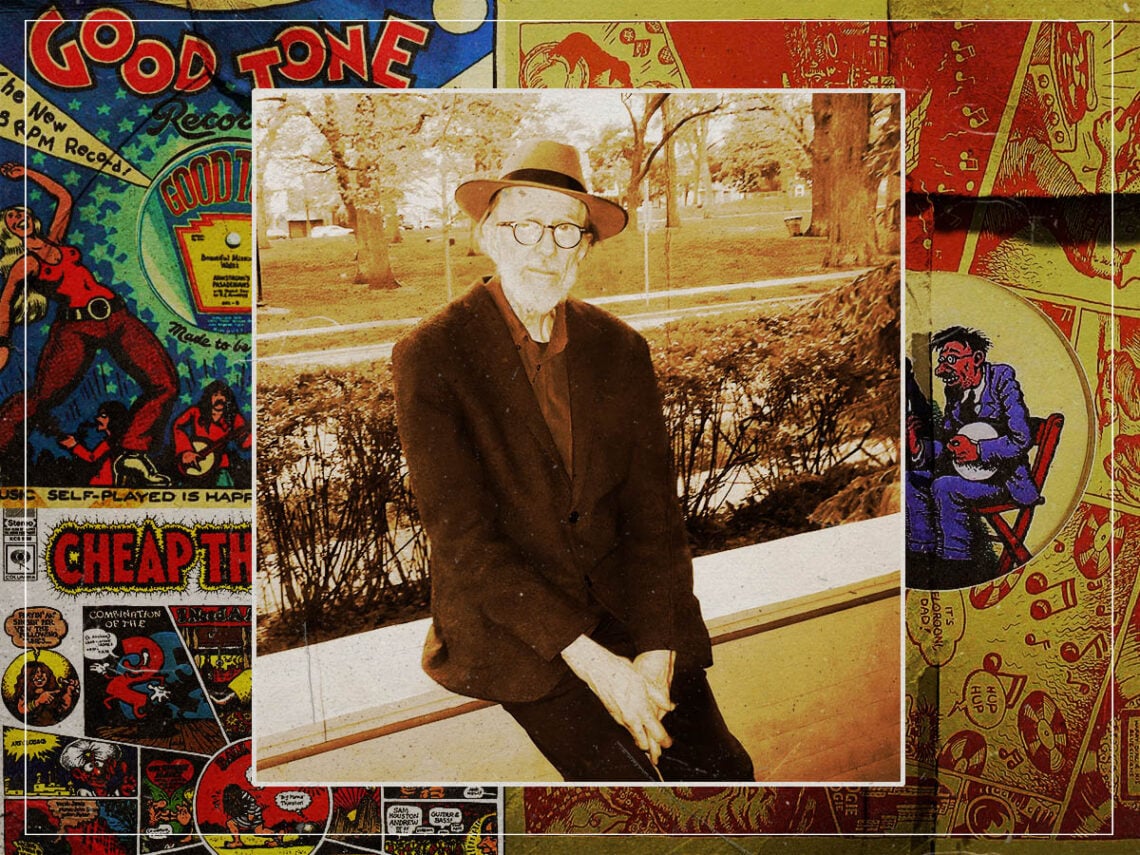
The controversial album covers of R. Crumb

There’s something about the technicolour joy of an acid trip that conjures up visions of comic books. Maybe it’s the way colours seem somehow reinvented or the regression into a subconscious childhood state. Either way, for psychedelic giants like the Grateful Dead and Big Brother and the Holding Company, to have cartoonist Robert Crumb – widely known as R. Crumb – illustrate their album covers made total sense. Though Crumb was a reasonably traditional artist in his early career, an acid trip of his own shaped a woozy, surrealist style that was a natural fit with their music.
During music’s most hallucinogenic period in the 1970s, Crumb was mirroring the efforts of the artists he’d later work with in his comics. Much as it was the dominant theme in lyrics at the time, drugs and sex were brought to the forefront. But while hippie musicians were toking joints and convincing themselves of their own counter-cultural importance, Crumb was making artwork so subversive the word “controversial” is still permanently affixed to his name in discussions about his work.
In 1968, Big Brother and the Holding Company were routinely exasperating executives at Columbia Records. They wanted to name their record Sex, Dope and Cheap Thrills – but it was a stern no. They settled on Cheap Thrills and envisioned an album cover showing the band in bed naked together. That was another stern no. Crumb was brought in to do the back cover, and Columbia wanted to plaster a picture of Janis Joplin on the front. But Joplin was such a massive fan of Crumb’s work in underground comic illustration that she gave the company her first “no”. Crumb’s cover stayed.
Crumb, for his part, refused to be paid for the efforts Joplin went to bat for, saying: “I don’t want Columbia’s filthy lucre.” The cover features a classic element of Crumb’s style – overtly sexual female figures and overtly racist caricatures – most pointedly for the illustration next to ‘Summertime’. Though Crumb was a self-confessed fan of black music like ragtime and blues, his respect for black artists seemed to vanish the second he started sketching.
When he illustrated a B.B. King portrait, he seemingly dropped the racist tone, but it was often glaring when he illustrated women. Crumb once said of his offensive style that he had “hostilities toward women” that “it ruthlessly forces itself out of me onto the paper,” and has often argued that his caricatures were a criticism of racism, not an endorsement.
Outside of the offensive nature of his comics, Crumb’s covers stood the test of time, all brightly coloured hippie visions befitting of the time. But he remains little more than a cult figure in illustration, largely because of his questionable approaches to subversion, which were done with far more flair and inclusivity by the musicians he collaborated with.
