


Confronting the dark side of the music industry

The prevalence of sex scandals in the music and entertainment industry in recent years is alarming. Currently, another is unravelling, so you can only imagine the multitude of others concealed in the shadows. More worryingly, though, many top names have faced accusations yet somehow evaded the consequences of cancel culture altogether.
The issue of paedophilia and sexual crimes is something that’s been slated as intrinsic to 1970s rock ‘n’ roll culture – many look back with justifications about it being “just the way it was” or simply “another time”. Law enforcement’s response during that time was markedly lax compared to the scrutiny we witness today, allowing rockstars to evade consequences on a grand scale. And, rather than condemnation, such behaviour was actually, at times, glorified, proudly immortalised in the lyrics and melodies of songs.
In a recent interview, Louis Theroux discussed a scene that was cut out of his infamous documentary When Louis Met Jimmy. He talks about the moment that a man approached Jimmy Savile and exposed himself to him. In a considerably tongue-in-cheek manner, Theroux deemed it the only time a journalist caught someone sexually assaulting Savile, and not the other way around. Since the severity of his crimes surfaced posthumously, Savile has been dubbed one of the most prolific child sexual predators in the history of British music and entertainment. His actions are one of the most insidious, made worse by the fact that he had a largely successful career, making history as one of the most prestigious British DJs who captured the admiration of the nation.
After the explosion of allegations that took place soon after his death, the BBC halted airing reruns of Top of the Tops episodes that included Savile in an effort to bury their associations. Many who lived through Savile’s tumultuous career were forced to reevaluate a figure they once deemed safe and trustworthy. This wasn’t something that came entirely out of the blue, though. Allegations against Savile were happening at the same time he was Britain’s most loved presenter, but they were ignored. Savile had friends in high places, some of which were either a part of or had direct connections with the police force. In fact, he himself admitted that the police often came to him with letters accusing him of attempting to make sexual advances, but they were laughed at by everybody in the room. It doesn’t bode well that the nation fell victim to a culture that simply didn’t care, to the point where suffering was trivially brushed under the carpet.
The crimes of Gary Glitter followed a similar pattern. Glitter is a well-earned “public hate figure” who equally abused his power as a (once) respected mainstream artist. But not everybody with a dark past faces a reckoning quite as strong. Whilst many had their comeuppance, others didn’t. That’s not to say that many of them haven’t been exposed because they have. It’s well known that Steven Tyler took legal guardianship of a 16-year-old girl, with allegations that he later forced her to have an abortion emerging as part of a sexual assault against a minor legal case. Bill Wyman, meanwhile, had a relationship with a 13-year-old girl, but both men went on to have successful careers after the fact.
Furthermore, Lori Maddox was a self-proclaimed part of a ’70s crowd called “baby groupies”. This was an assembly of underage girls (around 14-15 years old) who sought sexual relations with the biggest names in rock at the time. Maddox claims to have had relationships with the likes of Mick Jagger, David Bowie, and Jimmy Page, all while she was under the age of 18. Lori Maddox’s narratives have ignited numerous controversies and ongoing debates, focusing on the intricate interplay between inconsistencies within her claims and the profound ethical quandaries that arise if, indeed, they hold truth. While her associations with Jimmy Page remain the most widely acknowledged, the underlying issue persists in the uncomfortable reality that these revered musicians were all in their 20s while she was underage.
Similarly, this troubling pattern extends to iconic figures like Elvis Presley. Priscilla was just 14 years old when she first met Presley. Many have put Presley’s relationships under a microscope over the years, but whether or not he groomed Priscilla is a recurring theme. It has even been subtly factored into Sofia Coppola’s upcoming biopic Priscilla. At the time, Priscilla recalls being incredibly lonely and taken under Presley’s wing, but many have since questioned the detail behind this notion, wondering where basic kindness ends and grooming begins.
And then there are those who openly and proudly displayed their tendencies via their art. Moving over to Anthony Kiedis, he wrote the Red Hot Chilli Peppers song ‘Catholic School Girls Rule’ about a 14-year-old girl he slept with when he was 23. Moreover, there’s a reason why many radio stations no longer play ‘Christine Sixteen’ by Kiss. As the title suggests, the song is about a 16-year-old girl Gene Simmons knows he shouldn’t be obsessed with, but he can’t help himself. Its lyrics are problematic in ways that don’t need explaining: “I don’t usually say things / Like this to girls your age / But when I saw you coming / Out of the school that day / That day I knew, I knew / I’ve got to have you, I’ve got to have you”.
Delving into the complexities of consent further muddies the waters, but regardless, these subjects were all still underage, which forces us to confront a troubling question: how were these musicians able to evade accountability for their actions?
It’s a whole can of worms, really. The ’70s music and showbiz landscape served as a disturbing crucible for a clandestine culture, shielded for far too long by the likes of the stars’ own power alongside influential entities such as the BBC. Paedophilia within the rock ‘n’ roll industry is a huge concern that has not received the same level of consequences as it has in other spaces of the entertainment industry. The passage of time does not diminish the gravity of these musicians’ actions, but what truly matters is that many were fully aware of the wrongness of their behaviour at the time, yet they exploited the slower dissemination of information to conceal their misconduct.
This real injustice persists when these figures are allowed to maintain their stardom and careers without enduring significant repercussions. Ultimately, irrespective of stature or status, right and wrong remain immutable principles that should be upheld. We’ve reached a point where admiration for figures with tarnished reputations is either something that goes unnoticed or something that’s simply ignored. We talk at length about the legacies of bands like Aerosmith or the musical prowess of innovators like Bowie, but unless we go looking, their alleged wrongdoings are frequently neglected.
At the same time, we must understand that there are many different factors at play here. Firstly, at what point do we separate the art from the artist? What’s more, is that even possible? Foremost, the music industry must continue to foster an environment where those who have been abused can come forward confidently and without risk of public scrutiny.
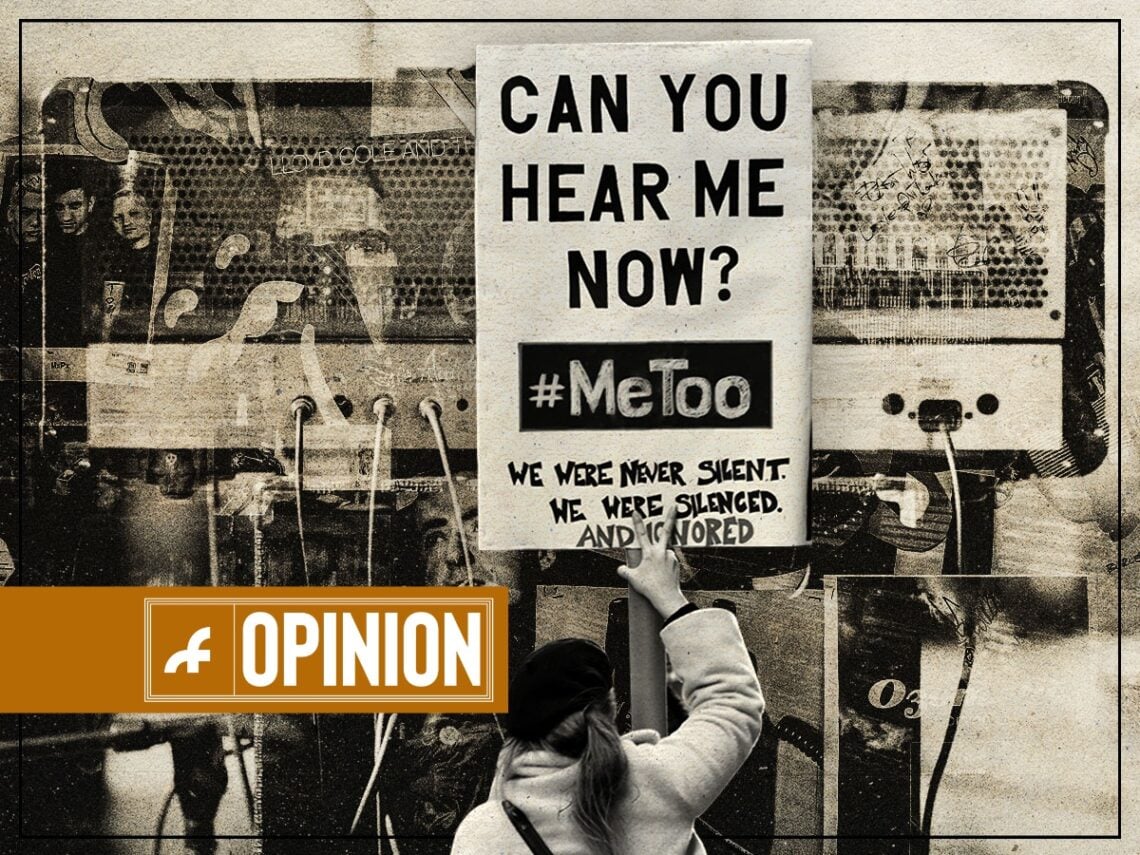
For example, the advent of the #MeToo movement marked a monumental turning point. Still, it continues to embolden countless survivors of sexual abuse to step forward, bravely challenging the prevailing ignorance and dangerous normalisation of such heinous crimes. This pivotal moment in history sparked a profound shift in societal awareness and prompted a crucial reckoning with the dark underbelly that had long been concealed.
The music industry needs to be as unforgiving as Hollywood in its treatment of such crimes whilst also being more transparent in the ethics of displaying art made by those accused. If the BBC no longer runs episodes of Top of the Pops that feature Savile or Glitter, will we ever reach a point where a musician’s name is blacklisted for the same reason? Probably not, but that’s a whole censorship issue that we as a nation have yet to address.
View the full trailer for Jimmy Savile: A British Horror Story below.
