


Composer Spotlight: Frederik van de Moortel on crafting the score for ‘Inside’

“I’m feeling the buzz, but it’s a small buzz,” Frederik van de Moortel says of the attention he’s received since the release of Inside, Vasilis Katsoupis’ new psychological thriller starring Willem Dafoe. The composer and sound designer is talking to me from his home studio, where he lives and works, surrounded by instruments and microphones. “I mean, I’m still completely unknown, but I’m starting to get a glimpse of how the industry works.”
Inside stars Willem Dafoe as Nemo, an art thief who breaks into the top-floor Manhattan apartment of a revered art collector with the intention of stealing priceless works of art by Egon Schiele. Unable to locate the paintings, he deviates from his pre-planned route and triggers a security lockdown that leaves him stranded for weeks on end. Van de Moortel’s artful score gives sentience to the ultra-modern space as Nemo’s mind slowly folds in on itself.
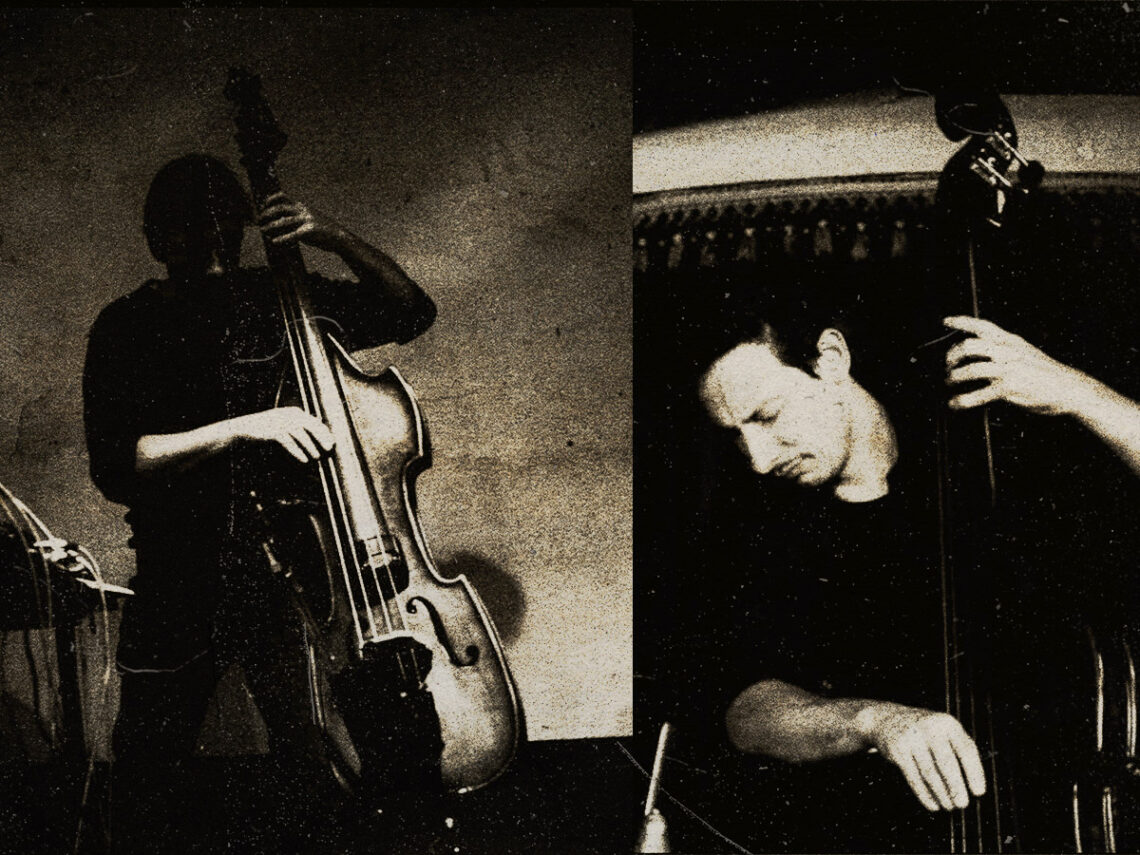
A veteran sound designer for theatre and film, van de Moortel’s protean style was born from necessity. “There was no money for a piano,” the composer explains. “So my solution was to raise the money myself and buy a synthesiser, which my piano teacher obviously found completely ridiculous.” Frederik soon became infatuated with the possibility of recording his music on tape. “My father had a quarter-inch tape machine, but it only had two tracks. I then realised that if I got a second tape machine, I could play back the first recording and then add my synthesiser on top of it.”
After graduating with a master’s in Music in 1999, he “tried making it as a full-time musician” but soon found more stable work in the studio, having talked his way into a sound design job knowing next to nothing about Pro Tools. “I guess after one day of work, [my boss] realised, ‘Oh, this guy has no idea what he’s doing.’ But rather than firing me on the spot, he gave me a chance to learn.” It was a smart choice. Frederik’s recent score for Inside is a masterclass in texture, tension and release. We sat down with the composer to talk about his process, his influences and some of the biggest challenges he faced while writing the score.
Far Out: How would you describe your approach to composition?
Frederik: “I love using the studio as a medium. I was trained as a double bassist and pianist, and I had classes in composition where we used pen and paper, but I think I learned the most through utilising the studio as a compositional tool.
“For me, it’s a combination of writing stuff down on paper, just sitting by the piano – which I use mostly for melody and harmony – and then going on to think about what kind of instruments would be appropriate for this kind of film or this story or this character. And that’s mostly done downstairs, where my double bass is. This is my research into pure sound, and there’s a certain playfulness in that research.”
What are your first steps when beginning a new score?
“First of all, I need to be asked. Getting the invitation is always the first step. From there, I get really excited about what I’m going to make. It’s honestly stupid how excited I get – too excited, perhaps. I don’t know how much talent I have, but I always have a lot of ideas, and I’m always eager to try them out.
“The best part for me is that moment when everything is still possible when the restrictions are still to seep in. I allow myself to really enjoy that moment. At this point, I’m not so much writing music but doing something between research and experimentation, trying to find a good concept or a bold statement. It’s often these aspects that will help me throughout the whole process.”
Who are some composers you’ve been influenced by over the years?
“Oh, that’s really hard. At a certain moment, I spent a year listening only to Beethoven’s Ninth. I don’t know why. I had a cassette on my Walkman, and I listened to it over and over again from start to finish. If I listen to it now, I still know every note. But then I also went through a punk period and a cyberpunk period, and a jungle period, so it’s hard to say where my influences are from. When I start making something, I always feel these connotations flooding in. Maybe I’ll play a chord, and it’ll remind me of Joseph Hisaishi, who worked on a lot of the Miyazaki animations, and then I’ll move a few fingers, and it’ll change the chord to a Bill Evans type of chord. That’s why music’s such a great medium to work with. It’s so malleable.
“I think I’m quite influenced by the Icelandic composers: Hildur Guðnadóttir, Johann Johannsson, and Ólafur Arnalds. I love the Icelandic approach to texture. But then I also love American composers like Thomas Newman, Cliff Martinez, and Stephen Price – a fantastic composer, I think. Then there are the older ones like Bernard Herrmann. I’m a huge Hermann fan. I’ve studied his chords and read his sheet music just to get a grasp of what he’s doing. Then I love old classic composers like Bach, Beethoven, Chopin, Stravinsky and Satie. I can also spend hours listening to David Tudor and John Cage.”
How did you come to be involved with Inside?
“I don’t know for sure, but I think Alek Goosse, a big Re-recording Mixer, gave my name to the producers. He sent me the script and said, ‘Read it; it’s really good.’ I read it, and it was literally the best script I’d ever read. How a script is written can really trigger you, and this triggered me a lot in the sense that I could almost hear music when I read it. Not concrete music but atmospheres, modes – small amounts of information that evoke a certain style.
“A few weeks later, I got a call from the Belgian co-producer to ask if I was interested in doing a Zoom meeting with Vasilis Katsoupis, the director. It was Covid times, so there was no way of flying and meeting these people, which I would prefer to do. But when I saw Vasilis, I instantly had a feeling of like, ‘OK, this is going to work. We’re going to get along.’ And that was spot on. We did get along, and if he lived closer, we would have become very close friends. After the meeting, we already had an artistic concept going. I’d written a four-five page treatise on what I thought could work, and I think 90% of what we ended up using was there in that original treatise.”
What was the biggest challenge you encountered during the scoring process?
“I think the biggest challenge was finding a sense of balance. When they first bought me into the project, they didn’t want so much music, so I was amazed to see at the end of the mixing how much of my music was actually in there.
“The score is spacious and changes its role throughout, so another challenge was shifting the role of the music. The music is, at certain moments, commenting on actions and, at others, foreshadowing what will happen. Sometimes it’s trying to add to the beauty; other times, it adds to the tension and the drama. It’s closely linked to the character of Nemo, of course, but it’s also linked to the building and timeframe. So it plays many roles, which was hard to control.”
Inside traces one character’s slow descent into madness. How did you choose to reflect Nemo’s changing mental state?
“I was never aiming just to reflect Nemo’s mental state. There are lots of times in the film where we see Nemo sliding into madness, but instead of reflecting that insanity, the music seeks to comfort the viewer and to portray a side of Nemo that’s actually quite sad. At other moments, it’s clear his mental state has deteriorated even further, but the music will find something heroic. And then there are moments when the music gives a taste of just how mad he really is. The thing is: that madness is usually evident from what’s happening on screen, so the music was free to morph and change.
“We started out with a very simple prepared piano for Nemo, and then, around halfway through, this real craziness kicks in, and I’m adding orchestral colours as a little wink to the ’50s avant-garde. Then comes this low percussion, like low-gong, which I really like, and tuned percussion like timpani, but timpani played in such a way that it brings a dissonant colour. Then I started blending in some synths into these orchestral colours, which worked really well. And then, by the time we’re at the end of the film, it’s no longer prepared piano but a full-blown orchestra. And mixed in with the madness, there’s this heroic grandeur and this bravery. Nemo’s madness has become almost mystical.
Tell us a bit about your studio. How have you adapted your space to suit your needs?
“There’s one component that’s always fixed: my computer system, which has a huge amount of hard drive space and runs Pro Tools. Then there’s the instrumental component. I have a lot of instruments. They’re usually scattered around the room. Basses, violins, guitars, bendir, gayageum: any crazy instrument I can get my hands on. I have a saxophone, but I didn’t play it. I have a trumpet, but I don’t play it. But even if I don’t play it, I’ll sometimes use it for some things. I have a few synthesisers: some more modern ones and some vintage, granular synthesisers. Then, downstairs, I have an atelier, which is more of an experimental zone. There’s a grand piano down there and a lot of things that make noise, but I wouldn’t consider musical: junk, toys, microphones.
“I’ve organised my studio so that I can make music very fast. Everything is always on, so if I have an idea on whichever instrument, I can very easily record it. My mixing desk is also typical for mixing film. It’s a bit excessive, but I know how it works, so it helps me make music very fast and get the details right in a short amount of time. I don’t like things that don’t work. Everything has to work. If it doesn’t, I get rid of it. At the same time, I have a lot of… questionable instruments. I like the sound of questionable instruments. So it’s like everything with me: it’s ambiguous. There’s a part of me that loves high-quality equipment, and there’s a part of me that really likes the sound of rust and decay.”
Finally, if you were about to be locked in a millionaire’s apartment for a month, what one piece of music would you take with you?
“If I have to choose one: ‘In a Silent Way’ by Miles Davis. If not that, then ‘The Well-Tempered Clavier’ by Bach or ‘Orange Was The Colour of her Dress’ by Charles Mingus”.
Thanks to Frederik for talking to us about his score for Inside. You can check out the trailer below.
