


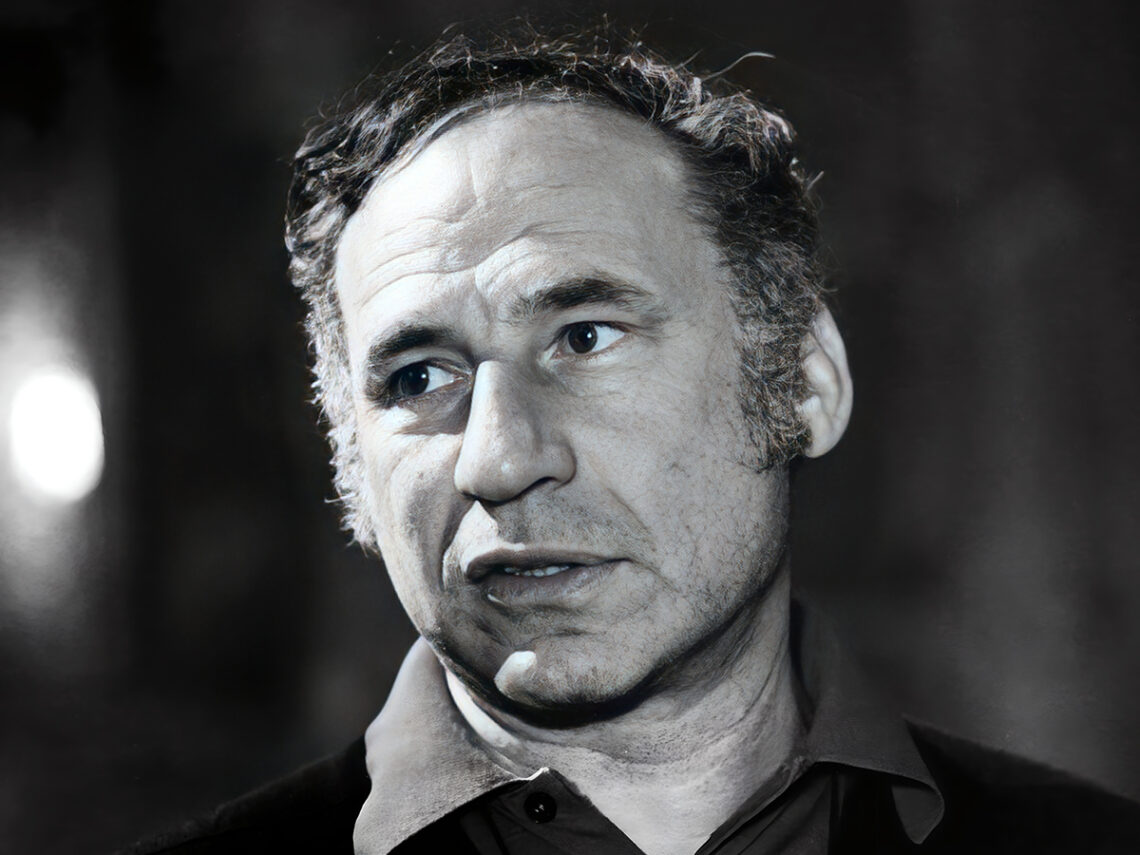
Why Mel Brooks lied through his teeth to make ‘The Producers’: “I’m firing him”

These days, it’s hard to imagine an executive disagreeing with anything comedy legend Mel Brooks wanted to do on a film. After all, this is the man who gave the world rib-tickling classics like Blazing Saddles, Young Frankenstein, Spaceballs, and The Producers. However, all throughout his career, Brooks dealt with producers and bean counters who had opinions on what jokes he could make and what actors he could cast. Thankfully, he soon developed a winning tactic to appease these meddlers – he lied through his teeth.
In 2021, Brooks chatted with The New Yorker about his seven-decade-long career in comedy, and the conversation quickly turned to one of his most beloved collaborators: Gene Wilder. The crazy-haired funnyman co-wrote and starred in Young Frankenstein and also played the iconic role of Leo Bloom in The Producers.
Brooks revealed that he first met Wilder in the 1960s when he starred in a play called Mother Courage with The Graduate’s Anne Bancroft, Brooks’ girlfriend at the time. Bancroft introduced the two men, who instantly bonded over a joke. You see, Brooks was wearing a particular coat known as a “pea jacket,” and Wilder complimented him on it. “Well, you look so handsome in that pea jacket,” he said, to which Brooks quipped, “Yeah, they used to call them urine jackets, but they didn’t sell.” Wilder cracked up, and the rest is history.
By the time Brooks was able to secure financing for The Producers, Wilder had been working in theatre for so long that he thought he’d never be able to make the jump to film. This is why the young star burst into tears when Brooks appeared backstage one night, threw the script on his dressing table, and said, “Gene, we got the money. We’re going to make the picture.”
Brooks smiled, “He just kept putting his makeup towel to his eyes and crying, and I put my arm around him and said, ‘You’ve got to stop crying and start acting.'” Imagine his shock, then, when distributor Joseph E Levine took one look at Wilder and scoffed, “The curly-haired guy—he’s funny looking. Fire him.”
Perhaps it was Brooks’ strong personal connection to Wilder that made him say his next words, or maybe he’d already decided on his approach to executives giving him notes. Either way, Brooks looked at Levine and immediately said, “Yes, he’s gone. I’m firing him.” Then, he proceeded to ignore Levine’s instruction and shot the film as normal. By the time Levine realised, so much material had already been shot that it would have been impossible to start over with a different actor.
The mischievous Brooks grinned, “I’d learned one very simple trick: say yes.” It really was that straightforward, with Brooks admitting, “That was the end of it. You say yes, and you never do it.” He applied the same principle to many of his other films, too, such as when the head of Warner Brothers told him to remove the fart jokes and the scene in which Mongo punches a horse from Blazing Saddles. He’d say reassuring things like, “You’ll never see it again,” and “You’re absolutely right. It’s out,” and then carry on his business as usual.
Ultimately, Brooks found this approach saved him countless hours of unnecessary stress and arguments, and he even applied it to life outside Hollywood from time to time. “Don’t fight them,” he mused. “Don’t waste your time struggling with them and trying to make sense to them. They’ll never understand.”
