


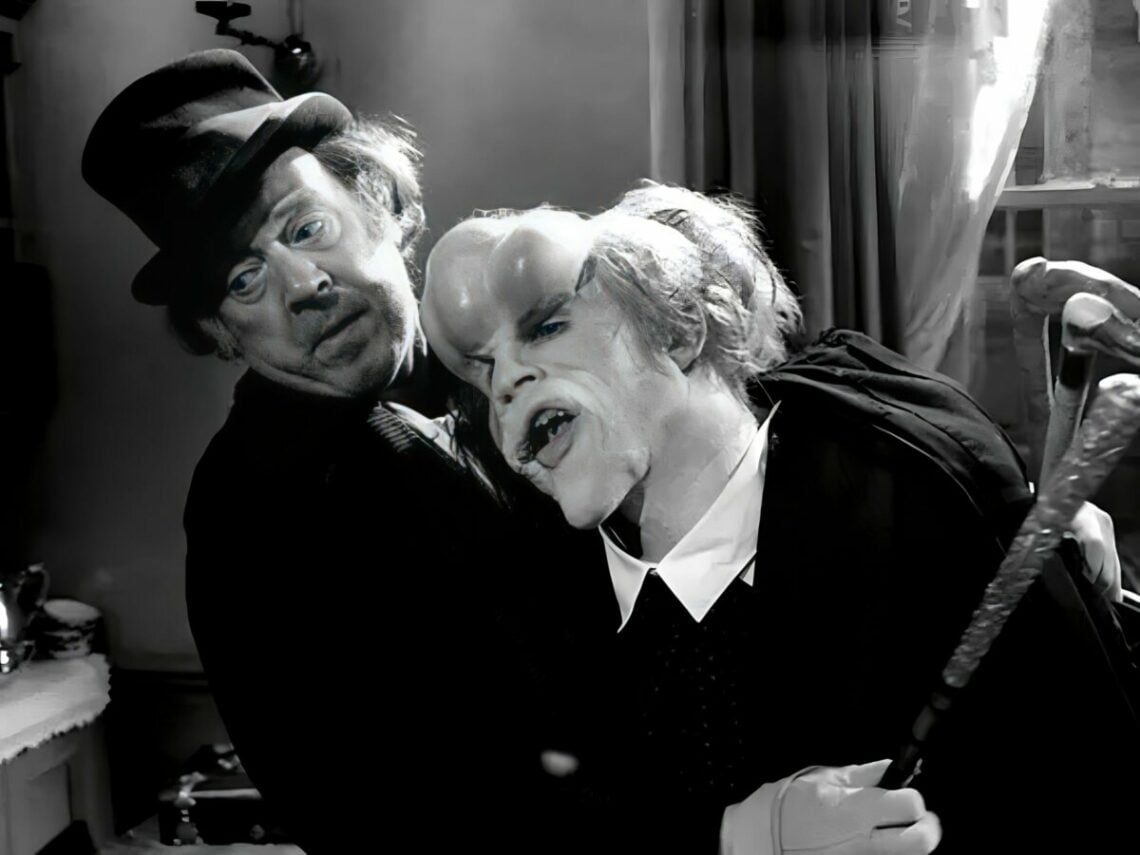
The comedian who helped bring David Lynch movie ‘The Elephant Man’ to life

It took David Lynch several years to get adequate funding for his first feature, Eraserhead, which was eventually released in 1977. The film is now considered a cult classic, yet upon its release, many publications were quick to tear Lynch’s debut apart. Still, Eraserhead found enough popularity as a midnight movie, screening for several years at theatres like Los Angeles’ Nuart Theatre.
Shortly after, Lynch got started on his next project, writing a script called Ronnie Rocket about a three-foot man with the ability to manipulate electricity. However, the director had a hard time finding someone to back the film financially. Luckily, Lynch was soon offered another project, The Elephant Man, written by Christopher De Vore and Eric Bergren.
The pre-existing script had fallen into the hands of producer Jonathan Sanger, who knew Mel Brooks. Impressed with the screenplay, which charts the life of John Merrick, a man with severe physical deformities, Sanger and Brooks agreed that it had real potential, with the latter deciding to finance it through his company, Brooksfilms.
The next step was to find a director suitable for the role. Brooks’ assistant and executive producer Stuart Cornfeld happened to love Eraserhead, suggesting Lynch for the job. He once explained: “I was just 100 per cent blown away…I thought it was the greatest thing I’d ever seen. It was such a cleansing experience.”
Brooks ended up loving Eraserhead just like his assistant, quickly deciding to finance The Elephant Man. Talking to Rolling Stone, he explained: “I saw that Lynch could deal very primitively and surrealistically with human feelings. The outsides of things are critical to him, but not in any normal way. He’s like Ionesco or Beckett. He certainly isn’t abstract—his movies are very real. The terror of a young man like the hero of Eraserhead, who takes the burden of a woman and the incredible burden of a baby before he’s ready for them, is a ubiquitous, universal heartache that a lot of people suffer. In Eraserhead, he just extended it.”
However, Brooks, known for his work in comedy and movies like Blazing Saddles and Young Frankenstein, feared that having his name attached to the credits would distort the audience’s perception of the film. He said: “I deliberately kept my name sotto voce on The Elephant Man. But I made a lot of contributions in the concept and script stages, and I have a lot of pride in ownership of that film.”
He also revealed that due to his comedic status, some people initially failed to take the project seriously. “Frank Wells over at Warner Bros really thought I was putting him on. He told me later, ‘Mel, I thought this was one of your most grotesque jokes. You have the hierarchy of Warner Bros. come to your office, and for an hour you spin this insane tale, and I thought, this is something Mel must do at parties.’ He didn’t believe there was a movie; he thought I just made it all up! Finally, Michael Eisner at Paramount read it and was very moved by it.”
The Elephant Man remains one of Lynch’s most tender, emotionally-led films, with an astounding, career-defining performance from John Hurt at the centre.
