


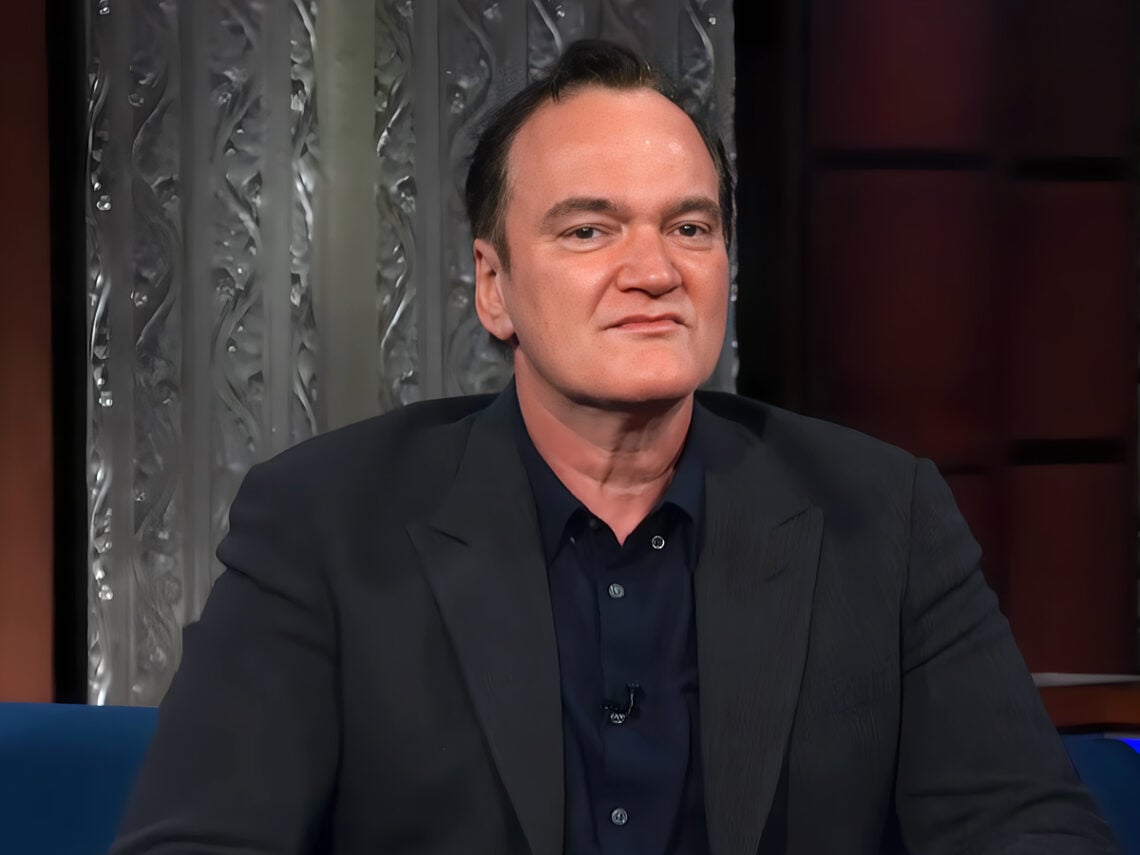
The controversial comedian who wanted to punch Quentin Tarantino in the face: “They aren’t going to help you when I see you”

Quentin Tarantino and controversy have always been inseparable. From horrifying the world with a police officer having his ear sliced off in Reservoir Dogs to reimagining real-life history in Inglourious Basterds and Once Upon a Time in Hollywood, Tarantino has always pushed the envelope in his films.
One controversy has returned repeatedly throughout his career, though, always ready to explode into a flashpoint: his use of the N-word in his films. Tarantino’s free use of that incendiary word has rubbed many people the wrong way over the years, including one comedian who threatened to punch him right in the face for mistakenly thinking he was allowed to use it.
The bad feeling surrounding Tarantino’s laissez-faire attitude toward the worst racial epithet in history dates back to the 1990s when his frenemy Spike Lee accused him of being infatuated with the word. In fact, Lee even accused Tarantino of wanting to be made “an honorary black man”.
Lee wasn’t the only prominent Hollywood figure who challenged Tarantino on it, though. When the in-demand writer/director did some re-writes on Tony Scott’s 1995 submarine thriller Crimson Tide, star Denzel Washington reportedly called Tarantino out in front of the entire cast and crew. He later apologised for airing his grievances publicly, but the hostile atmosphere surrounding Tarantino’s intentions with using the word hung around him for years.
Things kicked up several notches when Tarantino released Django Unchained in 2012. That tale of a freed slave who rescues his wife from the vicious Plantation owner who brutalises her was like a red rag to a bull for many Black stars, critics, and audience members. Lee tweeted that slavery was not a spaghetti western, as he believed Tarantino had tried to reimagine it in the film, but rather a Holocaust. He also told Vibe he wouldn’t see the movie, as it would be disrespectful to his ancestors.
While the emotion behind Lee’s comments was evident, he articulated them in a thought-provoking, calm manner. The same can’t be said for comedian Katt Williams, who took a much more direct, aggressive tack when addressing Tarantino. When TMZ cameras caught up with him on the street to ask about the Lee/Tarantino debate, he said, “When I see Quentin Tarantino, I’m gonna take this fist, and I’m gonna put it right in his mouth.”
The incensed funnyman continued: “Quentin Tarantino thinks he can say the N-word. But I checked with all of n–adom and nobody knows where he got his pass from. I hope he didn’t get it from Samuel L Jackson and Jamie Foxx, because they aren’t going to help you when I see you.”
Naturally, the two preeminent Black stars of the film, Foxx and Jackson, were asked about the controversy. Foxx, who was also accused of being a closeted homosexual by Williams during a bizarre on-stage rant, told Yahoo that Tarantino’s extensive use of the word in Django was simply a reflection of the time period the movie was set in. He said, “I understood the text. The N-word was said 100 times, but I understood the text. That’s the way it was back in that time.”
Jackson, who has starred in five Tarantino films, defended his longtime collaborator even harder. In 2016, he told Page Six, “I don’t understand the whole craziness about it, or people spending their time sitting in a movie counting the number of times a word is said.” He pointed out the double standard of criticising a white director for using the word in a movie about slavery but not applying the same criticism to a Black director making a film in the same period – such as Steve McQueen and 12 Years a Slave. He mused, “People tend to think Quentin is this pop artist that has this affectation, or, as some critics have written, juvenile obsession with the word…If you don’t like the story, leave the movie.”
For his part, Tarantino’s response has always been similar to Jackson’s: if his work offends you, don’t see his films. In a 2022 appearance on Who’s Talking to Chris Wallace, he flatly stated, “If you have a problem with my movies, then they aren’t the movies to go see. Apparently, I’m not making them for you.”

Never Miss A Take
The Far Out Quentin Tarantino Newsletter
All the latest Quentin Tarantino content from the independent voice of culture.
Straight to your inbox.