


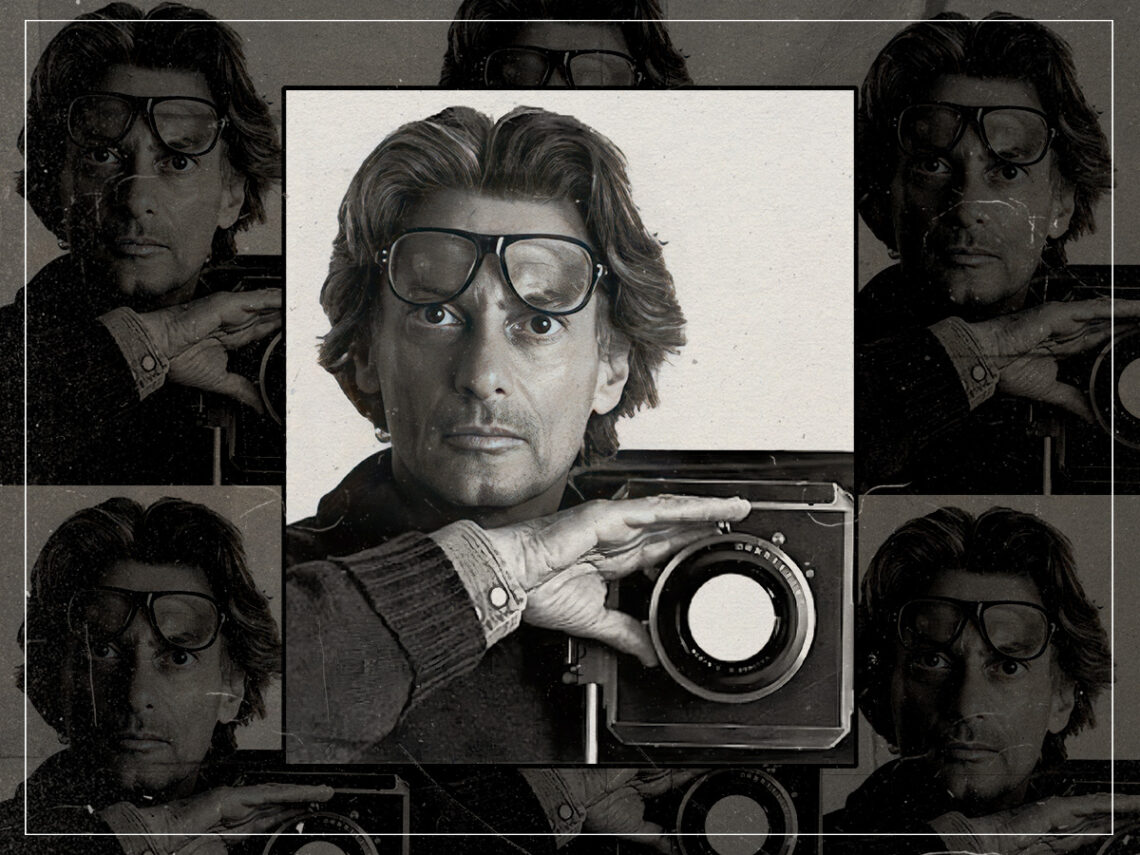
Why a million-dollar collection of Richard Avedon prints will never be sold

Ruedi Hofmann is in the unique position of owning a collection of prints that even conservative estimates value in the hundreds of millions, which is about where his luck ends because he can’t sell any of them. Hofman, now a photographer in his own right, was a master printer on the last project of Richard Avedon, the American portrait and fashion photographer. After working two jobs for Avedon, including a three-year stint on the In the American West series, he was paid in prints. Not exactly an industry standard, but it was an earnest gesture and seemingly done in the knowledge that said prints would be worth an awful lot on the art market one day.
Like most creatives, Avedon wasn’t much of a numbers guy, so the two struck up a deal with Hofman that he’d get a signed print of everything they worked on together. One small oversight later, a debate about ownership and copyright ensued following the photographer’s death in 2004. Avedon hadn’t signed the prints. Luckily, Hofmann’s hand in them was undeniable. He ran the technical arm of his studio and travelled up and down rural America with him as he set about capturing it on camera.
Hofmann’s experience also meant the 126 prints he’d been paid with had been pristinely kept. Safe in archival storage, none of the associated wear and tear of continual gallery trips can be found, adding to their value. Or it would do if the Avedon Foundation would authenticate them, something they have stubbornly refused to do.
The Foundation, set up by Avedon in his lifetime to maintain his estate, claim Hofman hasn’t provided any evidence of the print payment deal. They also told Hofmann that any attempt to reprint images from the collection would incur a $150,000 fine per print. If he chose to sell them and dodge that legal fiasco entirely, he’d only find another in its place. The Foundation would sue the buyers.
Naturally, this has complicated working out the value estimates. Hofmann has only his word to prove they’re original Avedon prints, and the Foundation has a working relationship with high-profile American museums like the Museum of Modern Art. Auction houses won’t touch the collection with a barge pole. The whole debacle has put Hofmann in the uncomfortable position of defending his part in the project even though Avedon acknowledged it freely in his lifetime – often publically, too.
When speaking to the New York Times about the longstanding issue, he sounded defeated by the whole thing. “I’m not a lemming,” He protested. “I am not a simpleton.” For his part, he wants to be compensated fairly, and it’s easy to argue he isn’t exploiting the memory of Avedon by asking for that.
“My wages were the prints,” he said. “And the check isn’t even in the mail.”
