


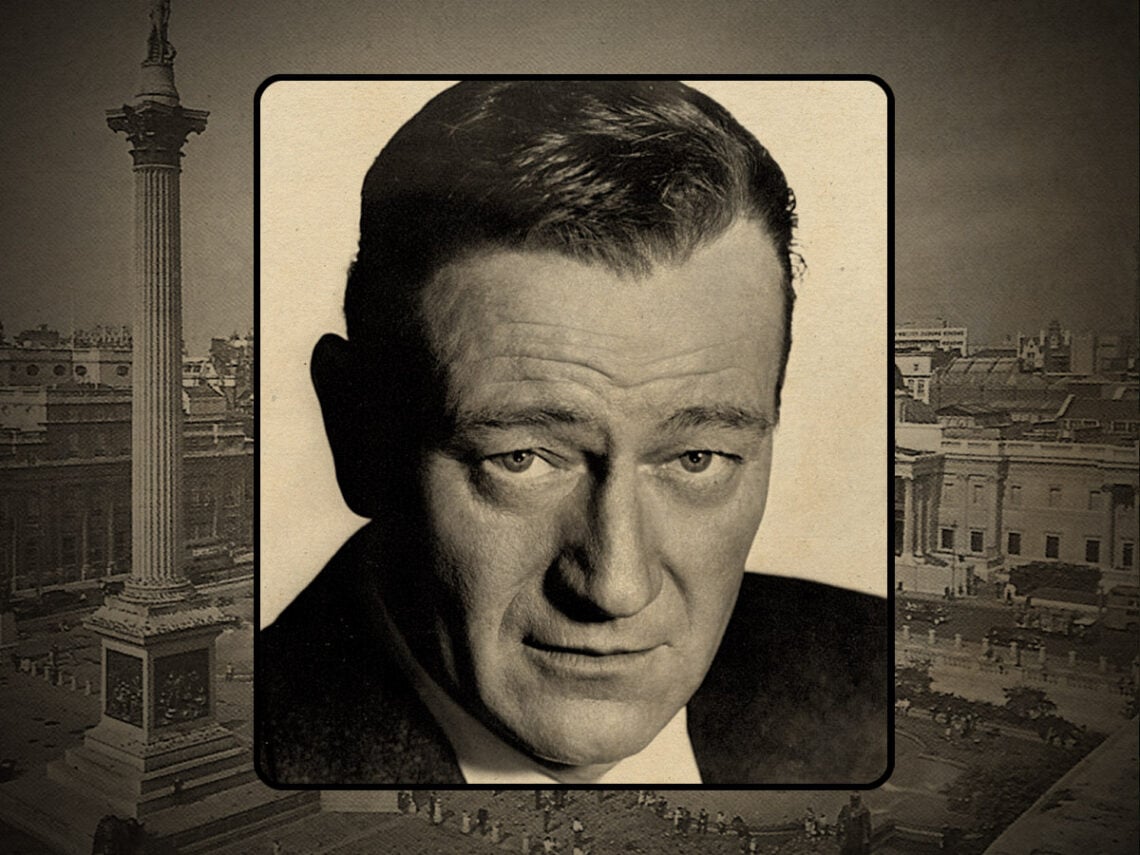
The actor John Wayne couldn’t start working with: “We lost the chance”

There aren’t many icons in the world of cinema as divisive as John Wayne.
For some, he is a legendary figure of cinema and a foundational stone upon which whole swathes of an industry are set. Without his endeavour during the early moments of cinema’s proliferation around the world, there could be several sections of the filmic world left uncharted. For others, Wayne remains a toxic reminder of the worst parts of not only Hollywood but masculinity at large.
It’s hard to disagree too vehemently with either side of the argument. Wayne certainly has become one of the more obnoxiously uncomfortable figures of 20th-century cinema to withstand. Not only did he often allegedly display outright racism and displeasure at those hoping to find some balance regarding civil rights, but he was also egregious in his dedication to hounding out socialists from Hollywood.
Equally, through tens of pictures, Wayne established himself as the swaggering hero of the 1950s cinema landscape. Whether he was on horseback or on the back of a tank, Wayne’s position as the ultimate superhero of the American film industry is hard to ignore. This duality wasn’t just felt by audiences in the 21st century but also by his co-stars and colleagues. It would appear you either loved ‘The Duke’ or hated him, and he felt the same way about most people, too.
Whatever your opinion on Wayne, one thing cannot be denied: he was a staunch professional. His commitment to making movies would leave him disgruntled with anyone who didn’t put their best foot forward, including Vera Ralston, Wayne’s co-star on The Fighting Kentuckian. The actor would become one of Wayne’s most disliked co-stars.

Wayne’s frustrations during The Fighting Kentuckian also reflected the broader tensions brewing inside the old Hollywood studio system. Republic Pictures head Herbert Yates frequently pushed Vera Ralston into major productions despite criticism of her performances, largely because of his personal relationship with her. For actors like Wayne, who was beginning to seek greater creative control over his projects, being forced into casting decisions highlighted the limits of his power even as one of the biggest stars in America.
The situation also revealed the contradictions at the centre of Wayne’s legacy. While many contemporaries criticised his politics and domineering personality, colleagues often respected the seriousness with which he approached filmmaking itself.
Wayne believed movies succeeded or failed based on discipline, preparation and commitment, which explains why he reacted so strongly when he felt a performance weakened the material. Even amid the controversy that continues to surround his reputation, stories like this underline how intensely he cared about the craft and commercial success of the films he helped create.
Paul Fix, who was also in the picture as one of the heavies, noted “Poor Duke really had a rough time with Herbert Yates over that one. Yates was insisting that Wayne use Vera Ralston again, and he said, ‘Damn it, Herbert, I know you love the gal, but she just can’t act.’ Well, there was an almighty argument, but Yates won because all he had to do was wave Duke’s contract in his face and say, ‘You wanna produce this picture or not?’”
The movie not only represented a change of pace for Wayne as he both starred in and took on the production duties for the film, but he also wanted more out of Republic. “Duke wanted to get the film made because he was trying to persuade Yates into letting him make The Alamo at Republic,” explained Fix. “He had also reached the stage where he wanted to work off his contract at Republic, so he had to cast Vera, who was a really nice lady, but, boy, she was just a disaster.”
But Wayne was confident that while one co-star may be a little disappointing, another would provide audiences with all they needed: “Duke said to me, ‘Never mind. Nobody’s gonna remember Vera in the film because all they’re gonna remember is Oliver Hardy and me doing our comedy scenes, and they’ll remember the battle, but they won’t remember Vera because she’ll soon be forgotten.’ And he was right—sort of. People remember Vera because she was in Duke’s films and because she was a disaster.”
Fix finally confessed, “Wayne told me, ‘I was always mad at Yates when he made me use Vera in that film because I think we lost the chance to have one damn fine picture.'”
Wayne is certainly a polarising person in the world of cinema. His attitudes towards society are unlikeable, and his on-stage persona is imposing enough to often intimidate his co-stars. But one thing is for sure: he was a professional.
