


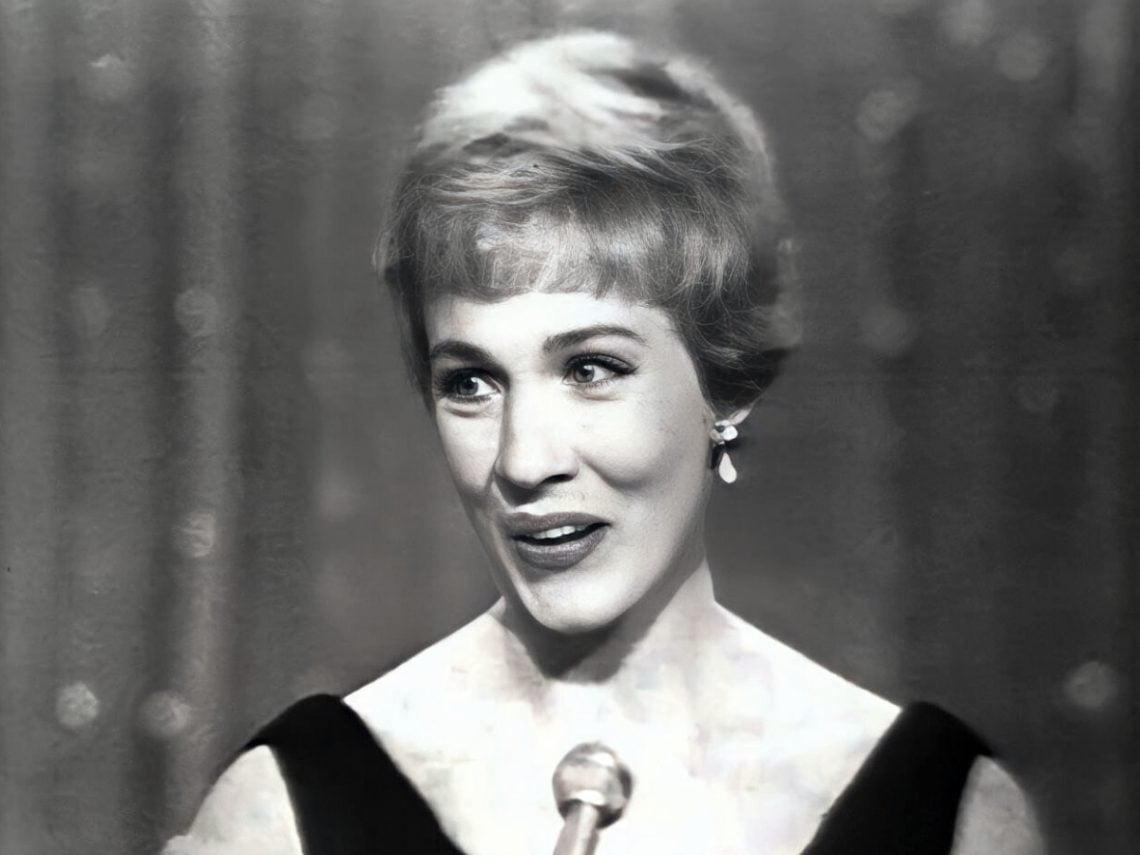
“One of my favourite films”: the closest Julie Andrews came to starring in a “cult” movie

In the big old book of legends that forever defined the film industry, Julie Andrews will always occupy an incredibly unique place.
Almost like she was always destined for immortalisation through celluloid, Andrews found unprecedented success with her feature film debut in a way that most actors can only dream of. Disney clearly knew what they were doing when they cast her in the title role of Mary Poppins, which immediately propelled her to global stardom and earned her the coveted ‘Best Actress’ prize at the Academy Awards, and that was just the start.
If following Mary Poppins up seemed like a daunting task, Andrews knocked it out of the fucking park with The Sound of Music, which is arguably still ‘THE’ go-to choice for any parents who want to stick their kids in front of a screen (but are wise enough not to expose them to the constant shitstream on YouTube and TikTok). But for Andrews herself, there was always a film that, even though it didn’t breach the mainstream consciousness like the aforementioned works, held a special spot for her.
Titled The Americanisation of Emily, it featured Andrews opposite James Garner in an anti-war comedy project, written by none other than the brilliant Paddy Chayefsky, the same twisted genius of a mind that penned Sidney Lumet’s Network. Due to its political stance and its release at a time when the US military was gearing up for the Vietnam War, The Americanisation of Emily didn’t have the appeal that Andrews’ more famous projects did, but that’s also a big reason why it meant so much to her.
In Andres’ memoir Home Work, she wrote: “Being a dramatic black-and-white war film, it was quite a contrast to the vibrant colour and musicality of Mary Poppins. It was difficult for me to assess my performance, although I enjoyed reliving the experience of working with such a fine group of people. Today, it is one of my favourite films, and I know that James Garner felt the same way.”
Adding, “I returned to New York for Tony’s birthday, which coincided with the low-key opening of The Americanisation of Emily. In contrast to the pomp and ceremony of the Poppins premiere, Emily simply opened at a regular cinema, with no fuss. Since it was a relatively quiet drama, the studios didn’t feel a fancy premiere was warranted. Nevertheless, it received fine reviews, and the film has subsequently become something of a cult favourite.”
Now seen in a clearer context and with added historical significance, Andrews is right in her claim that both scholars and fans have taken renewed interest in The Americanisation of Emily, not just because of its political relevance but also what it meant for the future of the anti-war genre. It’s also not a coincidence that James Garner considered it the best project he had ever been a part of, given the extent of both of their illustrious filmographies.
