


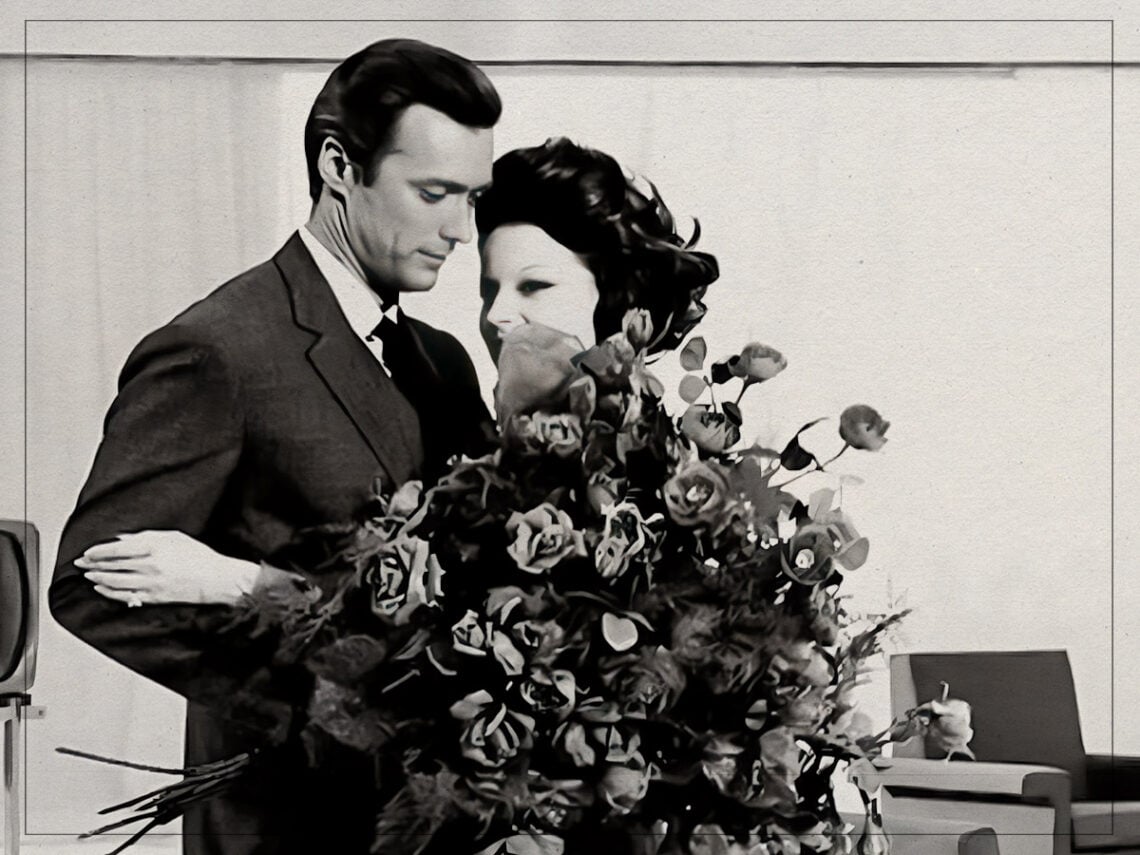
‘The Witches’: Clint Eastwood’s forgotten detour into Italian cinema

Decamping to Europe and returning as a star has become integral to the legend of Clint Eastwood, but because Sergio Leone’s Dollars trilogy took on such seminal status, the fourth and final picture the actor made during his sojourn to the continent often goes overlooked and unmentioned.
With his career heading nowhere fast, Eastwood opted to see if taking a more unusual path to cinematic stardom would stand him in any better stead. Obviously, it did, but he wasn’t entirely convinced at the time that relocating to the other side of the world to make three consecutive westerns would be the making of his career.
A Fistful of Dollars gave the imposing star his first major leading role, and by the time the dust had settled on spiritual successors For a Few Dollars More and The Good, the Bad and the Ugly, the persona that would serve Eastwood so well over the next six decades was virtually solidified.
The ‘Man with No Name’ is one of the most iconic characters in cinema history, weaponising the leading man’s thousand-yard stare, stoic screen presence, quiet gravitas, and grizzled charisma to spectacular effect. All three were helmed by an Italian filmmaker and featured cast members from Italy, Germany, Spain, Austria, and more, with principal photography on all three largely taking place in Almería.
They were European films, sure, but they weren’t quite Italian by the strictest definition. However, once the Dollars trilogy had wrapped up and Eastwood headed back to home shores to continue building his star in the likes of Hang ‘Em High, Coogan’s Bluff, Where Eagles Dare, and Dirty Harry, The Witches quickly fell through the cracks.
Releasing just three months after The Good, the Bad and the Ugly when it hit local cinemas in February 1967, it was a distinct change of pace. Nobody would associate Eastwood with the Italian neorealism movement, but there he was, lending support in a five-pronged anthology film with segments helmed by Luchino Visconti, Franco Rossi, Pier Paolo Pasolini, and Vittorio De Sica.
The latter oversaw Eastwood’s ‘An Evening Like the Others’, which stands out as a curio not only because it placed the face of the revisionist western under the direction of the transformative auteur responsible for Bicycle Thieves, but it still endures to this day as the most metatextual performance of the four-time Academy Award winner’s entire career.
In the segment, Eastwood plays a husband who loves the western genre and even dresses up as a gunslinger to try and reignite the sparks between himself and his wife. It doesn’t quite work out that way, with Silvana Mangano’s Giovanna realising that there’s no hope of saving their marriage.
Everybody knows about the Dollars trilogy, but most people tend to forget that Eastwood didn’t only make a fourth flick in Europe, but he was also directed by De Sica in a comic anthology in which every story revolves around witchcraft, superstition, and the supernatural.

Never Miss A Tale
The Far Out Clint Eastwood Newsletter
All the latest stories about Clint Eastwood from the independent voice of culture.
Straight to your inbox.