


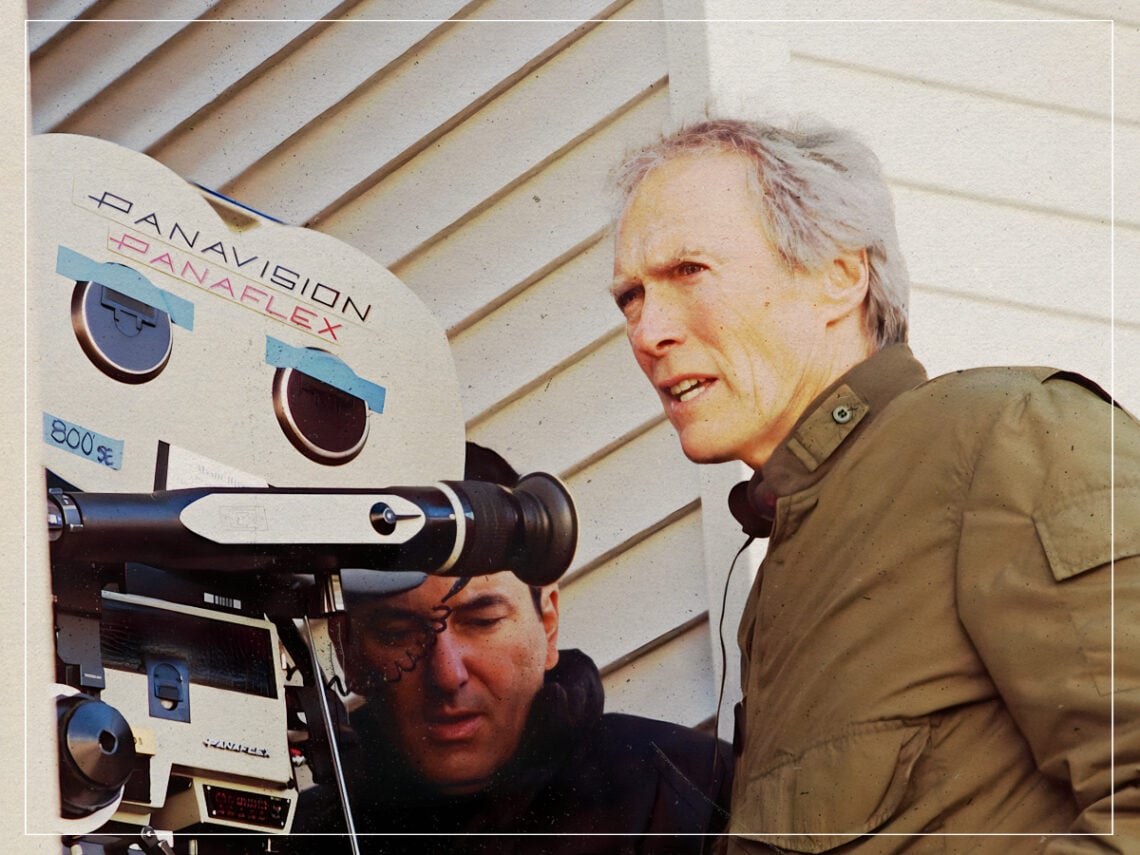
Clint Eastwood’s most Hitchcockian movie: “That really pleased me”

Observing the influences that connect films under a magnifying glass is practically an industry unto itself—the shared inspirations between directors, actors, and everyone working behind the scenes. Clint Eastwood is no exception, having occupied nearly every major role Hollywood has to offer: writer, actor, producer, and director—sometimes all at once.
Eastwood initially gained recognition for his role as Rowdy Yates in the television series Rawhide, which foreshadowed a career spent largely in the western genre. Of course, Sergio Leone’s seminal spaghetti westerns – the Man With No Name trilogy – were the standout among these. However, not every role required a six-shooter and poncho.
Transitioning to directing, Eastwood then made his debut with Play Misty for Me in 1971. From there, he achieved critical acclaim with Unforgiven in 1992 and Million Dollar Baby in 2004, both earning him Academy Awards for ‘Best Director’ and ‘Best Picture’. Even beyond these famous examples of Eastwood’s talents, some of his other notable directorial works include Mystic River in 2003, Gran Torino in 2008, and American Sniper in 2014, entries that most aspiring filmmakers would kill to have under their belts.
There’s one that slips through the cracks, though. Absolute Power is a 1997 political thriller directed by and starring Eastwood, based on David Baldacci’s 1996 novel of the same name. Eastwood plays Luther Whitney, a master jewel thief who, during a heist, witnesses a woman being murdered by Secret Service agents. This woman was involved with the president of the United States, portrayed by Gene Hackman. Events spiral out of control from there, as you’d expect.
“Someone told me that Absolute Power reminded him of an old-fashioned movie.”
clint eastwood
Speaking to The Standard Times ahead of the movie’s release, Eastwood reflects on his work. When prompted, “Friday, he again goes against the grain, making a thriller without the pyrotechnics that mark too many contemporary movies,” he had a thoughtful response lined up.
“Some Clint Eastwood movies would have demanded that kind of heroics,” he explained. “But the guy I’m playing in this movie is a master thief. It’s something he probably does for the thrill of it. He’s sacrificed his family to do it, something like an alcoholic or a drug addict would,” and goes on to say that he was flattered by a comparison to Alfred Hitchcock. Absolute Power didn’t exactly go on to receive the accolades for Hitchcock’s best (or even worst) work, but it did fine.
Eastwood added, “Someone told me that Absolute Power reminded him of an old-fashioned movie. That really pleased me. I’d like to think this is a movie Alfred Hitchcock could have directed.” Hitchcock, renowned as the ‘Master of Suspense’, developed a distinctive cinematic style that any director in the genre would invite comparison to. Hitchcock prioritised visual storytelling, often using determined framing and lighting to differentiate characters.
He utilised long shots and close-ups to express plot points and emotions, allowing audiences to discern the characters’ intentions and feelings without making them explicit in dialogue. This makes sense for Eastwood, as his roles tend not to be the garrulous type.

Never Miss A Tale
The Far Out Clint Eastwood Newsletter
All the latest stories about Clint Eastwood from the independent voice of culture.
Straight to your inbox.