


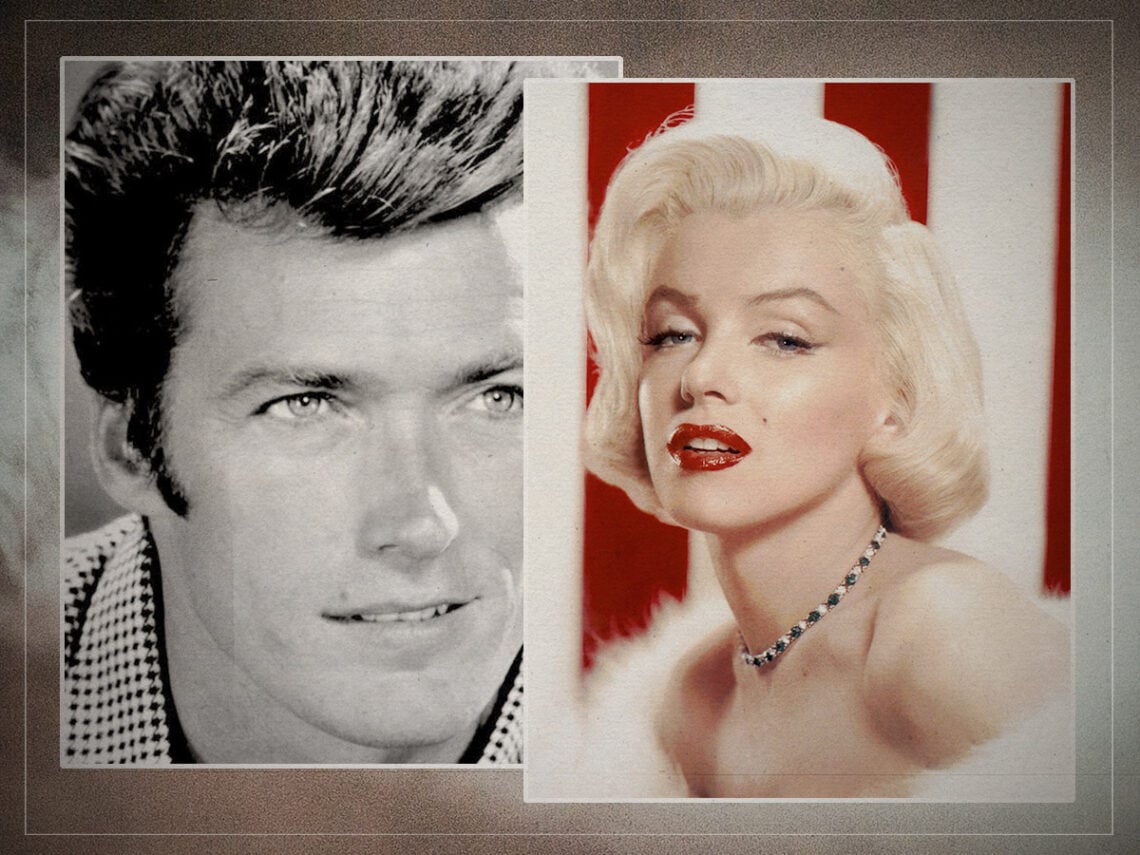
Clint Eastwood never worked with Marilyn Monroe, but was glad he didn’t: “That would drive me fruitcake”

Whether established or unknown, most actors would have killed for a chance to work with Marilyn Monroe at any stage in their career. Clint Eastwood almost did, but was ultimately glad he didn’t.
Despite feeling like icons from completely different time periods, the four-time Academy Award-winning star and filmmaker is only four years younger than the ‘Golden Age’ bombshell, although they were on completely different trajectories when they almost crossed paths in the mid-1950s.
Eastwood only had a handful of feature credits under his belt, most of which were uncredited parts, while Monroe had more than 20 films to her name, including scene-stealing performances in Gentlemen Prefer Blondes, How to Marry a Millionaire, and The Seven Year Itch.
When director Joshua Logan was casting his romantic dramedy, Bus Stop, she was already one of the industry’s most famous faces. The movie was a star vehicle to showcase her talents first and foremost, and a fresh-faced Eastwood auditioned in the hopes of elevating his standing by appearing opposite a certified A-lister.
He didn’t get the job, and once he’d segued into filmmaking, he seemed relieved that he didn’t get an opportunity to collaborate with Monroe on either side of the camera. As popular as she was, she also had a reputation for being difficult to work with, and her methodical preparations seemed completely at odds with her difficulty in executing her lines.
Billy Wilder was responsible for two of her most memorable turns in The Seven Year Itch and Some Like It Hot, but the legendary director admitted that Monroe was often a nightmare to work with. She was frequently late, and her self-confidence issues made even the simplest dialogue an exhausting ordeal that required dozens of takes before she’d get it right.
Unsurprisingly, that didn’t jive with someone like Eastwood, who won’t even shoot a second take if he doesn’t have to. He’s about the most economical legend in cinema history, so when he was explaining his quickfire process to The New Yorker, he singled out Monroe as someone who was the polar opposite of what he required from his performers, whether he was acting or directing.
“I try to get what I have in mind, but if an actor does what he has in mind, I’m very grateful to take it,” Eastwood opined. “It’s like going to a store and looking at all the suits on the rack and seeing one that makes you feel, ‘That’s exactly what I have in mind.'”
It says a lot about Eastwood’s methodology that he compared his actors coming up with their own ideas to being a crisp suit on a coat hanger, so long as those suits don’t waste his time. “I never had to work with someone like Marilyn Monroe, who, I’ve heard, made everybody wait three hours before showing up, that sort of thing,” he added. “That would drive me fruitcake.”
He might have missed out on Bus Stop, but as it turned out, Eastwood hardly regretted being denied the chance to share the screen with Monroe.

Never Miss A Tale
The Far Out Clint Eastwood Newsletter
All the latest stories about Clint Eastwood from the independent voice of culture.
Straight to your inbox.