


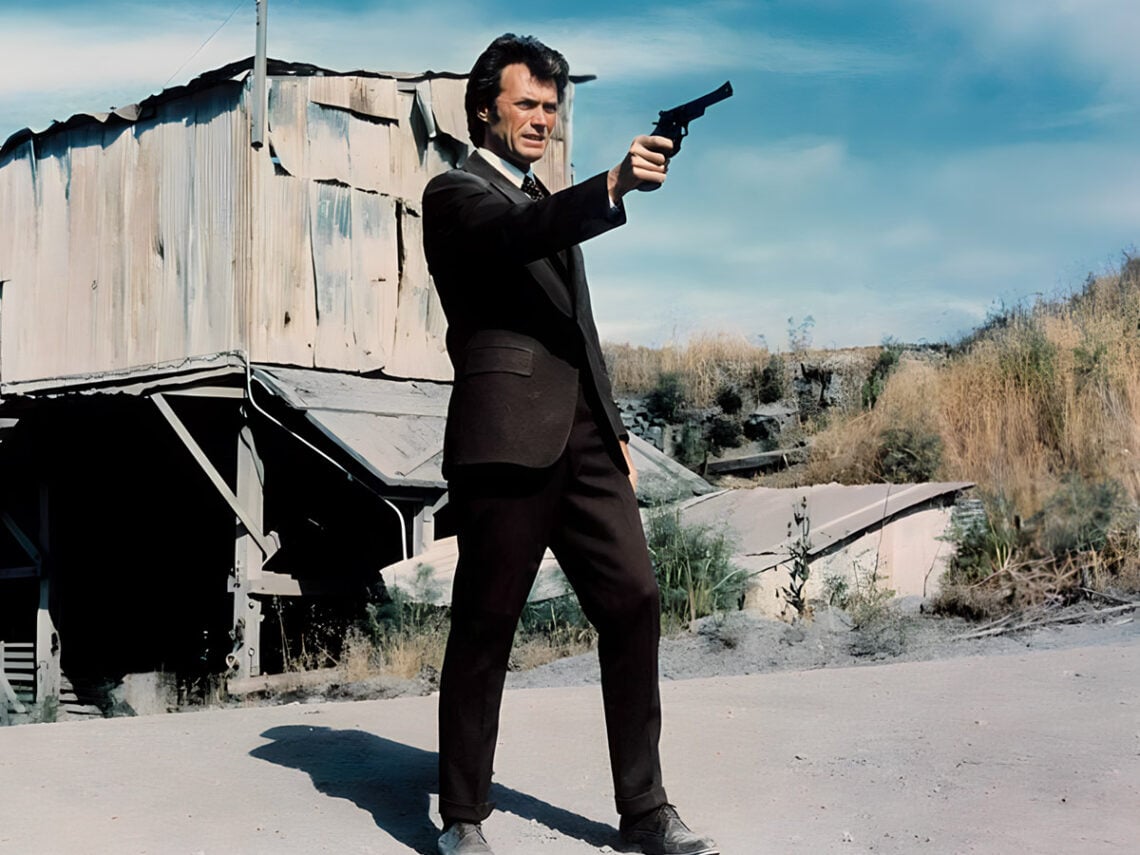
Clint Eastwood’s favourite thing about playing Dirty Harry: “That’s the way the guy thinks”

These days, Clint Eastwood’s Dirty Harry is viewed as one of the greatest movies of the 1970s. ‘Dirty’ Harry Callahan is arguably Eastwood’s most iconic character – perhaps rivalled only by The Man with No Name – and audiences flocked to cinemas four more times over the following two decades to watch the renegade cop in a violent new adventure. However, there’s always been an undercurrent of discontent directed at the movie – after all, upon its release in 1971, it was labelled “fascist” by many critics.
Fascinatingly, though, this controversy actually contributed to Eastwood’s favourite thing about playing the character.
When most audiences sat down to watch Dirty Harry, they were wildly entertained by the thriller’s hard-hitting action scenes and Eastwood’s effortlessly charismatic performance as the only cop willing to do what is necessary to catch the serial killer Scorpio. Throughout the movie, Callahan constantly butts heads with his superiors and the legal system, which he sees as insufficient when dealing with a monster like Scorpio. By the movie’s end, when Callahan shoots Scorpio dead and hurls his police badge into a body of water, an iconic movie cop is born – one who uses unorthodox methods and works outside the law when he needs to but will ultimately get results.
Audiences loved the movie, as it became the fourth highest-grossing picture of ’71, and most viewers simply saw Callahan as an example of a newer, tougher brand of hero. However, it can’t be denied that Dirty Harry has a highly critical subtext of modern society’s laws, judicial system, and police bureaucracy. Eastwood believed that subtext was part of what appealed to audiences, who were frustrated with such things in their daily lives. However, director Don Siegel claimed the movie wasn’t meant to say anything about society.
“At no point in making the film did we ever talk politics,” he claimed. “I don’t make political movies. I was telling the story of a hard‐nosed cop and a dangerous killer.”
Despite Siegel’s claims that Dirty Harry was simply a cop thriller and no more, it became a lightning rod for criticism upon release, thanks to this subtext. The New Yorker’s Pauline Kael wrote that the movie was “not about the actual San Francisco police force; it’s about a right-wing fantasy of that police force as a group helplessly emasculated by unrealistic liberals. This action genre has always had a fascist potential, and it has finally surfaced.”
Even Roger Ebert, who gave the film three stars out of four, called its moral underpinnings “fascist,” and Gene Siskel felt the film’s message was “dangerous” despite also dubbing it “one of the great police thrillers of motion picture history.”
Over time, the supposed right-wing leanings of Dirty Harry became synonymous with Eastwood’s real-life politics. At the time, Siegel admitted his star was a conservative who leaned toward the right, and critics like Kael seemed to latch onto the idea that Eastwood had imbued the Callahan character with his own political stance. Fascinatingly, though, the movie icon – who describes himself as a libertarian – has always maintained he and Callahan are not one and the same. However, he was fascinated by the moral questions a film like Dirty Harry asks of its audience.
“Society is at odds with itself,” Eastwood told The Wall Street Journal in 2011. “They want law and order but…I was always intrigued by this guy who was frustrated by not being able to solve problems due to the obstacles put up by society itself—by the bureaucracy in society.” To Eastwood, being captivated by the prospect of playing a character engaging with these troubling themes didn’t mean he was personally “against a criminal’s right to justice, to a defence, and all that sort of thing.”
While, in his opinion, Eastwood was unfairly tied to the politics of a fictional character, and he would go on to have a running battle with Kael throughout his career, he claimed this melding of art and artist was actually his favourite thing about playing Callahan. He knew that “a lot of people” watched Dirty Harry and imagined, “Hey, that’s the way the guy thinks” – and he took it as a testament to the power of his performance.
“That’s kind of a left-handed compliment in a way,” Eastwood mused. “You think, ‘Oh, I convinced you that much? Good!'”

Never Miss A Tale
The Far Out Clint Eastwood Newsletter
All the latest stories about Clint Eastwood from the independent voice of culture.
Straight to your inbox.