


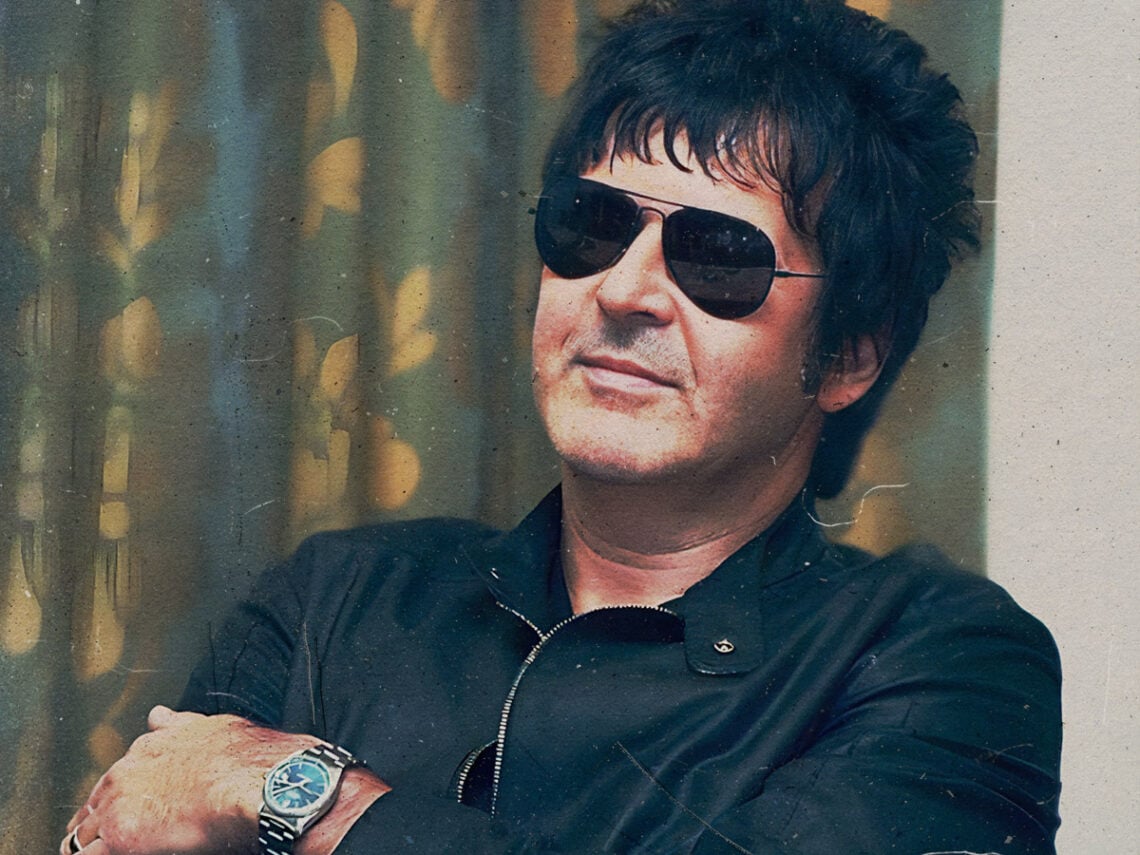
Five isolated drum tracks to prove Blondie’s Clem Burke was a genius

As a founding member of New York’s finest new wave band Blondie, Clem Burke transferred the frenetic energy of punk and the slinky sounds of new wave to create some of the best rock songs in history.
While his role in the punk revolution is known in some circles, Clem Burke’s name is often overlooked, usually mentioned only after Debbie Harry and Chris Stein. But without Burke, Blondie would never have hit the same heights. Here, following the news of his tragic death, is a concise introduction to Burke’s place as the band’s powerhouse engine, explored through five of Blondie’s isolated drum tracks.
In a statement, Blondie’s Debbie Harry and Chris Stein announced: “It is with profound sadness that we relay news of the passing of our beloved friend and bandmate Clem Burke following a private battle with cancer.”
Blondie and Burke would make their name on a fusion of sonic threads. Many of the street sounds that swelled around them were captured and replicated within the confines of their studio. From the Ramones to Talking Heads, NYC was brimming with creative talent, and Blondie, with the metronomic dancefloor beat of Clem Burke, were a shining light of the scene. The band soon became icons of the era and were heralded as the face of new wave.
Naturally, as the 1980s approached, Debbie Harry’s mix of angelic vocals and a devilish glint made her the centre of attention. Blondie’s unique blend of punk energy with disco and funk made her a once-in-a-generation frontwoman. Chris Stein, the band’s de facto leader, used his musical instincts and pop sensibility to walk the line between commercial appeal and credibility. But it was Clem Burke who truly elevated the group.
Joining the band shortly after its formation and remaining a reliable source of beats right up until his death, Burke became the glue that held everything together. Though Harry’s vocals were pop star standard and Stein’s knowledge unbeatable, it was Burke who made the tracks feel tangible. It was his unique timing and precise power that catapulted the band into stardom.
If you need further proof, you can simply take a look below and witness the birth of a new wave icon across five isolated drum tracks for Blondie.
Five isolated blondie drum tracks:
‘One Way or Another’
One of the main attraction songs on Parallel Lines was the ever-living joy that is Debbie Harry’s song about a stalker. A mainstay at parties and wedding dancefloors to this very day, this was the band at their peak, delivering a vibrant punch of pop-powered punk.
The song was written by Harry and Nigel Harrison and inspired by an ex-boyfriend of Harry’s who stalked the singer after their relationship ended. She later told Entertainment Weekly, “I was actually stalked by a nutjob, so it came out of a not-so-friendly personal event. But I tried to inject a little bit of levity into it to make it more lighthearted. I think, in a way, that’s a normal kind of survival mechanism. You know, just shake it off, say one way or another, and get on with your life. Everyone can relate to that, and I think that’s the beauty of it.”
While Harry’s lyrics are searing and smoking at the same time, and Stein’s riffs are as sharp as they are rusty, it is the engine-like drive of Burke that really seals the deal. The breakdown just wouldn’t be the same without Burke’s unique fills.
‘Atomic’
A classic track from Eat to the Beat, saw Harry attempt to write a song to match their globe-trotting mega-watt bop, ‘Heart of Glass’. But while that track is hung entirely on the new wave sound, somewhere along the line, Blondie went all western.
Combining that sound with the band’s new wave roots saw the group look ahead and create a futuristic sound. In 1000 UK #1 Hits by Jon Kutner, Harry explains the song’s composition: “He was trying to do something like ‘Heart of Glass’, and then somehow or another we gave it the spaghetti western treatment. Before that, it was just lying there like a lox. The lyrics, well, a lot of the time I would write while the band were just playing the song and trying to figure it out. I would just be scatting along with them, and I would just start going, ‘Ooooooh, your hair is beautiful.'”
Somehow, Burke not only managed to match the emotion of the piece Harry had in mind but also saved it from becoming a caricature piece. It’s beautiful and powerful drumming that showcases Burke’s guile.
‘Heart of Glass’
In their early years, Blondie were darlings of the underground. With Debbie Harry out front, they became a staple of the toilet circuit, and easily the brightest thing in it. They’d seen some success in Europe before ‘Heart of Glass’, but were still relative unknowns. After that track hit, they were icons.
It was the first moment that Harry and the band sat down and meticulously sewed their ragged punk edge to the glittering shimmies of disco. It was so much so that the track originally appeared as ‘I Had A Love’ AKA ‘The Disco Song’ and had a much more reggae-infused sound. On both versions of the track, it is burke’s glitching disco beat that reigns supreme.
In her 1982 book Making Tracks, co-written with Stein and Victor Bockris, Harry says it best herself: “When we did ‘Heart of Glass‘, it wasn’t cool in our social set to play disco, but we did it because we wanted to be uncool. A lot of people we’d hung out and been close friends with on the scene for years said we’d sold out by doing a disco song.”
‘Hanging on the Telephone’
When Blondie made the biggest splash, they jumped into the water with a “cannonball!” in the form of their third record, Parallel Lines. It saw the group polish up their previous scrappy punk sound and set their sights on the charts.
The band were just developing their soon-to-be-iconic sound when they released ‘Hanging on the Telephone’. The track was originally written and performed by Los Angeles outfit the Nerves, but Blondie made this song their own. It sees the group tighten the song up while maintaining its power.
It may not be the most original moment of Burke’s career, but it is another reminder of his driving power.
‘Call Me’
When Blondie caught up with disco producer Giorgio Moroder, the world held its breath as expectations rose. Originally, the producer had wanted Stevie Nicks to help write and perform the theme song for the new film American Gigolo, but he must have thanked his lucky stars when he heard the punk’s results on ‘Call Me’.
The bouncing track cemented the band’s place as one of punk’s few lasting contributors to the pop charts. It spent six consecutive weeks at the top of the US charts and quickly became their biggest success. Naturally, it also hit number one in the UK (their fourth chart-topper there) and in Canada, pushing Blondie—and Burke—into the mainstream spotlight.
It’s hard to imagine such a song finding success without Burke’s effortless shimmy on the song. It not only provides a delicate sense of flavour but also brings the meat and bones to Harry’s garnishes.
