


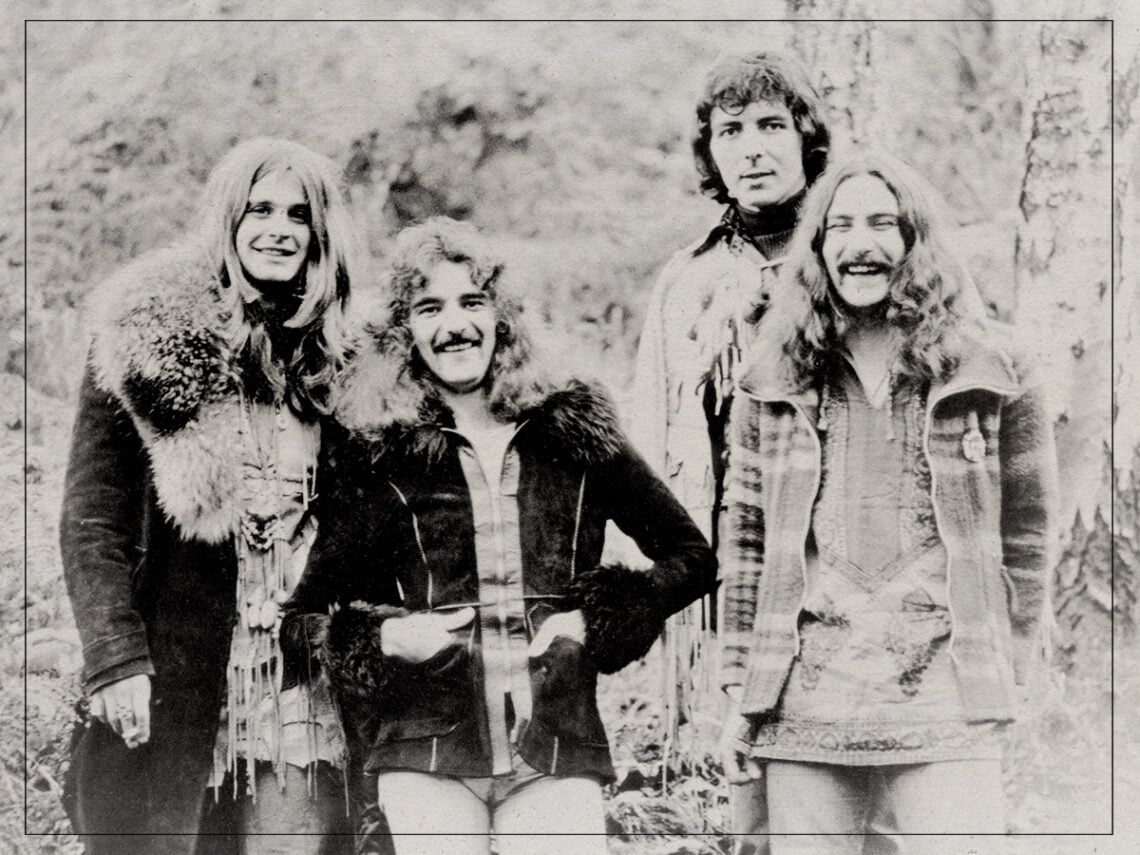
Clearwell Castle: The dungeon where Black Sabbath was reborn

What do you do when your heavy metal band, led by the ‘Prince of Darkness’, is struggling for inspiration? For Black Sabbath, the answer was pretty obvious: pile into a dark, haunted basement, of course.
From start to end, the story of Black Sabbath is a unique one that defies odds. Obviously, they defied odds simply by surviving as long as they did, given how wild the members were back in the day, as they spent their whole careers sharing stories of ripping heads off bats, having to cut shows short to prevent a live overdose onstage and so on. But mostly, they defied odds by making it big in the first place.
Riding the way right at the front is always a risk, as the dilemma of being a pioneer lies in the simple fact that you could succeed or you could also fail disastrously. Right as rock and roll was only just giving way to something heavier, and before labels like ‘metal’ even existed, Black Sabbath were going all in, and they were doing that as a bunch of working-class lads from Birmingham with little to no connections. The fact that they were spotted and supported by the industry is nothing short of pure luck; that they succeeded and achieved global fame? That’s a miracle.
But it was one none of them expected, and that’s what became hard to navigate as suddenly, the whole world was watching on and expecting things, demanding more music and quickly. After their debut in 1970, things moved fast. ‘Paranoid’, the hit single and the eponymous album, came that same year, and then it never slowed down. By the start of 1973, they were already four albums deep and burnt out.
That’s the context that started the making of Sabbath Bloody Sabbath. “We’d done the same thing—we went to the same house, the same studio, but it just wasn’t working out,” Tony Iommi told Uncut of the moment they tried to just start making another record like the rest. But it didn’t happen. It didn’t happen so badly that the band genuinely feared they were done for, as Geezer Butler added, “We thought it might be the end”.
They tried switching it up in a whole new way first by flying to LA. Naturally, in the early 1970s, the gaggle of goths from the Midlands didn’t really fit in there, so that didn’t work out. Then the question was launched: What do Black Sabbath do to seek out inspiration? The answer, naturally, was to convene with some dark forces.
Welcome to Clearwell Castle. Built in 1972, the gothic house essentially rotting and in ruins, decade upon decade, until in the 1950s, it was restored, and in the 1970s, it was opened up as a studio, ghosts and all.
All old buildings come with a level of spine-shivery weirdness, but Clearwell Castle provides the full goosebump experience. Keen to lean into that to channel for the album, the band went all in by choosing to write and rehearse in the dungeons of the house.
Sure, the space reinvigorated them creatively, giving them one of their all-time greatest albums as the energy in the castle seemed to supernaturally recharge their musical passion. But more importantly, it gave them some ghost stories to retell for the rest of their lives, like the one where Iommi swears he and Ozzy Osbourne saw a “figure in a black cloak” disappear into thin air as if that ghost came bearing musical gifts, and then poof, vanished.
Clearly, something in that space worked. It worked for Black Sabbath in 1973. It brought Led Zeppelin back together in 1978 as the members convened there after some time apart. It even worked for Deep Purple during a period of line-up shifting turmoil. Perhaps the trick for holding a band together and reviving the creative soul is simply a little bit of fear.
