


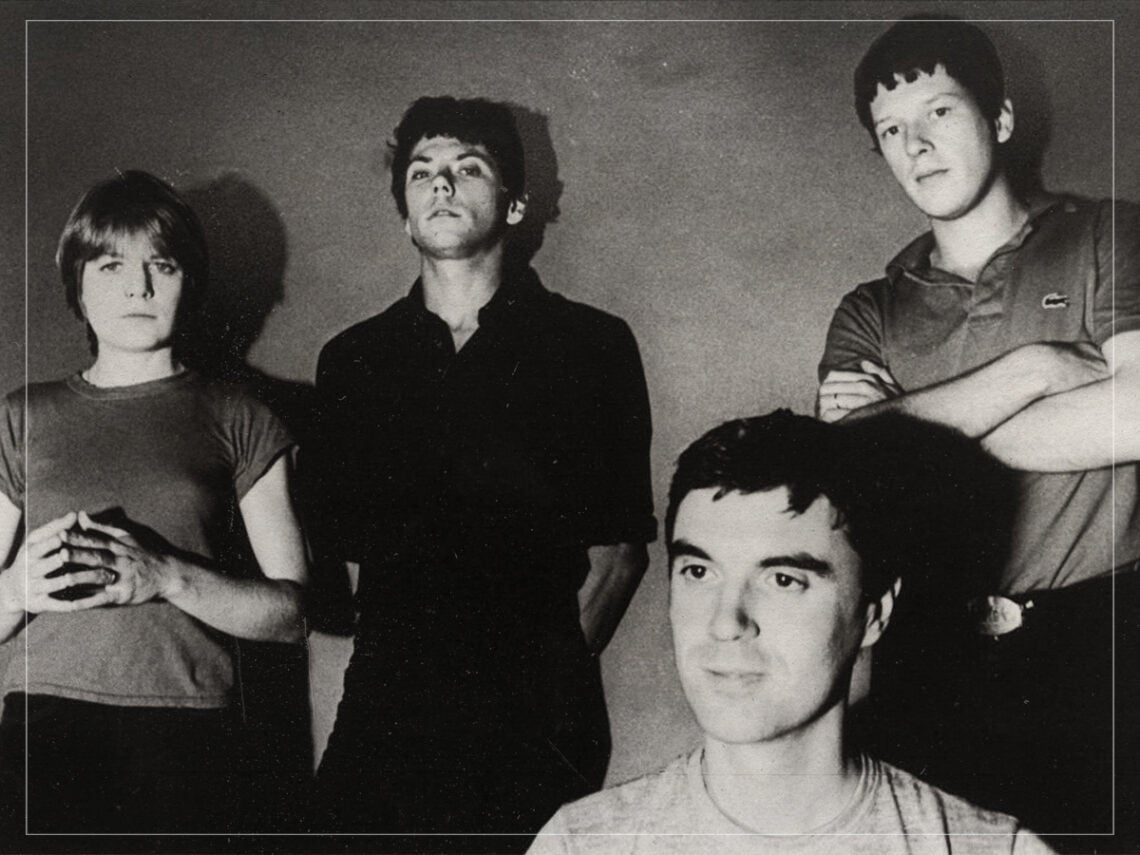
The classic Talking Heads song Chris Frantz “didn’t really connect with”

Talking Heads aren’t the only band to have grappled with the weighty musings of Man’s eternal paradise.
A spiritual and theological obsession of humanity since the dawn of time and across all religious creeds, heaven has naturally found itself a routine locale for many a rock and pop song. Led Zeppelin paved a romantic stairway to a more fantastical depiction of celestial bliss, Eric Clapton dreamt of the crossing of paths with his lost child in a more pained illustration of nirvana’s mystical realm, and the Pearly Gates are given a definitive knock by Bob Dylan’s mortal musings.
But no one seemed to tackle the perennial spiritual inquiry with such idiosyncratic commentary as Talking Heads. By 1979, the New York CBGBs alumni were about to hit their serious creative peak, reuniting with Brian Eno after their first production partnership on More Songs About Buildings and Food for a darker, spookier brew of Afrobeat rhythms, disco edge, and a smattering of haunted electronics scoring frontman David Byrne’s increasingly eccentric lyrical observations on poisonous air, mistrust of animals, and an appreciation for paper.
Slapped with a black, tread-plated cover, Fear of Music was not the bright and vivacious pop record that would catapult them to stardom years later.
Yet, sat in the middle of Fear of Music’s tracklist was ‘Heaven’, the seemingly serene paean to eternal dwelling with the ever so slight whisper of sterility lurking amid its country-rock psych.
The imagined afterlife is set in a bar where Byrne is delighted with the never-ending spin of his favourite song. Is the bar itself called ‘Heaven’ and situated in our Earthly coil? Whatever the exact nature of our Elysian drinking-hole, Byrne croons it’s “A place where nothing / Nothing ever happens,” which seems boring as hell far below us, until he slips the admission “It’s hard to imagine that nothing at all / Could be so exciting, could be so much fun.”
It’s the genius trick of the song. You just don’t quite believe Byrne when he says, with almost prosaic delivery, that he’s numbly content in the midst of an endlessly looping soundtrack of a bar that never changes, but therein lies what marks ‘Heaven’ apart from much of popular music’s grapple with Kingdom Come, chiefly, the paradoxical frisson between endless serenity and inevitable crushing boredom.
Still, ‘Heaven’s beguiling cynicism was an initial hard sell to the band, no less than Talking Heads’ drummer Chris Frantz, who struggled to quite wrap his head around what Byrne was gunning for. “I didn’t relate to the idea that heaven is a place where nothing ever happens,” he told Songfacts in 2020. “I understand it’s kind of a zen thing, but I didn’t really connect with it. I did like the chord changes – it reminded me of a Neil Young song.”
In its own warped way, there’s certainly a note of Harvest’s country stroll lying in ‘Heaven’s reeds, forming just one of the many knotty strands that make up Byrne’s inimitable songcraft. Fundamentally, Frantz’s bewilderment is one of the many crucial ingredients to Talking Heads’ askance magic, a bemusement to Byrne’s lyrical worldview perfectly in keeping with Fear of Music’s acerbic, alien bite.
