


The classic 1974 comedy that John Wayne turned down: “I can’t do it”

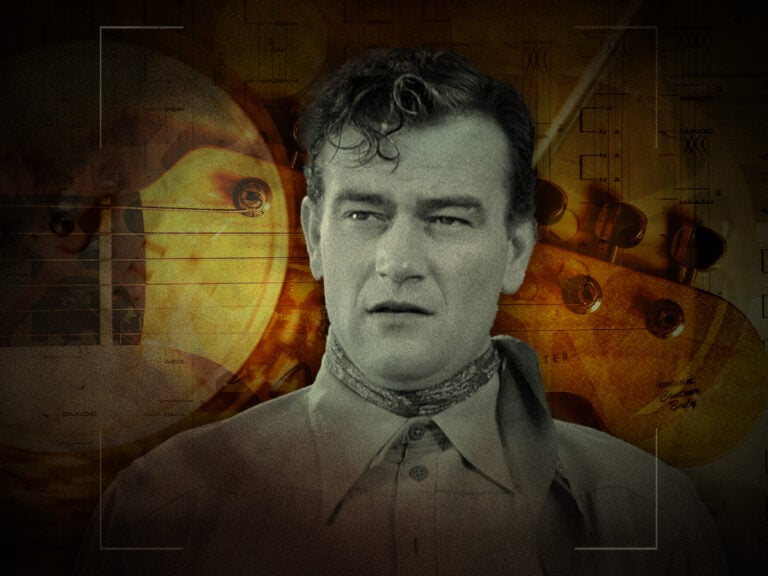
John Wayne has long been synonymous with the western genre, having ridden across screens in many gritty roles, often directed by John Ford. These performances made him a symbol of American traditionalism, a figure of heroism and masculinity.
Unsurprisingly, then, Wayne was hardly a liberal guy. Using his celebrity as an opportunity to express bigoted viewpoints – like championing white supremacy in that infamous 1971 Playboy interview, which also saw him call the characters in Midnight Cowboy “fags” – the actor wasn’t someone that you’d expect Mel Brooks to want to work with.
But as it happened, Brooks was keen on getting Wayne to star in one of his most popular comedies, the satirical western spoof Blazing Saddles – the fact that the comedian was interested in getting the iconic cowboy star to appear in the movie is interesting because, of course, Blazing Saddles uses humour to attack bigotry, mocking the racist townspeople who take offence when a Black American man is appointed the new sheriff.
So, with the movie emerging just a few years after Wayne had told Playboy, “I believe in white supremacy until the blacks are educated to a point of responsibility. I don’t believe in giving authority and positions of leadership and judgment to irresponsible people,” perhaps Brooks was purposefully hoping to poke fun at Wayne through this rather ironic casting? Brooks has never elucidated on why he wanted to cast The Duke, but it seems unusual that he would cast him out of genuine admiration.
He knew that getting Wayne on board was highly unlikely, though. The production of Blazing Saddles was a stressful one, with Brooks at a point of economic hardship, while his wife, Anne Bancroft, was pregnant. There was pressure to get the movie made – and for it to be successful – because he’d not made a movie since Twelve Chairs four years prior.
“Blazing Saddles was more or less written in the middle of a drunken fistfight,” Brooks told Tablet Mag. “There were five of us all yelling loudly for our ideas to be put into the movie. Not only was I the loudest, but luckily I also had the right as director to decide what was in or out.”
One of these ideas was to cast Wayne, but it wasn’t meant to be. “And yes, it’s true. I first asked John Wayne to be in the movie. Upfront, he said, ‘I can’t do it.’ I understood,” he revealed. It’s hardly a surprise that the hugely racist, misogynist, antisemitic, and homophobic Wayne turned down a movie that was designed to take aim at the prejudices that have long defined certain western movies, featuring Wayne himself, no less.
Brooks didn’t reveal which character he wanted Wayne to play, but perhaps it was Harvey Korman’s Hedley Lamarr – the film didn’t need Wayne to be a success, though, and it went on to earn three Academy Award nominations, as well as making a significant profit.
The director called the movie “a Jewish western with a black hero”, which certainly stood in opposition to the kinds of movies that Wayne appeared in. It’s a good job that it didn’t work out.

Never Miss A Tale
The Far Out John Wayne Newsletter
All the latest stories about John Wayne from the independent voice of culture.
Straight to your inbox.