


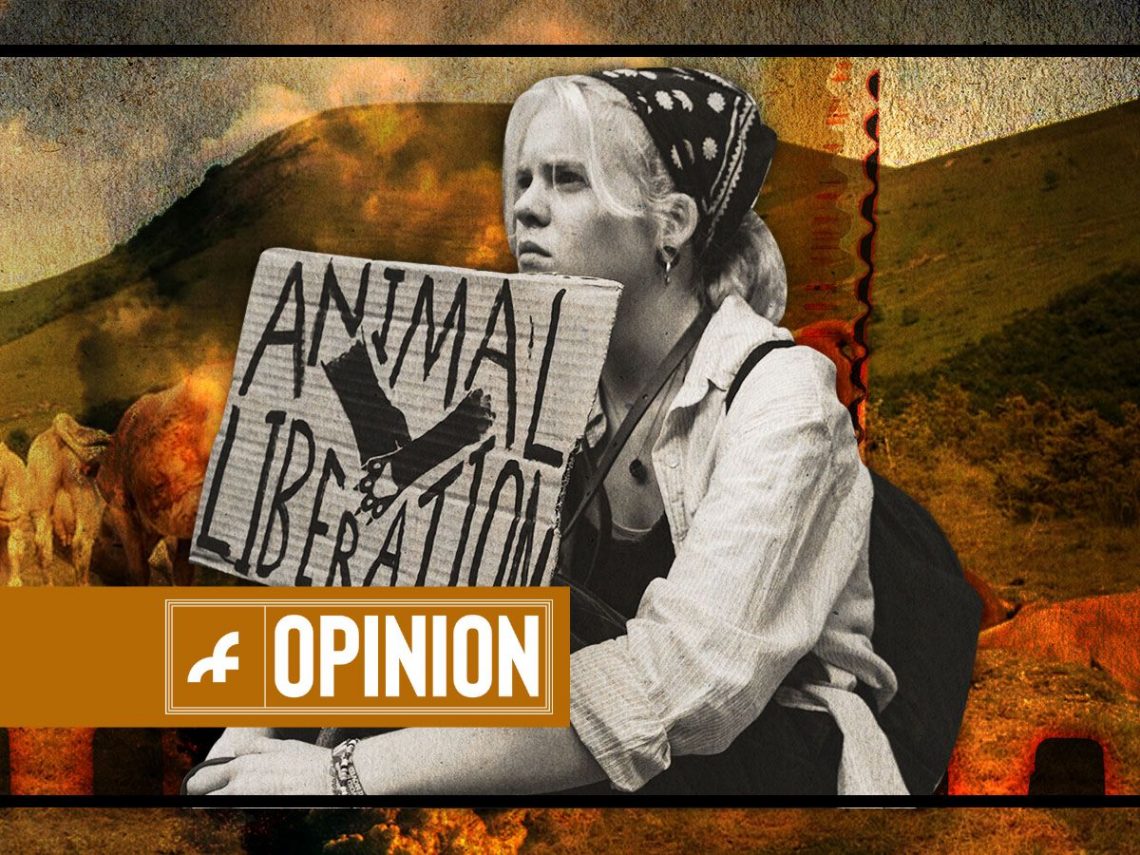
Forget glue and milk: How cinema can be a vehicle for environmental protest

How do you persuade and convince someone to join your point of view? This is the inherent puzzle behind not just the recent Just Stop Oil environment protests that have halted traffic across the UK in recent months but protests in general. Protest groups have used momentarily disruptive marches, flyering, and public talks in the past. However, when nobody seems to be listening to your demands, this is when civil disobedience comes in.
Though the tactics may have changed, this form of protest is nothing new, with the Civil Rights movement of mid-20th century America, the Wave Hill Walk Off of the 1960s in Australia and even the Poll Tax protests of the UK at the turn of the 1990s being just three events in recent history where civil disobedience has been used to persuade. History demonstrates that the tactics work, but in a modern world, confused with social media noise, these tactics need to be resolute and coherent.
Such are the complaints aimed against Just Stop Oil and their related protest movements, Insulate Britain and Animal Rebellion (to name just two). For the past few years, they have been engaging in increasingly more radical forms of protest to enact change. Blocking major London roads, vandalising works of art in popular galleries and pouring milk on the floor of supermarkets make up three ways in which the creative groups are trying to force change. Still, despite their honourable actions, it’s difficult to hear any of their points in the violent furore of public opinion.
Indeed, it’s difficult for the average Joe to listen to a group of arm-linked protestors blocking the road, especially when they’re preventing them from getting to a hospital appointment. Furthermore, when animal-rights protestors waste milk on the floor of supermarkets, it’s hard to get down to the real meat of their argument, particularly as that wasted milk will merely drive up demand for such products, meaning more profits for dairy farmers.
It is without question that concerns about the environment, animal agriculture, and continued oil usage need to be addressed sooner rather than later, and disruptive protests can be the answer. Still, it’s how you enact these protests that matter. When done together, with a united, coherent and constructive voice, disruptive tactics can be effective, but the problem is that their desired aims are messy and confusing.
Thus far, it appears these protests are merely harassing ordinary people, causing the everyday individual to label these activists as rebels at best and ‘terrorists’ at the most irrational.
Undoubtedly, the urge for environmental protection has never been simple to lobby. It’s a matter so existential, so impossible to truly grasp the impact of, that many simply disregard it as ‘not their problem’. When many people have to worry about the cost of living crisis and the continued incompetence of the Conservative government, it is no doubt a privileged position to dedicate your time and energy to defending the planet. This, however, doesn’t make their position wrong. In many ways, such protestors are entirely selfless, but it does mean that the likes of Just Stop Oil need to approach their issue with unprecedented care and attention; this is not an issue that seems relevant to hundreds of thousands of people.
Of course, the matter of environmental disasters is relevant, and it’s relevant to everyone. Still, with the degradation of natural habitats happening away from urban centres, it’s difficult for many to understand the true gravity of the situation. Persuasion is impossible, with protestors already bringing many environmentally-conscious people to their cause. Now it’s time to change tactics and curate a coherent message to the masses that will not fall on deaf ears. And being seemingly little more than a public nuisance in the name of a few column inches and a hefty raft of social media comments isn’t going to do the job.
Visual media has long been an effective tool in helping to mobilise change, with countless movies and TV programmes across the art form’s history having successfully brought about real-life change. From Frederick Wiseman’s 1967 movie Titicut Follies, which sparked the closure or reform of several psychiatric hospitals, to Gabriela Cowperthwaite’s 2013 documentary Blackfish, which led to SeaWorld ending its Orca breeding programme, sticking a previously unknown issue in the face of the viewer can have a profound impact.
Cinema and documentaries, in particular, invite the viewer to become a participant, as opposed to a passive consumer of information, establishing close proximity with the viewer to feed any given issue directly. As the filmmaker of the seminal documentary The Act of Killing, Joshua Oppenheimer, states, “We all identify with the people we see, and in a good documentary, we are not just reading an account of the world, we’re seeing and hearing our world”.
The greatest documentaries have been able to harness this innate power and enact real-world change due to their groundbreaking investigation. Consider way back in 2004 when Morgan Spurlock’s Super Size Me forced McDonald’s to ditch ‘Super Size’ portions and rebrand their entire model, encouraging many people to reconsider their opinion of fast food in the process.
Or, take the most famous account of cinematic environmental activism, Davis Guggenheim’s Al Gore-penned documentary An Inconvenient Truth, which disrupted the flow of early 21st-century consumerism by shifting public opinion on climate change. Making the problem far more publicised than before, Gore and Guggenheim encouraged thousands of people to become more conscious citizens and even caused a political storm.
A little more recently, Josh Fox’s Gasland, which focused on communities in the United States where fracking had ravaged the local environment, led to greater online searching for the issue, which was previously unheard of in the national vocabulary. More search leads to more social media buzz, media coverage, and real-life mobilisation for change. Reducing the concentration further, and the revelatory My Octopus Teacher has seen a wave of refusals to eat the highly intelligent cephalopod.
In a modern world where we spend more time online than in the physical space of the real world, professional filmmaking spaces like Netflix and BBC iPlayer, as well as everyday social media sites like YouTube and TikTok, should become a hotbed of activism. Creating long-from compelling films or short, snappy info-packed videos is a surefire way to go viral in an online space that is quick to jump on the latest provocative piece of activism.
Whilst civil disobedience can work, it isn’t the only way you’re going to engage with the public in a busy, complicated modern world. Like a forceful preacher in a busy town square, people can hear the likes of Just Stop Oil, but they’re not listening. So, give people something they can’t help but listen to, understand and comprehend. Spilt milk, soup-stained art and hand-glueing disruption prompt discussions about the nature of the protests, not a conversation about the urgency of the climate disaster.
