


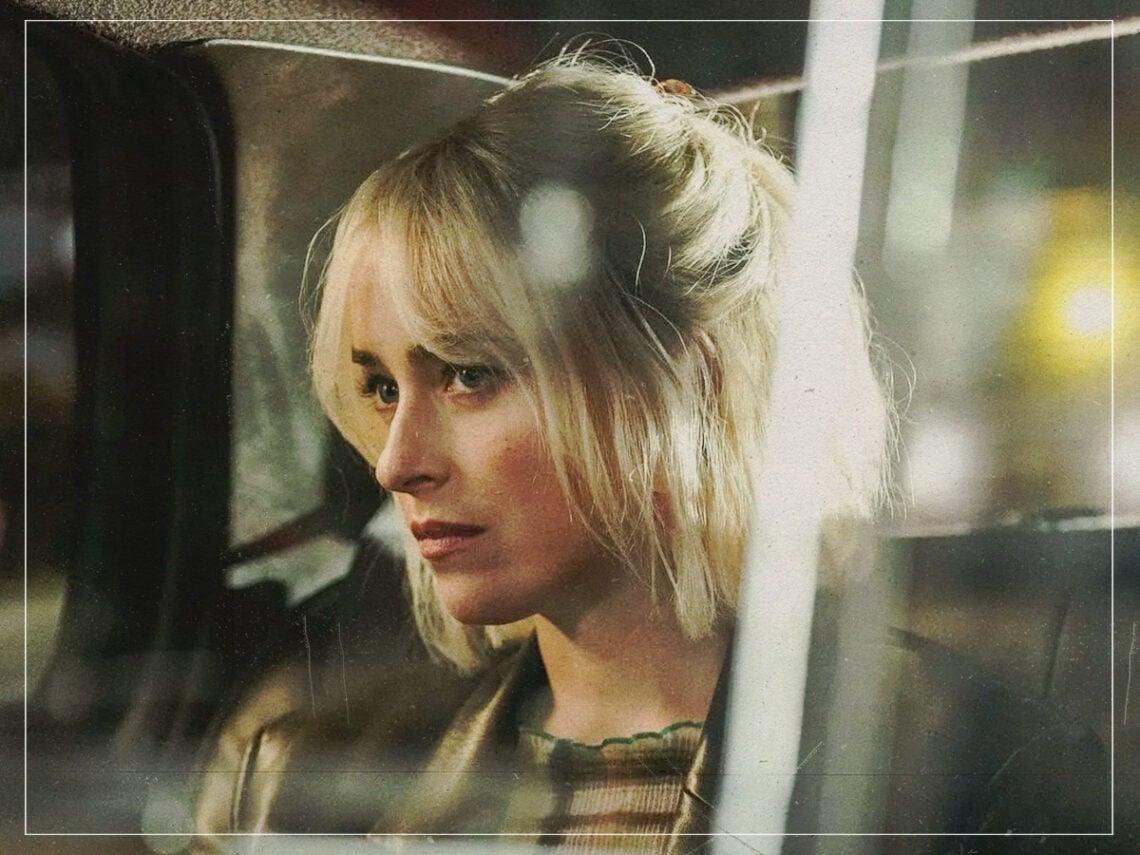
‘Daddio’ movie review: a consistently absorbing character study

Writer/director Christy Hall’s debut feature is a decided risk, a subtle personal drama that relies heavily on the work of two actors playing the only two characters in the entire film. Hall, the creator of the popular teen fantasy/drama I Am Not Okay With This, has launched her directorial career with a more serious challenge: a slow, dialogue-heavy interaction between people with no obvious affinity but which becomes a remarkable conversation that reveals more than either participant had expected. “If you talk to someone long enough, they will reveal their humanity to you,” director Hall commented in an interview, and her script tests that theory. Fortunately, Hall and her two lead performers are up to the task.
Sean Penn plays Clark, a 60-something cab driver in New York City. Dakota Johnson is the young, unnamed passenger he takes on the lengthy drive from the airport to her home. The extremely minimal plot unwinds over the course of the cab ride, with the camera remaining entirely and a touch claustrophobically within the cab interior, with very few exceptions. As the journey begins, the driver initiates casual conversation, and his young passenger readily chats with him.
At first, the discussion involves superficial topics such as weather and traffic, but gradually, the two move into deeper and more personal subject matter, ultimately wandering into personal philosophy, playful banter and verbal competitions, and friendly disagreements over matters like the differences between the male and female worldview. Their respective outlooks, coming from their differences in age, profession, sex, and education, emerge but are not permitted to interfere with their cautious rapport.
However, the actual conversation only gives a partial portrait of the two characters. The rest is provided, with meticulous care, through their reactions, facial expressions, and manner of speaking, at times providing a deeper understanding of a character’s real feelings, at other times suggesting that a statement was not entirely honest or complete. Additional hints come from the texts the passenger sometimes receives on her phone and her reaction to them – a key ingredient in the drama. The passenger is initially careful, as any woman travelling alone might be, refusing to give her name and providing only a street corner as her destination rather than a specific address, but she also meets the driver’s verbal challenges with considerable self-assurance. As the discussion becomes more personal and serious, we are often left with something of a mystery.
Are the driver’s observations on male-female relations realistic, based on his greater experience, or only the views of an older man bound by convention? Are they always sincere or merely an expression of bitterness over past regrets? Are his guesses about his passengers accurate, based on long experience, or mere prejudices? Are the young woman’s views on life and love accurate, or do they derive from youthful naiveté? Is she really as strong and independent as she appears? The answers are not provided for us, any more than for the two characters. The subject matter cannot be outlined in any detail, not because it would spoil the plot, but because the flow of the conversation is so carefully crafted in order to reveal what it needs to reveal in the proper order.
Sean Penn is at his most low-key and genial in the role of Clark, a confident man, kindly but plainspoken and with a slightly cynical take on life. Penn lives up to his well-established reputation in a role that requires precisely the right tone and the right interaction with his co-star. Dakota Johnson, meanwhile, manages to break through the expectations created by some less noteworthy roles with a performance that fits the bill perfectly, as restrained as the part calls for, yet emotive and quietly moving when necessary.
Both manage to express as much with their silent reactions as with their actual dialogue. Their casting was a stroke of luck: Dakota Johnson was first approached to act as producer, but after reading the script, she requested the female passenger role. Johnson, in turn, showed the script to Sean Penn, who was equally impressed and volunteered for the role of Clark. Hall explained in an interview that the impressive cast made it far easier to get financing for the project despite her lack of directorial experience.
Credit goes to the film’s seasoned cinematographer, Phedon Papamichael, for adding tremendously to the story through his creative camera work. As the two characters’ dialogue develops, the camera provides, as appropriate, a contained view of the cab interior; glimpses of the dark streets outside, blurred by city lights so that the exterior seems vague and distant; close-ups of the characters’ faces where needed; and at times, a view of Clark as seen by his passenger, or the young woman as seen by her driver. The outside world intrudes rarely, at well-chosen moments.
Director Hall had originally written the script as a stage play but realised that film would allow a more “up close and personal” experience and would be able to portray the intimacy of the scene as a stage performance could not. The end product, benefiting greatly from expressive camera work, shows that her instincts were correct. Despite the seemingly bare-bones storyline, the insightful script and credible characters draw the viewer in and make for a consistently absorbing character study and compelling human drama.
