


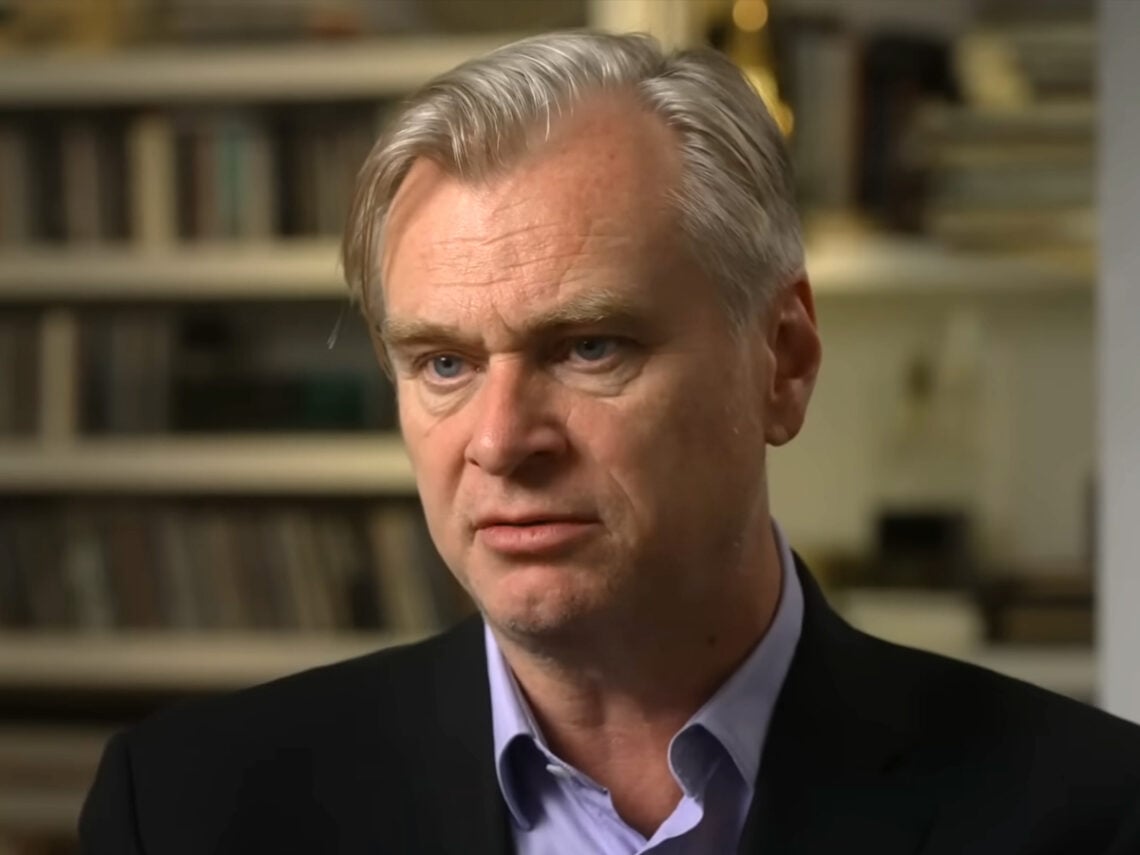
Christopher Nolan’s polite letter to safeguard the future of cinema: “Thanks for taking the time”

It struck me the other day while watching a fairly low-definition version of Ghostbusters on a quite old and rubbish TV, that actually it was much, much better.
It might well be that due to the constant push for technology to make things seem as real as possible, that we’ve forgotten what brilliant movies are really about: escapism. And it’s something that one of the greatest modern directors, Christopher Nolan, has been bringing attention to for years now.
There’s a retro-joy in watching films like that 1980s classic in the same, slightly grainy way they were released at the time, especially once they hit home video, and it’s a feeling that can’t really be replicated by 4K or 8K sets once the initial novelty of watching a film look like it was made yesterday wears off.
Nolan is a well-known luddite, but his movies, especially 2014’s Interstellar, have on occasion used visual effects to jaw-dropping success over the decades. He is a firm believer that any director’s original vision should be witnessed by a film’s audience as closely as possible – hence his utopian plea that the movies he makes, like next month’s epic The Odyssey, be witnessed on enormous IMAX screens wherever possible, because he was the first ever to use solely IMAX cameras.
And he has also been concerned about modern TVs and the technology employed by manufacturers that completely change the viewing experience of movies at home, more specifically motion smoothing, or the ‘soap opera’ effect that was originally designed to help reduce blur on fast action sports but that quickly became a default setting on most new televisions.
He is so concerned about it in fact that back in 2018 he co-signed on a letter with fellow director Paul Thomas Anderson that went out to the major TV brands in order to open a dialogue about getting some kind of mode built into their sets that could allow viewers to see films exactly as the men and women who made them intended.
Members of the Directors Guild of America were told about the letter via an email containing a survey to fill out with their concerns, stating: “By starting a dialogue with the manufacturers themselves we hope to try and give directors a voice in how the technical standards of our work can be maintained in the home. Thanks for taking the time to complete the survey, it’s a first step towards both demonstrating to manufacturers just how much we care about the presentation of our work, and offering some indications of the most common causes for concern.”


It didn’t seem to have much effect however, although for a time Netflix did work with Sony to produce a special setting on their top of the line TV sets that would default to a particular calibration without much of the technological trickery. At least the one thing Nolan can control is how people see his films in the cinema – especially if they splash out on the 70mm IMAX showings of The Odyssey when it releases on July 17th.
Nolan is a staunch traditionalist and won’t film on digital cameras, instead using physical film and even splicing and glueing it together in the edit. He even worked with Kodak for his 2023 movie Oppenheimer to produce a brand new 65mm black and white film stock.
Unfortunately there are only 31 locations in the world with the equipment needed to truly show films in this way, due to the enormous, specialised projectors required. Three of those are in the United Kingdom, two of which are in London and one at The Printworks in Manchester.
