


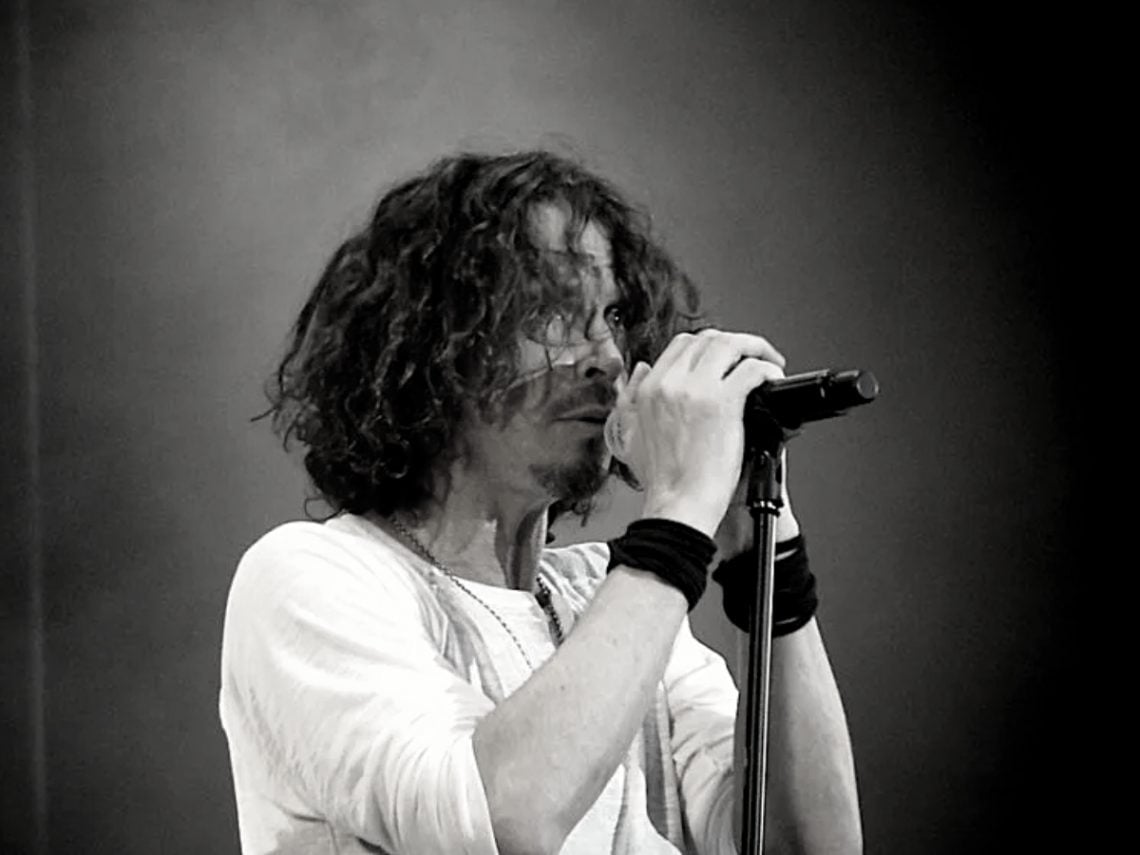
Why Chris Cornell compared himself to Bob Dylan

Part of Soundgarden’s appeal has always been indebted to the golden age of rock and roll. Although the rest of the Seattle scene was busy rebelling against the music that their parents raised them on, the sound of Chris Cornell‘s spectral croon had the same power and stamina as someone like Robert Plant from Led Zeppelin, consistently belting to the rafters under menacing riffs from Kim Thayil. When turning into his solo career, Cornell saw himself as a much different presence as an artist.
After Soundgarden decided to call it a day at the end of the 1990s, Cornell’s next move was to make solo acoustic music, coming up with the album Euphoria Morning before getting the call to join the former members of Rage Against the Machine for Audioslave. Though the music made on albums like their self-titled debut and Revelations were solid enough, Cornell was still looking to reach out beyond his normal capabilities.
Though the idea of a more experimental version of the living rock legend sounded fine, fans were perplexed when they heard the album Scream for the first time. Instead of the usual rock and roll, Cornell’s collaboration with modern producers like Timbaland led many fans to think that he had lost the plot a little bit.
When talking about his creative path, though, Cornell couldn’t help but think back to when one of his idols had the same backlash from his fans. Speaking to The Guardian, Cornell was reminded of the infamous Bob Dylan concert where he went electric for the first time. Since Dylan had been known as the leader of the folk revolution, some fans didn’t take kindly to the bold shift in direction, with one fan even calling Dylan ‘Judas’ for daring to move out of his comfort zone.
Cornell completely understood why those kinds of people were upset by Dylan’s change, and he once commented: “It’s funny because the first time I saw the No Direction Home documentary, I didn’t like Bob Dylan with the band as much as the parts of the movie where he’s on his own.” With his fans livid at the idea that the rock god was now embracing pop, Cornell appreciated the guts that Dylan had to take a risk among his audience.
When discussing the documentary, Cornell had a major takeaway when some Dylan fans reacted to his drastic change, explaining, “This guy says a really smart thing: ‘Well, that wasn’t like any pop music I’ve ever heard.’ And he’s right because that performance doesn’t sound like any other artist, even though it was approached with guitars, drums and keyboards.”
While fans might have learned to appreciate Dylan’s drastic change, time has not been kind to Cornell’s experimental album, sounding dated in some spots and suffering from meddling from a few too many producers some of the time. Then again, Cornell never was one to badmouth any of his records, just seeing it as one piece in the overall story of his work.
In essence, Cornell’s way of dealing with his own career wasn’t that far off from the mentality Dylan had most of the time. For every subpar album release that came and went, both Dylan and Cornell remained unafraid to follow their muse, looking to see what they could do with the medium rather than casually satisfying their fans on each release.

Never Miss A Tale
The Far Out Bob Dylan Newsletter
All the latest stories about Bob Dylan from the independent voice of culture.
Straight to your inbox.