


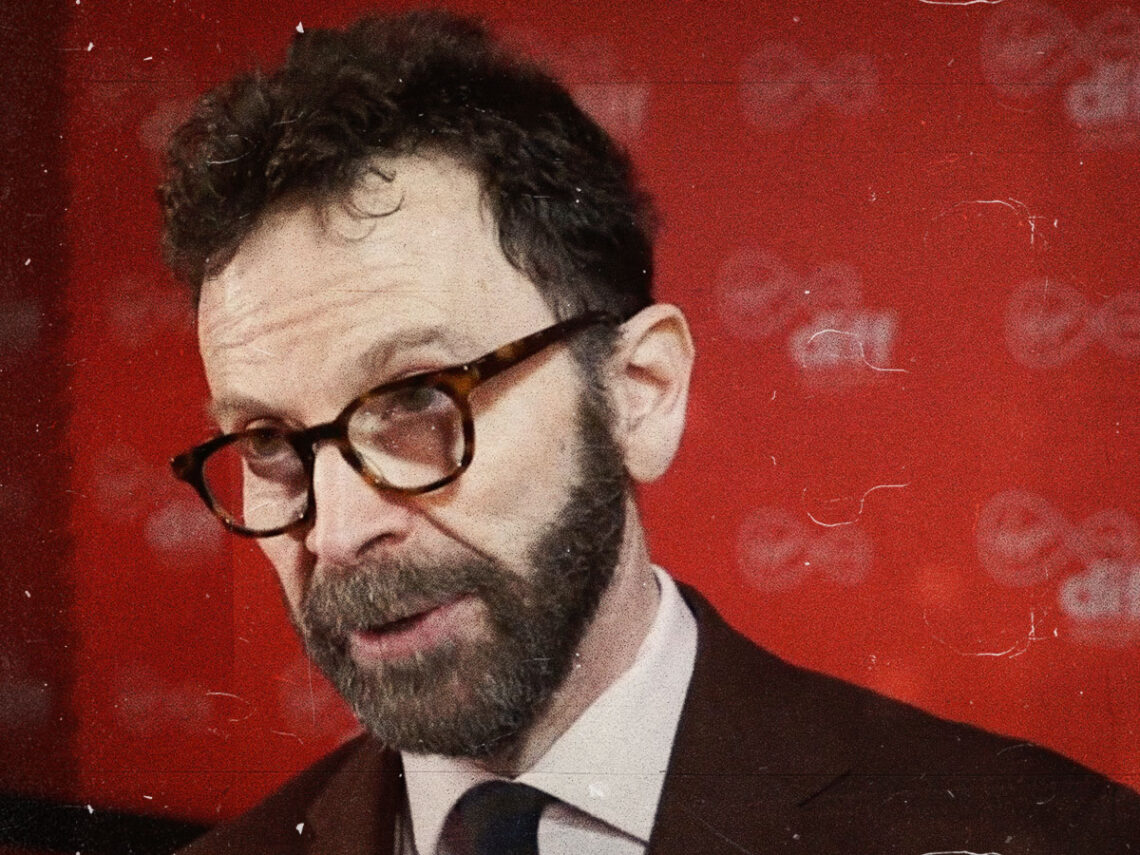
“It’s not my intent”: Charlie Kaufman isn’t being weird on purpose

Charlie Kaufman is one of those rare talents whose screenwriting endeavours had Hollywood excitedly awaiting whatever project he had coming next. However, upon his directorial debut, the excitement dissipated. The head-scratcher Synecdoche, New York might have starred Philip Seymour Hoffmann and been critically acclaimed, but it tanked at the box office. And while it’s garnered a cult following, Kaufman doesn’t seem to have completely recovered his beloved status.
His first script was for Spike Jonze’s surrealist comedy Being John Malkovich, which garnered the Oscar for ‘Best Original Screenplay’, setting him up as one of those writers associated with a very specific, mind-bending and usually critically acclaimed type of film. Followed by another Oscar nod with Jonze’s Adaptation and another win with Michel Gondry’s cult classic Eternal Sunshine of the Spotless Mind, it seemed like Kaufman was on a roll with his weird, idiosyncratic writing.
His directorial pursuits, though, haven’t paid off quite as well as was expected, and some might put this down to the weird, ‘mindfuck’ quality of his work. It seemed to pay off in his writing, but for some, the hare-brainedness doesn’t quite translate into directing. However, most who would describe his work as such are those who love the filmmaker.
Many online lists feature Kaufman’s films under the increasingly popular “mindfuck” subgenre (alongside other regulars like David Lynch and Christopher Nolan), and they certainly do just that. However, the director doesn’t quite set out to mess with our heads so much.
“I have heard that description of things I’ve done, but I don’t set out to do that,” he told Variety. This is hard to believe, given his films have featured strange characters like a puppeteer who finds a portal into John Malkovich’s mind, a couple who have their memories of each other erased and an ailing theatre director whose plays blur the line between fiction and reality. And, honestly, who knows what I’m Thinking of Ending Things was really about.
However, there is another thing that his screenplays and films have in common. Their emotion and humanity. While it might seem like Kaufman sets out with strange plots, non-linear narratives and a unique approach to memory in an attempt to discombobulate, it seems that he’s actually trying to get to the heart of what it means to be alive.
These unique narratives allow the audience to dislocate themselves from the importance of the plot as a way to zero in on the emotions felt by the characters and themselves. This is the best way to enjoy Kaufman; disregard the symbolism of the action and focus on what it is that action is trying to make you feel. In that way, Kaufman’s films begin to feel less like a mindfuck, or they’re telling us that real life is the mindfuck, and that’s the only truth there is.
However, Kaufman doesn’t seem to mind too much what people gain from his work or see in it. “I think the way to approach one’s work is to put it out in the world and let it do what it does. So if people want to call it a mindfuck or say I’m weird, that’s their prerogative. But it’s not my intent.”
He might be trying to get to the emotional core of life, but if all you get out of his films is ‘wow that was weird’, it doesn’t bother him. He knows where his intentions lie, and if we just let his unique way of storytelling wash over us, perhaps we can see them, too.
