


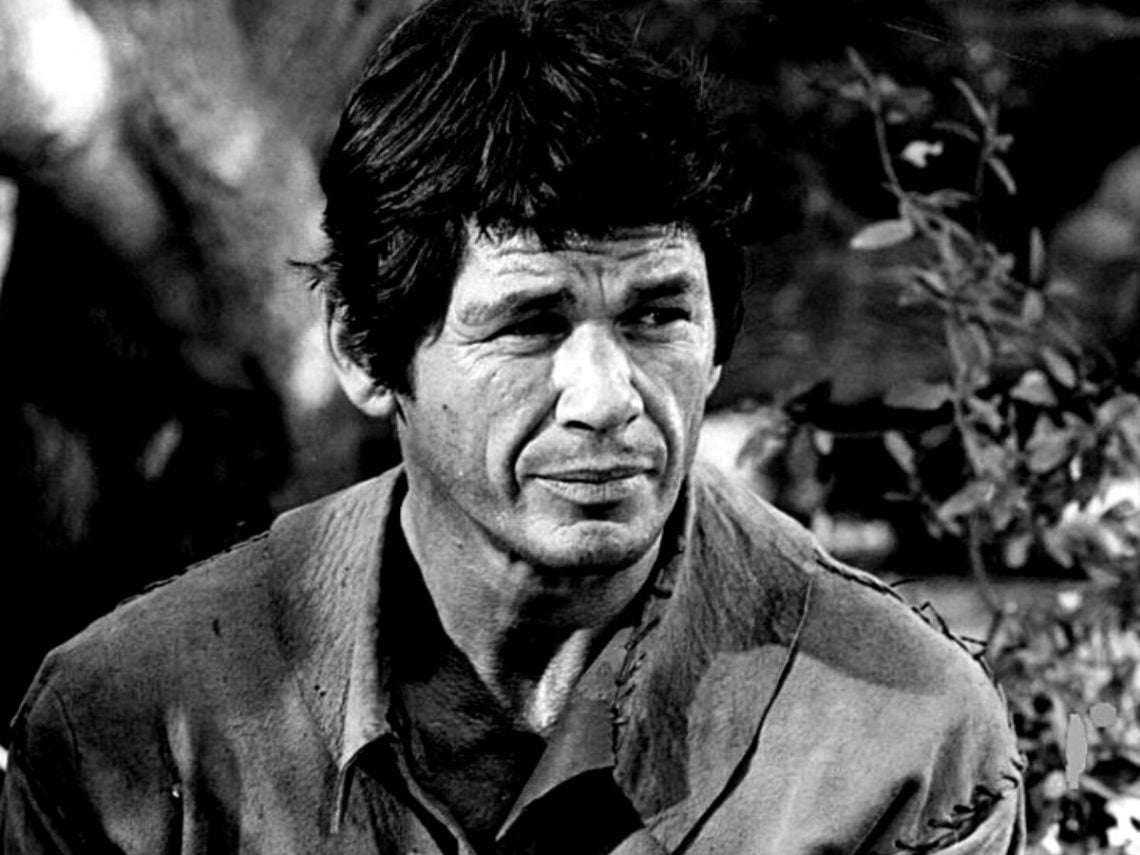
Analysing Charles Bronson’s “tough guy” onscreen persona

Hollywood loves a typecast character actor, one who becomes easy to recognise and enjoy for their trademark onscreen personas. Known for his brawny physique, actor Charles Bronson gained international fame as one of Hollywood’s tough guys in action, western, and war movies. Having initially started out as a supporting player, going by his birth name Charles Buchinsky, he transformed into a leading man credited with his new screen name.
Having worked with ‘The Pope of Pop Cinema’ Roger Corman and acclaimed director John Sturges during his career, Bronson appeared in a number of roles that relied on his toughness and brawn to tell the tale, forging a genuine cinematic “tough guy” persona. The hopeful actor worked several odd jobs before entering the film industry in the early 1950s, and his early supporting work was spent playing henchmen, thugs, and other “heavies”. When asked about his workout regime, as implied by his impressive shape, Bronson gave all credit to these heavy labour jobs in his youth.
His first leading role arrived in 1958, taking his position in Corman’s Machine Gun Kelly. This role is characterised by an obsession with submachine guns as based on the real-life gangster of the same name, emphasising the sense of danger and edge. His performance as Gun Kelly is what brought Bronson to the attention of mainstream critics, leading him to then be cast as an Irish-Mexican gunslinger in The Magnificent Seven in 1960.
Bronson then appeared in Sturges’ now-iconic picture The Great Escape as a claustrophobic tunnelling expert, taking a short break from the stern tough roles he was racking up. Three years later, he stepped into the gritty shoes again, appearing onscreen as a southerner with a disrespectful attitude in This Property is Condemned. Director Robert Aldrich then cast Bronson as a prisoner-turned-commando in The Dirty Dozen as his career snowballed with growing success.
However, it was his early 1970s roles in Red Sun and Adieu I’ami that really proved Bronson’s potential as a star-studded leading man. He then went on to appear in Brain Garfield’s 1974 film Death Wish as Paul Kersey, an architect who becomes a vigilante after his wife and daughter are attacked during a home invasion. This is the role that characterised the rest of Bronson’s career, as his strong figure and menacing stare would make him one of the toughest action stars.
Fastforward to 1988 – now established as one of Hollywood’s greats – Bronson played a vengeful, yet musical gunman in Sergio Leone’s epic spaghetti western Once Upon a Time in the West. Bronson plays the nemesis of Henry Fonda, in his own usual typecast as a villain. The moment Bronson appears with his signature harmonica, he infiltrates the scene with his intense persona and powerful energy. Bronson barely moves, yet it’s all in the eyes, as the actor stares each of his co-stars down and commands attention with a few powerful sentences. Essentially, Bronson was able to execute his tough guy image in mere seconds of screen time.
The actor’s brawn on the big screen came from a personal place. He had previously served in the United States Army Air Forces as a bomber tail gunner during World War II, and there’s no doubting this impacted his aura. Bronson was also open about his difficult childhood due to living in poverty, revealing how it shaped a perception of how brutal reality could be. These are the experiences he channelled into his performances, exemplifying a realistic and sharp presence that is no stranger to struggle. This struggle is what later festered into the strength the actor demonstrated in front of the camera. Bronson was inspired to start acting after being shown a play by a friend. For him, acting just “seemed like an easy way to make money”.
However, this statement soon became an understatement as, by the time he started working on Death Wish, Bronson was reportedly among the best-paid actors of his generation. When it came to getting in front of the camera, he didn’t approach the task as a way to work out artistry, he was simply doing a job. Bronson seemed to acknowledge his on-screen persona and the responsibilities that came with it making a film. The actor said: “I’m only a product like a cake of soap, to be sold as well as possible.”
He also shared that he believed the action pictures he was producing at the time didn’t provide much time for acting. “I supply a presence,” he famously said. “There are never any long dialogue scenes to establish a character. He has to be completely established at the beginning of the movie, and ready to work”.
Bronson’s final theatrical appearance was in Death Wish V: Face of Death, followed by a TV movie trilogy called Family of Cops in the late 1990s. A hip replacement surgery caused the star to retire before he passed away on August 30th, 2003, at the age of 81.
