


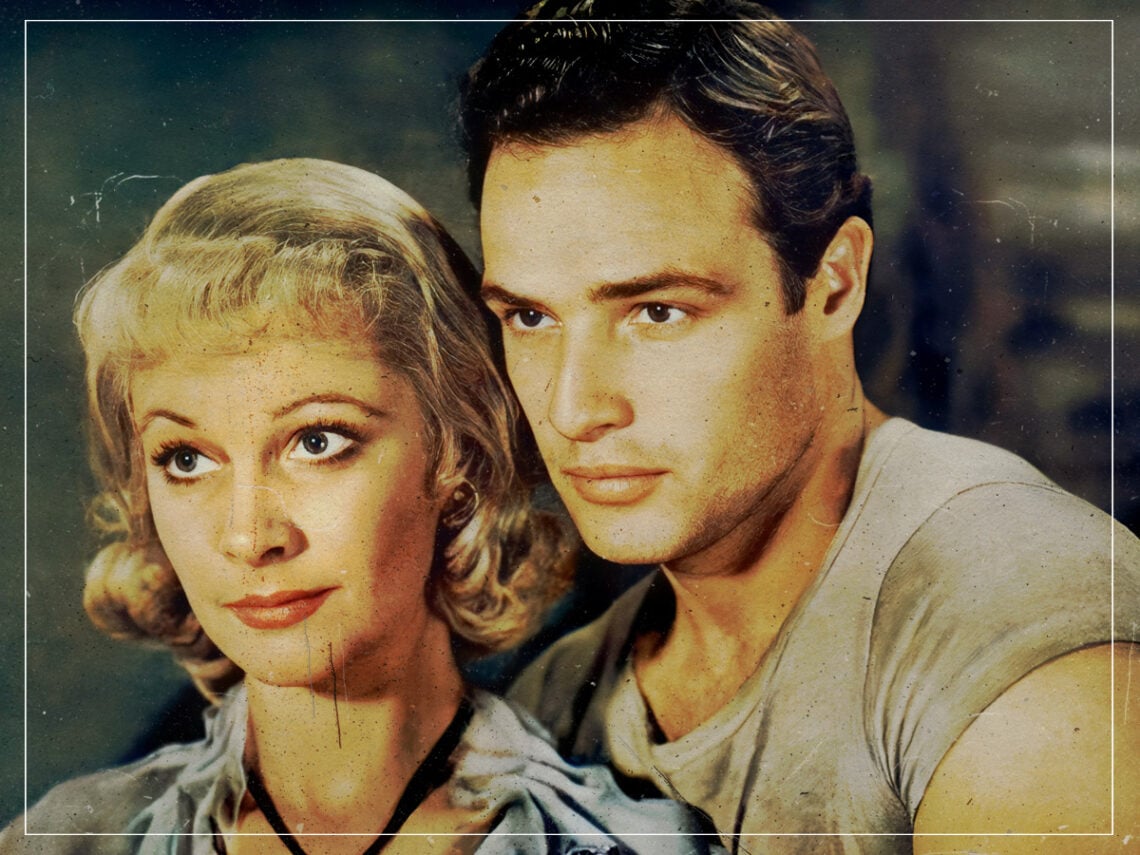
Stanley Kowalski: The character Marlon Brando thought he was the “antithesis” of

Throughout his remarkable career, Marlon Brando delivered some of the most intense and memorable character portrayals in the history of cinema. A true icon of the big screen, Brando established himself as one of the first method actors by diving far into the psyches and physicalities of his roles.
Whether playing a hardened mob boss in Francis Ford Coppola’s The Godfather, a renegade colonel in the same director’s Apocalypse Now or a problematic American widower in Bernardo Bertolucci’s Last Tango in Paris, Brando always came through with performances of a mesmerising quality.
Having begun his career on the stage, Brando made the successful transition to cinema with an effort in Elia Kazan’s A Streetcar Named Desire, released in 1951, based on Tennessee Williams’ 1947 play of the same name. Brando was virtually unknown in the film industry at the time, but following his turn as Stanley Kowalski, he earned his first ‘Best Actor’ Academy Award nomination and announced himself as a massive star.
Brando had already played the role of Stanley Kowalski in the original Broadway version of the play, which had also been directed by Kazan. A Streetcar Named Desire tells of a former southern belle who decides to move away from her affluent life following a series of personal losses and begin living with her sister and brother-in-law (Stanley Kowalski) in a shabby New Orleans tenement building.
Stanley Kowalski is depicted as an unempathetic, hardened and impatient man with a short temper that sometimes leads to domestic violence. In playing one of his most famous characters, some critics had felt that Brando was indeed playing a version of himself, perhaps not knowing the lengths he was going to in giving his character an air of authenticity.
In a piece written for the Seattle Times, Brando spoke of Stanley Kowalski and how he felt he was far away from having any kind of his characteristics. “A few writers have suggested that in portraying the insensitive, brutish Stanley Kowalski, I was really playing myself; in other words, the performance succeeded because I was Stanley Kowalski,” Brando explained.
Having “run into a few Stanley Kowalskis in my life”, Brando understood the kind of personality features that he would need to imbue his version with, i.e. “muscled, inarticulate, aggressive animals who go through life responding to nothing but their urges and never doubting themselves, men brawny in body and manner of speech who act only on instinct, with little awareness of themselves.”
However, Brando was insistent that he was nothing like Stanley Kowalski, claiming, in fact, that he was the “antithesis” of everything that Williams’ character represented. “I was sensitive by nature, and he was coarse, a man with unerring animal instincts and intuition,” Brando noted.
According to Brando, he didn’t have to do any research when it came to creating his vision of Stanley Kowalski, despite going to great lengths to understand his parts later in his career. “He was a compendium of my imagination, based on the lines of the play,” the actor explained. “I created him from Tennessee’s words.”
Indeed, there’s a power in Brando’s performance in A Streetcar Named Desire that might suggest that he had indeed tapped into parts of his own psyche to bring Stanley Kowalski to live, but the truth is that Brando saw himself as an empathetic person, which most actors often have to be if they are too succeed in their portrayals.
