


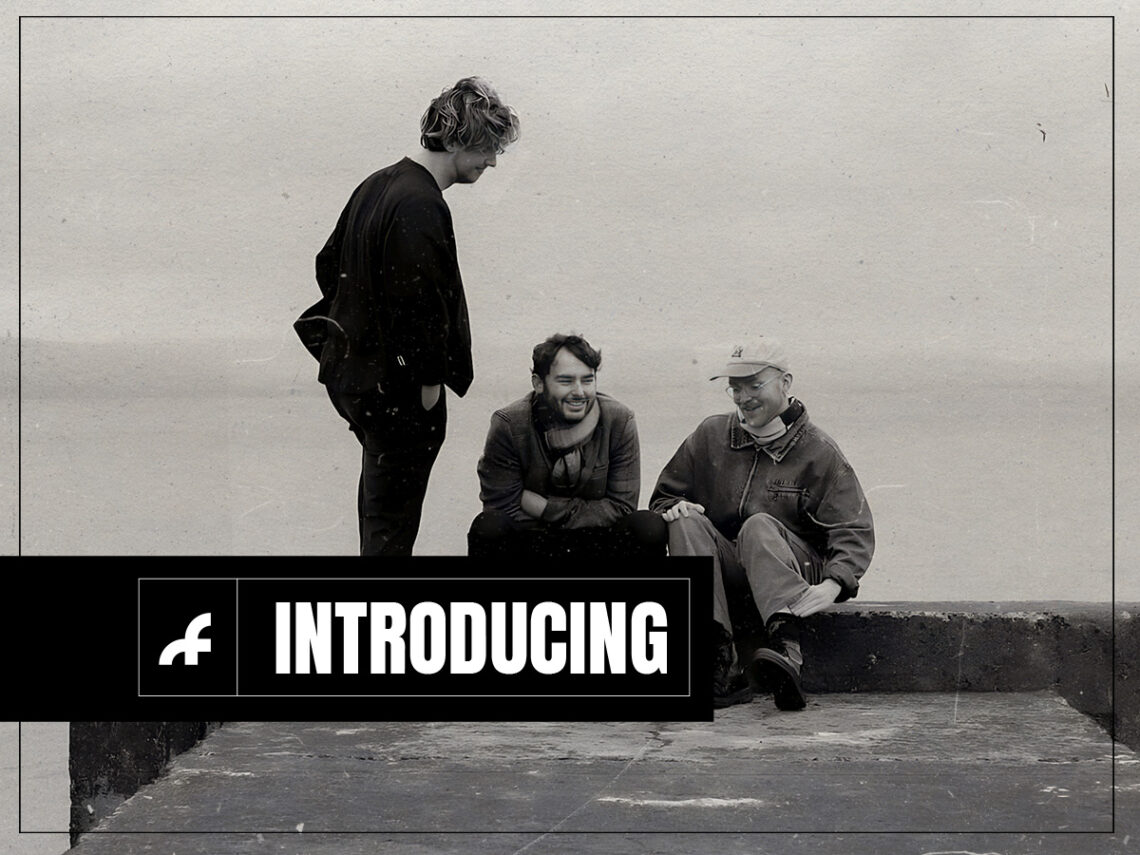
Meet Chalk, your new favourite punk band

People say that history repeats itself, but it doesn’t. Parallels can be drawn throughout history; wars have always occurred, as has corruption; people have always fallen in love, and people get sad, angry, horny, and everything in between, but it’s not repetition. To call it repetition takes away from the past, present and future, the idea that past tragedies mean nothing, present problems are pointless, and the future is doomed. History doesn’t repeat itself; some actions reoccur, and we pick them out, as is human nature. History is the constant, and music is history. In that sense, Chalk isn’t a new punk band. Instead, they are and always have been inevitable.
Musical history is fascinating, as it follows culture around like a shadow. In the 1940s, ‘50s and ‘60s, free jazz and noise music became much more popular. In terms of ideology, this was an early iteration of punk, as it was used to voice frustrations with the outside world during a time when outlandish language and rebellion were particularly frowned upon.
By using deconstructed notes, sporadic rhythm and harsh sounds, the music was inaccessible, reflective of the composer’s attitudes to the world outside of it. Then, this little thing called punk came along and brought words to the forefront. Calling the Queen inhuman and openly opting for anarchy was a floodgate moment, as suddenly, frustration could be voiced in plain English rather than done sonically.
A lot of punk bands have since spoken about what they hate, and shortly after the establishment of the genre, hip-hop also came to fruition, music that relied heavily on words and has also been used as a means to highlight injustices. It has become the case that the word is the thing turned to the most for any kind of emotion, the point that now, half a century after the punk movement, it is in some ways played out.
Words aren’t just in music; they’re everywhere. Thanks to social media, the internet, and generally having access to everything that ever was or will be in the palm of your hand, the verse is losing its ferocity. You cannot escape words; you’re reading them now, and these probably aren’t the first you’re seeing today, and likely won’t be the last you’ll see either, so to have access to them so much and then also have them be the main focal point in the music you listen to can be exhausting. As such, sound is back. Enter: Chalk.
Chalk represents a new wave of punk bands who have returned to using lyrics as a layer of their sound rather than them being the entire foundation. The emotion they try to convey comes through sonically, in what sounds you hear, as opposed to what they tell you. Their new single, ‘Claw’, is an excellent representation of this, which will form a part of their upcoming EP Conditions II. They have described the EP as what it feels like to fall in love inside of a nightmare, and that comes through with every second of the new track.
“For lyrics, it’s usually a ‘don’t think, do’ process,” the band told Far Out, “Sometimes it’s a good line, other times it’s a load of nonsense. There’s often a few lines written that prompt the theme, or if we need inspiration, we might put a film on and draw some imagery from that. We’re all fairly collaborative when it comes to the lyrics.”
While the lyrics certainly play into the theme of their songs, a lot of the time, it’s the way they’re said that conveys the feeling as opposed to what the actual words are. This continues throughout their music, which adopts hard rock and noise elements to express feelings such as anger and anxiety.
“Our first single, ‘Them’, explores how our anxieties can visit us in our dreams. It was mostly delicate delivery, but [I] knew I [wanted] to shout the chorus line,” they add. “The power chords in the guitar and anvil sounds gave me something to grab onto and allowed me to explore anger in a way I hadn’t with our own songs.”
It works both ways, too, as their sounds can convey happiness and hope, as is the case in their track ‘Conditions’. “The lead guitar in the mid-section was the first part written and immediately conveyed the feeling of hope to us. So it was important to carefully build parts and the arrangement around that so the message came across.”
Just because sound is regaining the top spot when conveying emotion in music, it doesn’t mean history is repeating itself. When free jazz and noise came about, they were prevalent because people couldn’t use words as freely; now, there are so many words that their meaning can often be lost when used in music. As music follows culture, Chalk represents a new age of punk that relies on sonic interpretation instead of literal meaning. Not history repeating itself, just actions and a new strand of history altogether.

Never Miss A Beat
The Far Out Punk Newsletter
All the latest Punk content from the independent voice of culture.
Straight to your inbox.