


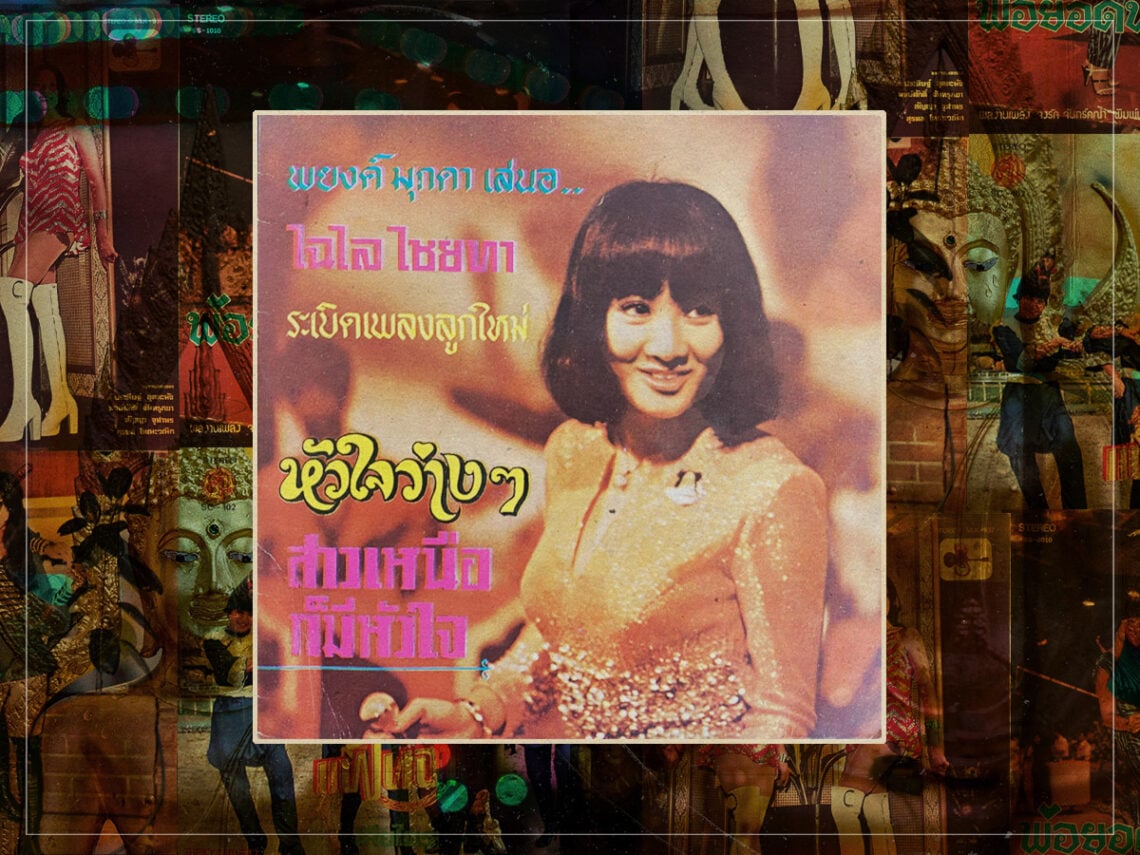
Chailai Chaiyata: How a beauty school student became a Thai pop master

Pop music is a universal language, beloved by everybody from the outback of Australia to the icy landscapes of Greenland. Since the dawn of popular music, each region and country has fostered its own unique take on the prevailing sounds of pop. During the mid-20th century, amid a backdrop of political unrest across Southeast Asia, Thailand boasted a particularly inventive, captivating pop scene, dominated by the distinctive tones of Chailai Chaiyata.
Thailand has something of a unique history within Asia, being the only state in the region to avoid Western colonialism, while its neighbouring nations were rapidly being divided up among Western powers. Perhaps as a result of this unwavering independence, Thailand has often managed to hold on to its cultural roots and heritage in ways that colonialism might not have allowed. At the same time, however, Thailand has long since provided a place for travellers from all across the world to visit, leaving their own marks on the cultural landscape of the country.
This diverse and expansive cultural history quickly permeated into the pop music of Thailand, which emerged during the 1960s as local Thai groups attempted to emulate the rock and pop sounds emanating from the UK and the USA, while instilling their own traditional Thai influences into proceedings. Arguably, it was during the 1970s that Thai pop and rock really hit their stride, with groups like Caravan crafting defiant political anthems that provided a voice to Thai youth, and vocalists like Chailai Chaiyata redefining the sound of Thai pop.
Inevitably, for a pop star who existed almost exclusively in Thailand over half a century ago, details on Chailai Chaiyata are pretty scarce, particularly in the Western world. However, it is thought that the vocalist was born in the San Kamphaeng district of Chiang Mai, in the northern part of Thailand, and that she attended beauty school during her younger years. After this education, so the story goes, Chaiyata took a job selling Shinawatra silk with her sister, before succumbing to the allure of music.
A gifted vocalist, she reportedly began performing at a nightclub called Blue Moon, where she earned 50 baht per day (around £11, when adjusted for inflation). From there, she moved on to another nightclub in Khon Kaen and began a recording career at the same time. Early records saw the vocalist collaborate with fellow Thai pop master Sawanee Patana on a unique blend of pop, funk, disco, and a litany of other musical influences to create a sound that defied genre and international borders.
When it comes to Chaiyata’s discography, it is difficult to find specific release dates, let alone sales figures, but she seemed to reach the peak of her cultural impact during the 1970s, amassing an audience all across Thailand. Over the course of her career, she released three studio LPs, either in a solo capacity or alongside Sawanee Patana, and unveiled many more singles, typifying the golden age of Thai pop and crafting some of the most sonically diverse pop records ever recorded, regardless of where they came from.
Tragically, Thai pop has gone consistently overlooked by the Western world, and it has only been in very recent years that modern ‘T-pop’ has gained traction on social media. However, Chailai Chaiyata remains one of the best-kept secrets in Asian pop music, with her music sounding as fresh and exciting today as it must have done all those years ago.
A notable jewel in her extensive discography is the track ‘Kwuan Tai Duew Luk Puen’, an uncharacteristically confrontational pop-funk masterpiece, with a title roughly translating to ‘You Should Die By Bullets’. If that doesn’t convince you to convert to the cult of Chailai Chaiyata, nothing will.
