


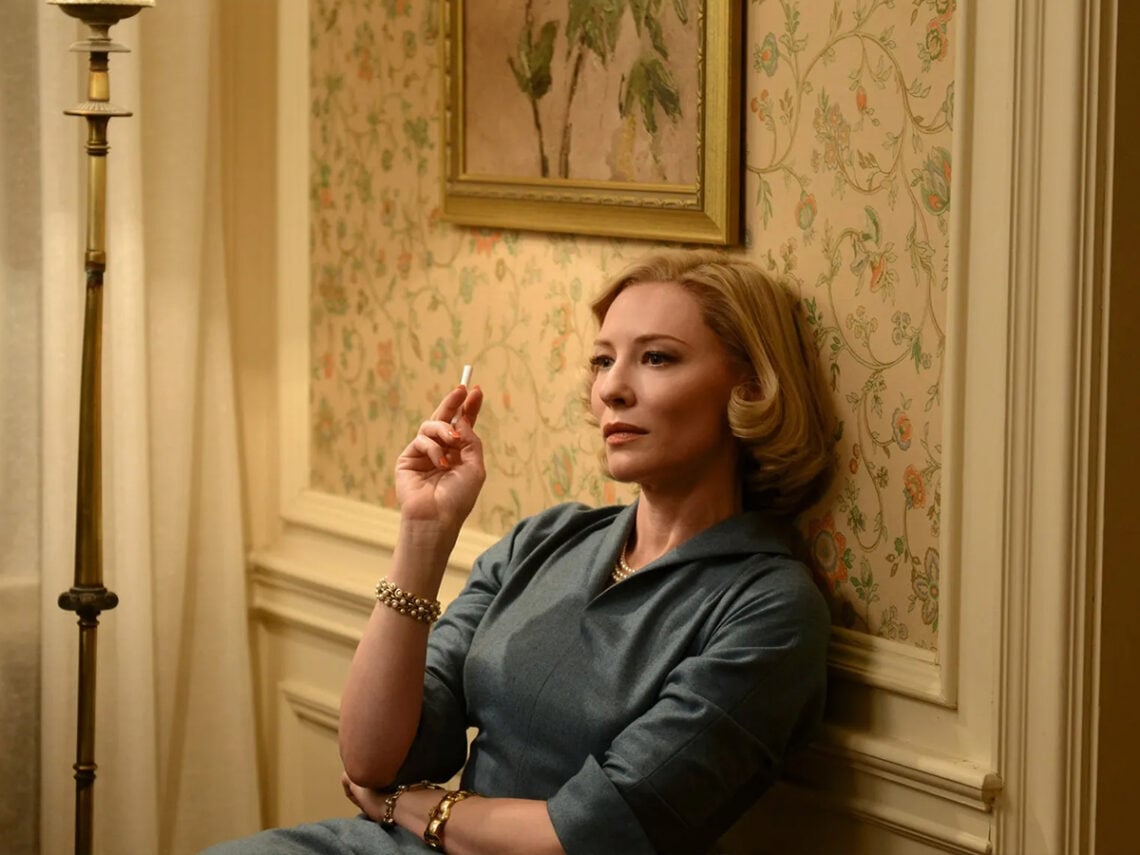
Cate Blanchett explains why ‘Carol’ struggled for funding

Actor Cate Blanchett has appeared at the Toronto International Film Festival as part of a long-ranging conference about her career. During the conversation, the star explained why she thinks the film Carol struggled to acquire appropriate financing.
At the Royal Alexandra Theatre, Blanchett, who is attending the festival for Alfonso Cuarón’s TV show Disclaimer and Guy Maddin’s movie Rumours, appeared in front of a huge crowd of fans to talk about several topics, including the risks of making big-budget films.
At one point, the two-time Academy Award winner spoke of how she deals with disagreements with her directors and focused in particular on a moment that came during the making of Carol by Todd Haynes, with whom Blanchett has collaborated on several occasions.
The moment Haynes struggled to light a scene in the film, Blanchett and her co-stars had to give the director some space to find a solution. “There is a misconception somehow that making the film, when it’s great, it’s like summer camp, and I’ve been on a couple of those, and the films have been fucking awful,” Blanchett noted.
Carol saw the Australian actor play a middle-aged woman who begins a romantic affair with Rooney Mara’s character, a younger woman who works in a department store. According to Blanchett, releasing the film was a big difficulty due to funding issues.
“At one point, another director was going to do it, and he got sort of taken off the project,” she explained. “It was a five-year period, because no one wanted to fund it at that point. No one wanted to see… who was going to watch a film with one woman, let alone two women, falling in love?”
Blanchett thinks that there is a deep problem in the film world with women’s position and how they are perceived in narratives. The actor goes on to suggest that more proactive decisions need to be made to improve women’s prospects in modern cinema.
“We do think about how much still has to change within the industry in terms of equity, inclusion and making films more sustainably,” Blanchett pointed out. “But, you know, we have made huge advances.” Still, Blanchett believes that a lot of the female-led movies of recent years have stood out from the male-centric entertainment industry because their “vibrant” natures show “voices less homogenous.”

Never Miss A Scene
The Far Out Film Newsletter
All the latest film news from the independent voice of culture.
Straight to your inbox.