


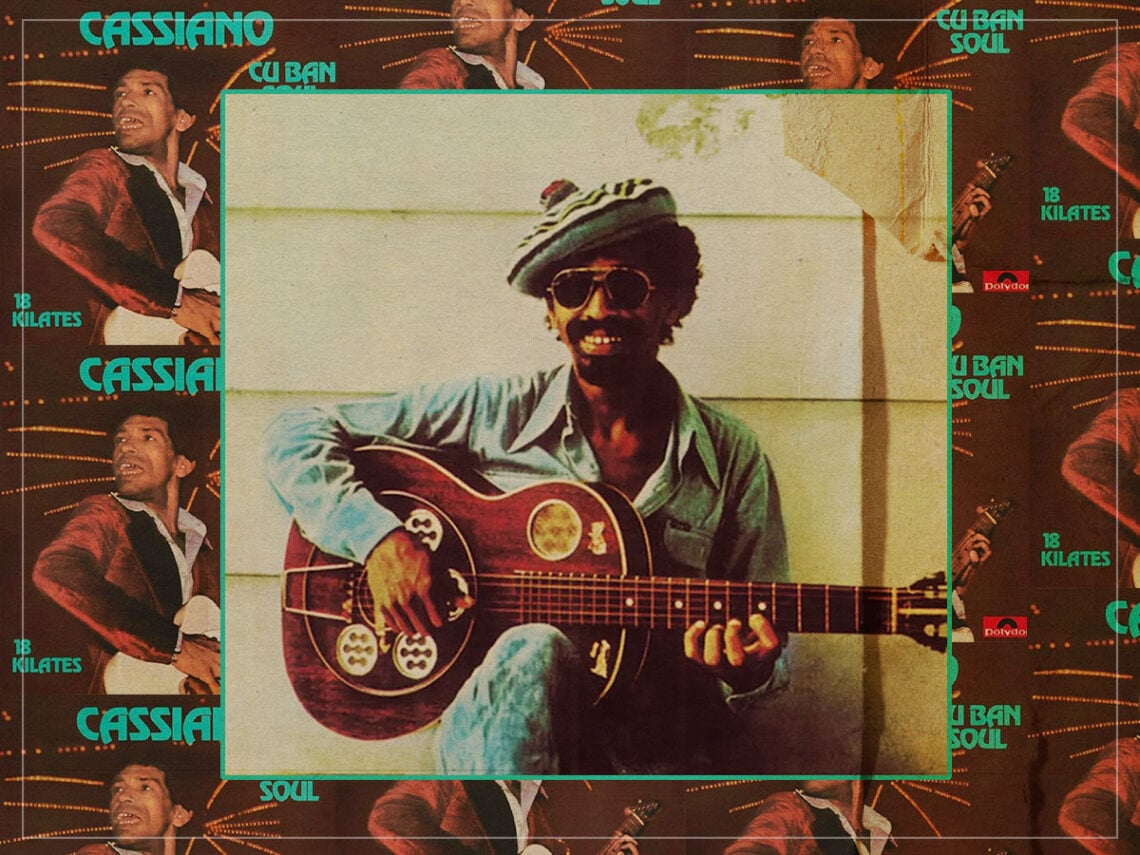
Cassiano: The underappreciated genius of Brazil’s funk and soul pioneer

Soul music might have its roots in the Black communities of the Northern United States, but its musical appeal has always been universal. Early records in the late 1950s and early 1960s put soul music on the map, and labels like Motown Records, Stax, and Atlantic were tireless in their quest to bring soul to mass audiences. By the mid-1960s, soul was a global phenomenon, replicated everywhere from Detroit to Brighton Beach. Even the bossa nova land of Brazil produced its own incredible soul scene.
Brazil has always boasted a particularly vibrant cultural landscape, going back hundreds of years. However, the mid-20th century was a particularly prolific period in the nation’s musical output. Elsewhere, the 1960s were viewed as a beacon of freedom, music, and revolutionary artistic expression, but in Brazil, the focus was placed almost exclusively on the political turbulence of the era.
In 1964, a coup d’état deposed the democratically elected leader of the country, replacing his presidency with a repressive military dictatorship that took a less-than-sympathetic view of the nation’s artists and musicians. The year was a turning point in the history of Brazil, both politically and culturally.
In the wake of the coup, musicians across the country began to create defiant anthems that protested against the dictatorship while celebrating the cultural heritage and traditions of Brazil. These attitudes transformed the sounds of bossa nova and paved the way for a new musical revolution in the South American nation. It is no coincidence that 1964 was also the year that Brazilian audiences were introduced to Cassiano.
Hailing from Campina Grande in the northeast of Brazil, Genival Cassiano dos Santos relocated to Rio de Janeiro—the centre of Brazil’s musical explosion—during his childhood. During his younger years, Cassiano cut his teeth playing with a group called the Bossa Trio, playing the style of samba jazz that had come to define the sounds of Rio during the early 1960s. However, it was not until the young musician went out on his own that his position in the history of Brazilian music was cemented.
At the same time that Cassiano was playing samba around Rio, the sweet sounds of soul and Motown were sweeping the United States. Fellow Brazilian musician Tim Maia had visited the US and had discovered the infectious tones of Otis Redding, Stevie Wonder, and all the other now-iconic musicians establishing soul in the States. When he returned to Rio, Maia began establishing a soul scene in Brazil, and he recruited Cassiano to play on his 1970 album.
That album was a turning point in Cassiano’s career, setting him on a path to becoming one of Brazil’s greatest supporters of funk and soul music. His debut solo album, Imagem E Som, was released in 1971, and it remains a soul masterpiece. It blended the catchy tones of American Motown and R&B with the timeless sounds of Brazilian samba, bossa nova, and folk. Tracks like ‘Ela Mandou Esperar’, in particular, are some of the most infectious soul songs ever put on record.
Following that debut album, Cassiano was on the path to an incredibly promising career as a soul performer. He released two more records, Apresentamos Nosso Cassiano in 1973 and the Caribbean-infused Cuban Soul in 1976, and grew a reputation as a leading figure within the world of Brazilian soul. Before too long, however, his career took a tragic turn.
By the late 1970s, Cassiano had achieved mainstream success in Brazil, but record labels still weren’t convinced by his potential. CBS passed up on the opportunity to support a fourth album, and, at the same time, the musician’s health took a severe turn.
Part of the musician’s lung was removed in the late 1970s, which forced him to temporarily abandon his musical career and look after his health. When Cassiano returned to music, releasing Cedo Ou Tarde in 1991, he was disenfranchised with the work, and the poor reception of the album led to him abandoning music entirely.
For decades, the pioneering soul star lived as a recluse in his Rio apartment, unable and unwilling to return to his life in the Brazilian music scene. Genival Cassiano dos Santos passed away in 2021 after his lung issues grew worse. Even still, his life and legacy are still carried on by the swathes of artists and soul fans across the world who continue to revere his work for its pioneering quality and unique sound.
