


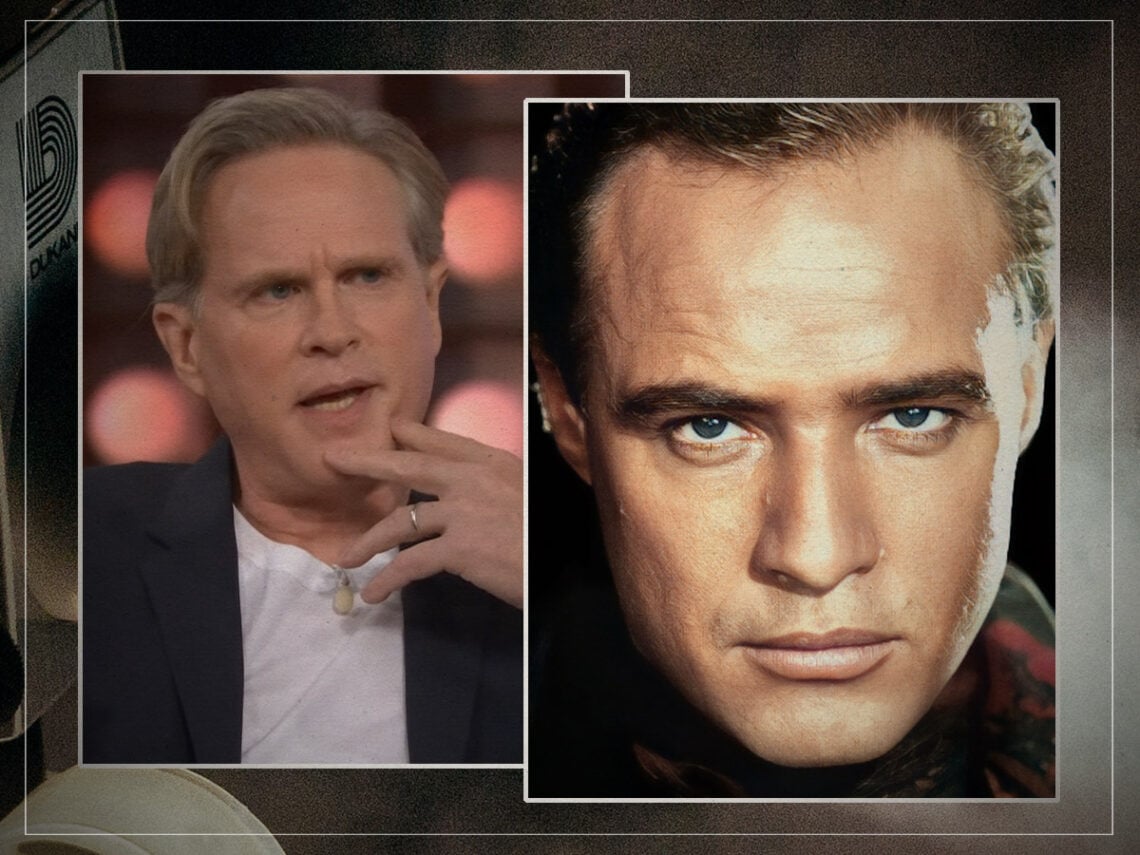
When Cary Elwes was employed as a Marlon Brando wrangler: “He mainly wanted desserts”

Most people who worked with Marlon Brando have a story or two to tell about the reclusive, elusive, and frequently apathetic method man, but few of them are as bizarre as Cary Elwes’ first job on a movie set.
Regarded by many of his peers as the single greatest actor in cinema history, there’s no denying that when Brando was operating at the top of his game, he was unmatched. Unfortunately, the longer his career went on, the less likely it was for him to do anything other than phone in his performances.
Still, because he was Marlon Brando, the two-time Academy Award-winning icon who changed the face of acting forever, it required a hefty salary to convince him to commit to any production, even if the directors and cast members knew there was a high chance he’d get up to his usual tricks.
Before he’d even made his screen debut, Elwes found that out for himself when he was tasked specifically to ensure the Godfather legend didn’t shirk his responsibilities on the set of Richard Donner’s Superman. Even though he was paid millions for what was a glorified cameo as the title hero’s father, Jor-El, Brando repeatedly tried to convince the producers that his presence wasn’t needed onscreen.
His mindset didn’t change once he’d arrived at the studio, and when he couldn’t be arsed showing up on time, a 16-year-old Elwes was dispatched to coax him out of his trailer. Superman began shooting in March 1977, two years before the actor made his maiden screen outing in Yesterday’s Hero and a decade before his breakthrough turn in The Princess Bride.
He was only a fresh-faced kid with designs on making it in the industry, so when an assistant director fell ill and he had some spare time on his hands, he was assigned a difficult task. “My job was to get Marlon out of his trailer,” he told The Telegraph. “Marlon had no incentive to be on time, because his agent had struck the most amazing deal for him.”
Brando’s deal stipulated that he’d be paid an extra million dollars for every day beyond the 12 he’d agreed to. Naturally, that didn’t give him much impetus to stick to the schedule, so Elwes used what he described as “some comedy” on his part in an attempt to save Superman a small fortune in extra costs.
“How did I manage it? Mainly with food,” he explained. “Once you fed Marlon, he was in a much better mood. So I tried to find delicacies that appealed to him, which were limited at Shepperton at the time. He mainly wanted desserts.”
The mental image of Elwes leaving a trail of sweet treats from the door of Brando’s trailer for him to follow to the set is undeniably hilarious, even if it probably didn’t happen that way. An aspiring teenage actor dealing with one of the all-time greats must have been an incredible experience for the youngster, even if tracking down sugary snacks so that he wouldn’t sit around doing nothing all day wasn’t what he’d imagined.
Elwes must have done something right anyway, seeing as Brando didn’t go beyond his 12 days.
