


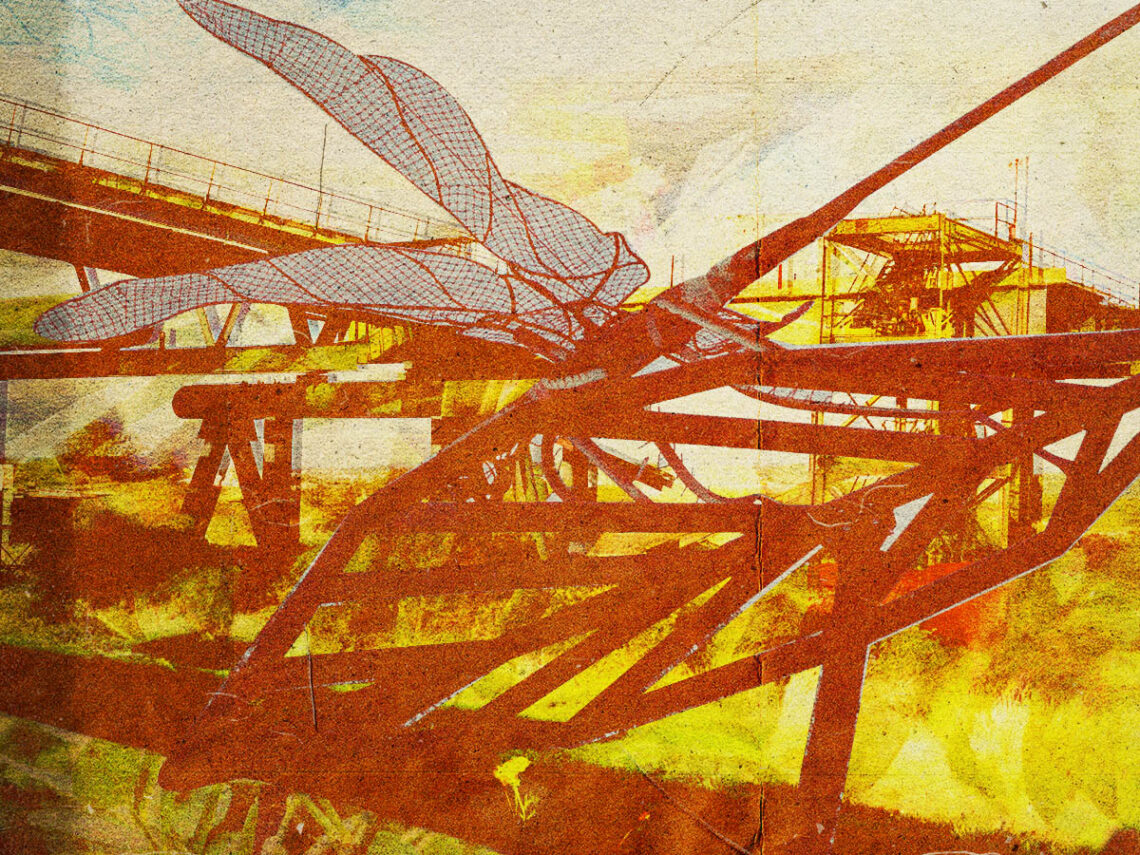
Canvey Wick: Exploring England’s most unlikely nature reserve

You know you live on a small island when you can walk from a Morrison’s car park into a bonafide wildlife haven in the time it takes to eat a packet of monster munch. In the vast landscapes of Canada, America and even Romania, it’s easy to forget about the churn and swirl of cities. In Britain, it’s more common to emerge from a patch of heathland and find yourself on a motorway.
The earliest European country to industrialise, Britain has been eulogising its landscapes for almost as long as it’s been destroying them. As our cities have spread outward, the meadows, woodlands and marshes that once provided habitats for countless insects, birds and mammals have been systematically eradicated. Thankfully, nature has returned to some of those former grazing lands. Take Canvey Wick, for example, a post-industrial wildlife haven just outside London.
Canvey Wick has a rather odd life story. Tucked away in the southwest corner of Canvey Island, Essex, this 93-hectare stretch of land was once used as a grazing marsh by sheep farmers, as well as salt harvesters, fishermen and shellfish cultivators. The age-old farming techniques used here for some 2,000 years allowed for a plethora of wildlife to develop in harmony with the few hundred people who called Canvey Wick their home. For centuries, this crop of land was known only to those who were born and died here, but at the turn of the 20th century, tourism came to Canvey Island. Before low-cost package holidays did away with the traditional British seaside holiday, the area was a busy seaside resort. Then, when the holidaymakers stopped coming, Canvey Wick was adopted as the centre for England’s petrochemical industry.
Things were far from cushty for the Nightingales, Whitethroats and wildflowers of ’70s Canvey Wick. A thriving habitat that had remained practically untouched for hundreds of years was suddenly a building site. At the turn of the decade, US firm Occidental Petroleum secured permission to build a six-tonne oil refinery, depot and deep-water jetty on Canvey Wick, ripping up the marshland and covering it with silt, gravel and shell. With this once-pristine landscape devastated, the energy crisis of the mid-70s put everything to a halt. The global economic crisis, one triggered by Middle Eastern nations slashing oil production in reaction to America’s support for Isreal during the Yom Kippur War, meant there just wasn’t enough money to finish the development project. With that, Canvey Wick was abandoned.
It wasn’t until the 1990s that the larger refinery structures were finally demolished. But already, there was talk of plans to turn Canvey Wick into a housing estate complete with business and retail parks. If it hadn’t been for a campaign launched by the local community, this remarkable haven for wildlife would have been buried beneath a thick layer of concrete. For the next few years, nobody knew what to do with the area. This inaction gave Canvey Wick time to recover. The dredged areas once intended for the oil refinery created free-draining conditions perfect for wildflowers, and countless rare varieties began springing up. Today, it’s regarded as a refuge for countless rare species of flowers and invertebrates. Though seemingly desolate, this “brownfield rainforest”, as it is known, is a biodiversity hotspot home to nearly 2000 invertebrate species, including one of Britain’s rarest bumblebees, the shrill carder.
Every year new and lost species are being discovered and rediscovered. The variety of soil types created during the development and subsequent abandonment of this area gave birth to a range of soil types, transforming Canvey Wick into what ecologists call an “open mosaic habitat”. Away from the meadows, where fennel, evening primrose, and sweetpea grow tall under mackerel skies, there are asphalt pads ideal for cold-blooded reptiles like such as slowworms, common lizards and adders – Britain’s only poisonous snake.
You need only take a train across the UK to see just how many industrial sites have been left to rust. Unlike Canvey Wick, many of these places are unprotected, meaning the chances of them becoming wildlife hotspots are rather slim. But with committed habitat restoration work (Canvey Wick only opened to the public in 2014 after a long restoration project), these areas could offer us the opportunity to live alongside rich landscapes teeming with life.
You can find out more about Canvey Wick by visiting The Land Trust website. Located just 30 miles outside the capital, the reserve is easily reachable from London and makes a great day trip. The gates are open from 9.00am to 5.00pm and there’s a car park nearby. Entrance is free. Huzzah.
