


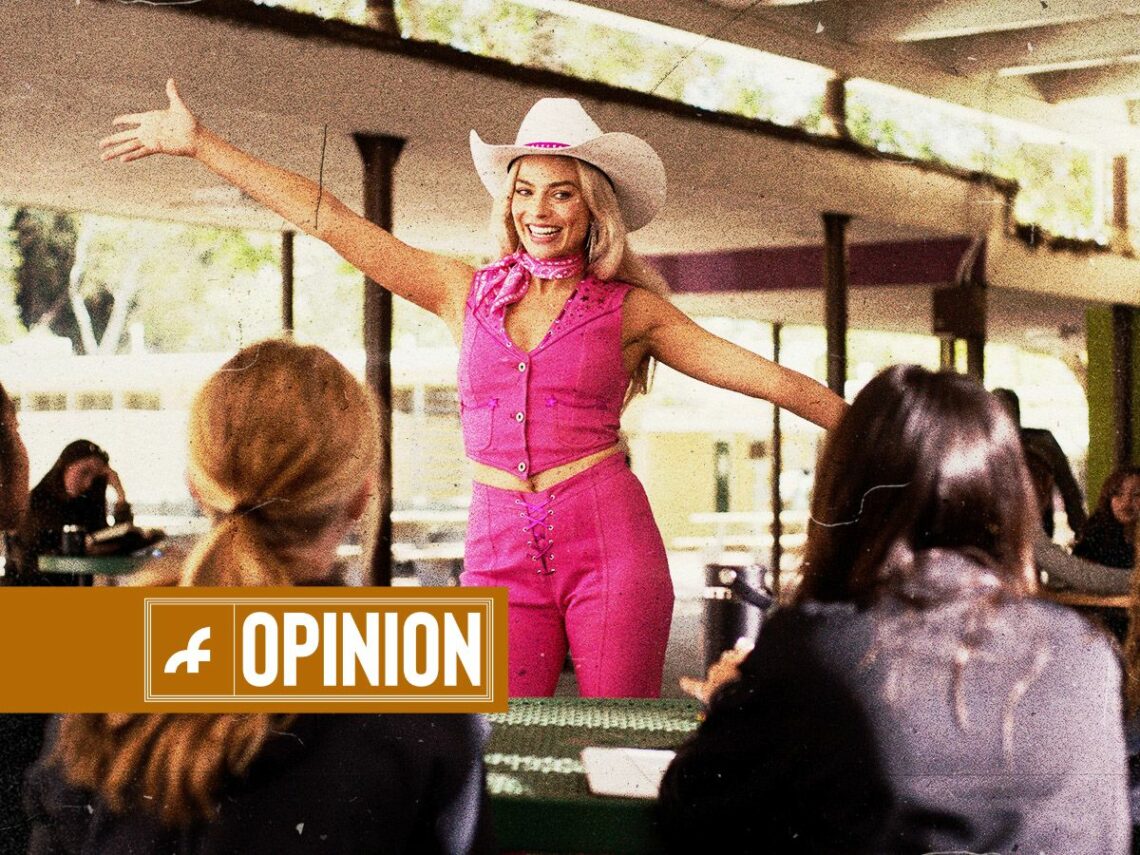
Can there ever be too much hype around a movie?

In a world where pop culture increasingly dominates the conversation, the media landscape around upcoming movies often becomes an excruciatingly loud cacophony of speculation, anticipation and tightly wound, highly strung, borderline-delirious levels of hype. Case in point: the yet-to-be-released Barbie film. As the screen adaption of the world’s most famous doll readies itself to sashay into the limelight, anticipation has been ramping up to fever-pitch levels.
A mere surface-level glance at film forums and cineaste circles online will reveal to you that something akin to a cult has formed around Greta Gerwig’s upcoming feature. As far as the internet is concerned, Barbie is queen, and this decade’s cultural zeitgeist has already been mass-produced, boxed up and stocked on the shelves, ready for purchase. But the problem is, the damn film isn’t even out yet! Does all this hype promise a blockbuster hit, or merely set up audiences for crushing disappointment?
For the culturally illiterate, ‘hype’ is essentially the intense promotion and build-up leading to a product’s release. In terms of etymology, there are two very interesting theories: Firstly, it may derive from the term ‘hyperbole’, which effectively means ‘exaggeration’. Secondly (and much more revealingly), some believe it comes from the old-fashioned slang use of ‘hyper’. The meaning of that? A term to describe someone who has swindled someone else…language origins aside, in the context of movie marketing, hype could range from strategically dropped trailers and interviews, exclusive sneak peeks, celebrity endorsements, viral social media campaigns and even fan theories. It acts as a bridge between filmmakers and audiences, instigating conversations, fostering anticipation, and, perhaps most importantly, setting expectations.
There’s no doubt that hype can play a pivotal role in a film’s success. The 2019 Avengers: Endgame is a prime example. Building on a decade-long narrative arc, the Marvel Cinematic Universe built a palpable sense of excitement for what was dubbed the ‘ultimate crossover’. Fans and media alike dissected and discussed every trailer, poster, and interview at length, fuelling the fires of anticipation. The result? Endgame not only shattered box office records but also managed to meet the sky-high expectations of its legion of fans. If you don’t believe me, take your pick of any of the countless real-time theatre response videos, which show audience members shrieking and pulsating with excitement when Captain America takes Thor’s Hammer, Iron Man snaps his fingers, or Spider-Man appears. In fact, the more I think about it, perhaps the new definition of hype should simply read: Avengers.
On a tamer but nonetheless effective end of the hype spectrum, a film like 2007’s Paranormal Activity demonstrates how a well-orchestrated hype can propel an indie movie to monstrous levels of mainstream success. Armed with a shoestring budget and a novel concept, the film relied heavily on word-of-mouth and strategically planned screenings to generate buzz. The audiences’ collective curiosity and a unique marketing campaign turned the film into a cultural phenomenon, grossing nearly $200million worldwide. It was effectively the 21st-century version of The Blair Witch Project, which came only eight years earlier in 1999 and is widely regarded as the first film to utilise viral marketing. It’s now become synonymous with, if not literally kickstarted, hype culture.
However, riding the wave of hype is a double-edged sword. Recall the notorious example of that same year’s Star Wars: Episode I – The Phantom Menace. With a 16-year gap since the last instalment and an eager fanbase, the hype was astronomical. Yet, when the film finally hit the screens, it fell flat. Critics and fans alike were disappointed, and what was touted as the triumphant return of Star Wars was quickly dubbed a massive letdown. George Lucas even received death threats. This is how potentially and genuinely dangerous hype can be. If you purposefully whip fans up into a near-primal level of emotion, you better hope that’s going to stay positive — if that same energy transforms into something else, you’re in serious trouble.
Another case in point is the 2012 John Carter. Disney’s colossal marketing campaign had set expectations sky-high, touting the film as the next big thing in science fiction. However, upon release, the movie was universally panned, struggling to recoup its production budget and ultimately deemed one of the biggest box office flops in history. Reflecting on the film’s downfall, director Andrew Stanton stated, “We didn’t get the word out about what the movie really was. The perception was not in line with the reality.” Let’s just look at that again, shall we? “The perception was not in line with the reality.” That’s a wonderfully diplomatic way of saying, “We overhyped it”.
So, is there really such a thing as too much hype? Speaking incredibly broadly, yes. A more balanced and granular opinion? Still yes. While hype undeniably plays a significant role in attracting audiences, sparking initial interest and selling tickets, it almost always sets unattainable expectations. Take Christopher Nolan’s Tenet. It really is, at its core, an interesting and ambitious movie. But after the barrage of hype, the incessant emphasis on it being “the next Chris Nolan movie”, the speculation as to whether audiences will need a second viewing to understand it before they’ve even seen it a first time… By the time audiences made it to the auditorium and switched their phones off, I would argue that there was a subconscious desire to challenge the movie and prove the hype wrong.
The blame lies in part with the marketing and sales teams, but the biggest culprit is us. What’s the benefit of generating this vogue aura surrounding Barbie? Exacerbated by meme culture and the rapid-fire evolution of social media trends, the steam from the Barbie train has almost run out before the film even hits the theatre screens. I’ve seen Barbie/Oppenheimer jokes gain popularity and become obsolete between the first and second trailers. The benefit is non-existent; overhype is a lose-lose situation. The best-case scenario is that it meets expectations, which is about as riveting as a plane landing at its scheduled arrival time. But when a film breaks through the screen, seizes you, pulls you into its world and spits you out a changed human being, without expectations… I’m talking 2016’s Arrival or Spider-Man: Into the Spider-Verse, or even the first Pirates of the Caribbean movie… now that’s the true power of cinema.
Like any form of art, movies should ideally let their inherent quality do the talking. Hype, therefore, should be viewed as a tool to pique interest, not as a guarantee of quality. After all, as audiences, we would be better served to judge a film by its narrative prowess, the strength of its performances, and its thematic depth rather than the mind-numbing and downright imitating clamour that precedes its release. If Barbie turns out to be incredible, it will be in spite of the hype, not because of it.
