


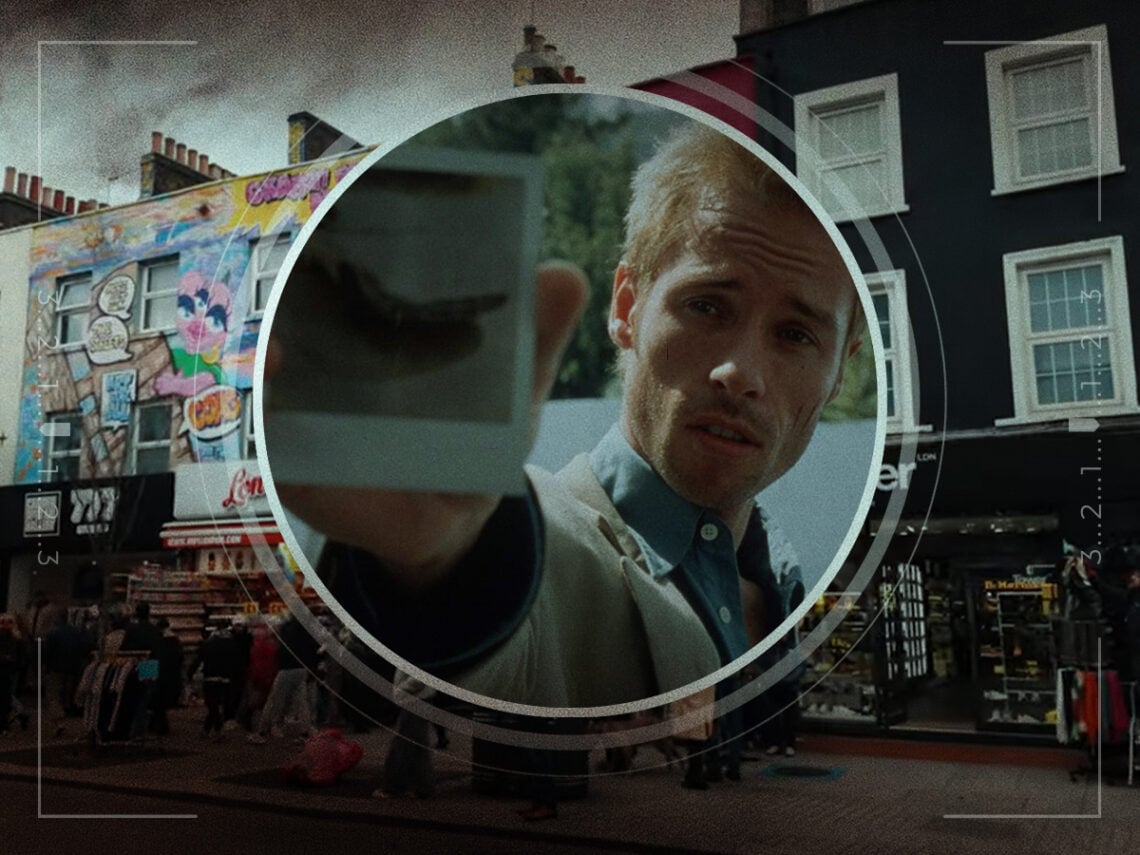
The Camden street brawl that inspired ‘Memento’: “It was one of those moments”

Before Christopher Nolan became the Oscar-winning director of Oppenheimer, an IMAX connoisseur, and the creator of one of the most acclaimed superhero trilogies, he started out making small-budget movies, using just $6,000 to make his debut feature, Following.
Utilising the help of his friends and family, Nolan was able to make a film that would get him recognised, and within a few years, he was in a position to make a bigger film, Memento. When I say ‘bigger’, I don’t exactly mean ‘big’, as Memento was still a rather low-budget movie compared to the average Hollywood film, with the English director given a budget of between $5million to 9m, but still, that was a considerably more than Nolan was used to; he almost didn’t know what to do with it.
Memento has since become one of the director’s most beloved works, an early 2000s classic praised for its unique approach to structure and memory. Earning a ‘Best Original Screenplay’ nomination from the Oscars, Nolan suddenly had a sense of what a career as a successful filmmaker could look like. Not long before, he’d been studying at University College London, and now he was an Oscar nominee.
The film sees Guy Pearce play a man who sustains anterograde amnesia following an apparent home invasion, which resulted in the death of his wife. While Leonard survives the attack, this short-term memory condition leaves him unable to remember who was responsible for the crime. Told in a non-linear structure, the protagonist tries to figure out what happened, using various mementoes to get a clear picture of that tragic night.
The screenplay was based on a short story written by Nolan’s brother, Jonathan, with an event that occurred when the former was living in Camden, informing the narrative and its overarching theme of memory.
While residing there as a student, Nolan witnessed a brawl in the street between a man and a woman, and he was left unsure of what to do. “They were clearly a couple; it wasn’t like a random attack, but I couldn’t just walk on,” he explained via The Nolan Variations by Tom Shone, “It was one of those moments that you really remember emotionally because you ask yourself, OK, what do I do? You know the right thing to do, but you also know you are afraid of it.”
Another member of the public helped to disperse the fight, and the filmmaker quickly ran over to calm the man down; yet, his brother seems to think he was there with him that night. “Now here’s the interesting thing: I was talking about this story years later with my brother, and he is 100 per cent convinced that he was there with me. And I don’t think that he was. I genuinely don’t,” Nolan said.
The fact that neither of the siblings can be sure is fascinating, and it was this complete breakdown of what was real and what was imagined that helped to inspire Memento. “I believe that I told him about it. He was staying with me, and I went home,” Nolan recalled, noting that his brother may have been 14 or 15 at the time of the incident and he had told him about it “in great detail, and I think he…well, the truth is, I don’t know whether he was there or not.”
“Some issues you can verify one way or another, sort of figure it out, but a lot of them you can’t. And that’s why people talk about recovered memory syndrome, because the truth is, our memories don’t work the way we think they work. And that’s what Memento is all about,” he concluded.
