


‘By Night with Torch and Spear’: Joseph Cornell’s avant-garde cinema

Within the landscape of American experimental film, Joseph Cornell was undoubtedly among the most interesting figures – both from an artistic as well as a biographical point of view. Often associated with the fascinating traditions of assemblage, Cornell was a pioneering visual artist whose works influenced other important filmmakers like Stan Brakhage. While he has been immortalised by film history, that wasn’t the case during his lifetime.
Almost a perfect example of the reclusive artist, Cornell spent the majority of his life in a small house on Utopia Parkway in New York City. Isolated and distant from the centre of the avant-garde circles, he devoted a lot of his time to his craft while also taking care of his mother and his disabled brother. Having developed his style on his own, Cornell’s art dealt with found objects and the aesthetic as well as philosophical elements that concern their existence.
Despite his relative isolation, Cornell managed to stay in touch with many of his contemporaries and also gained a reputation for being the most prominent American Surrealist, which piqued the interest of European artists. Unfortunately, after his work was screened at the Museum of Modern Art in 1936, Salvador Dalí decided to pick on Cornell and told him that he should stop trying to be a filmmaker. Although Cornell rarely conducted any screenings after that horrible encounter, he never gave up on cinema.
While his filmography will be of interest to all film fans, one particular experiment that is especially noteworthy is his 1942 work By Night with Torch and Spear. A strange collage made from found footage, this particular project was practically unknown until Cornell passed away in 1972. Discovered in his extensive collection of private reels after his death, the film was fortunately preserved due to the efforts of the Anthology Film Archives.
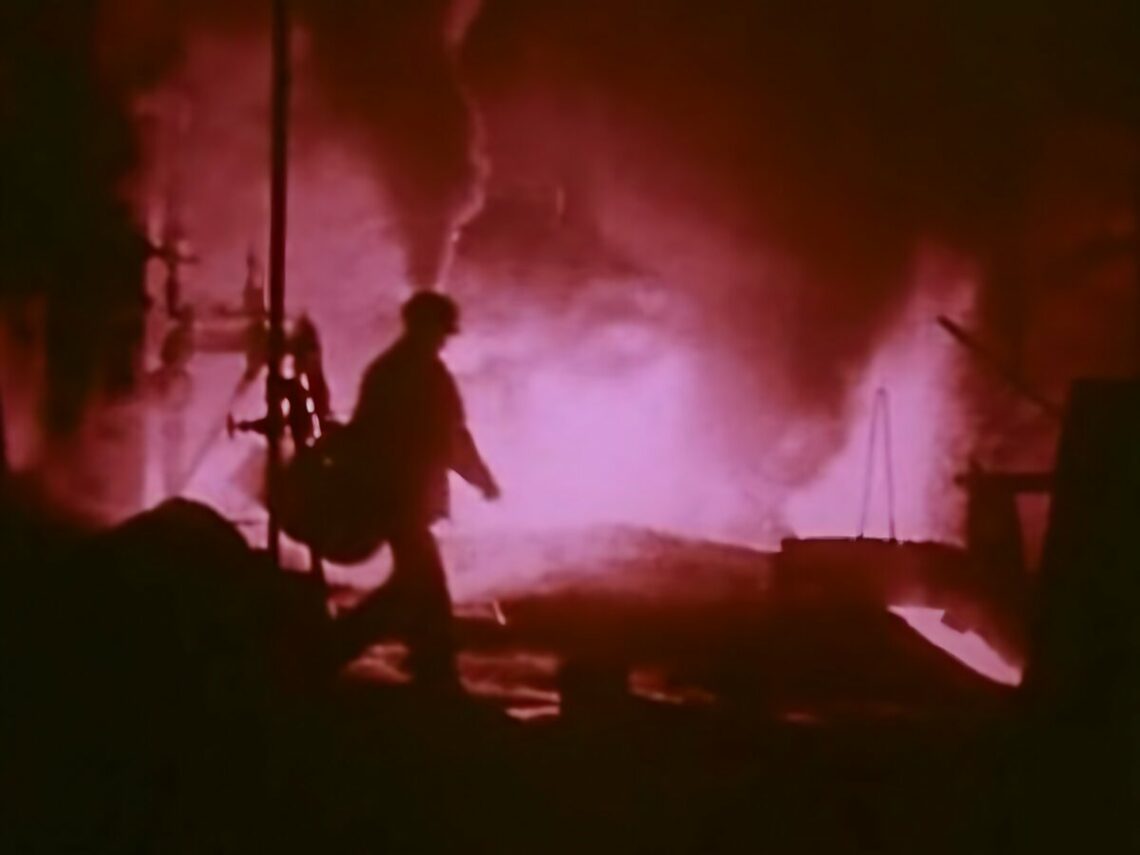
Seemingly divided into three segments, the indecipherable cinematic experiences presents us with inverted images of a factory that is consumed by powerful flames and tended to by faceless workers. This central theme of inversion plays a significant role in By Night with Torch and Spear since the intertitles are inverted too (almost like they are written in a completely different language), as is the narrative chronology.
Moving away from the industrial age, Cornell takes us through visions of the West, the East and the Egyptian desert before descending to the world of insects. It’s a journey to the origins of the world, one that hasn’t yet been touched by the unavoidable corruption of the future. One of the most striking images within the film comes at the very end, featuring two men – one armed with a spear and the other with a torch that doesn’t illuminate much – wading out into a black sea under the cover of complete darkness. Very few images have the power to represent our civilisation as a whole, and that’s undoubtedly one of them.
Watch the film below.
