


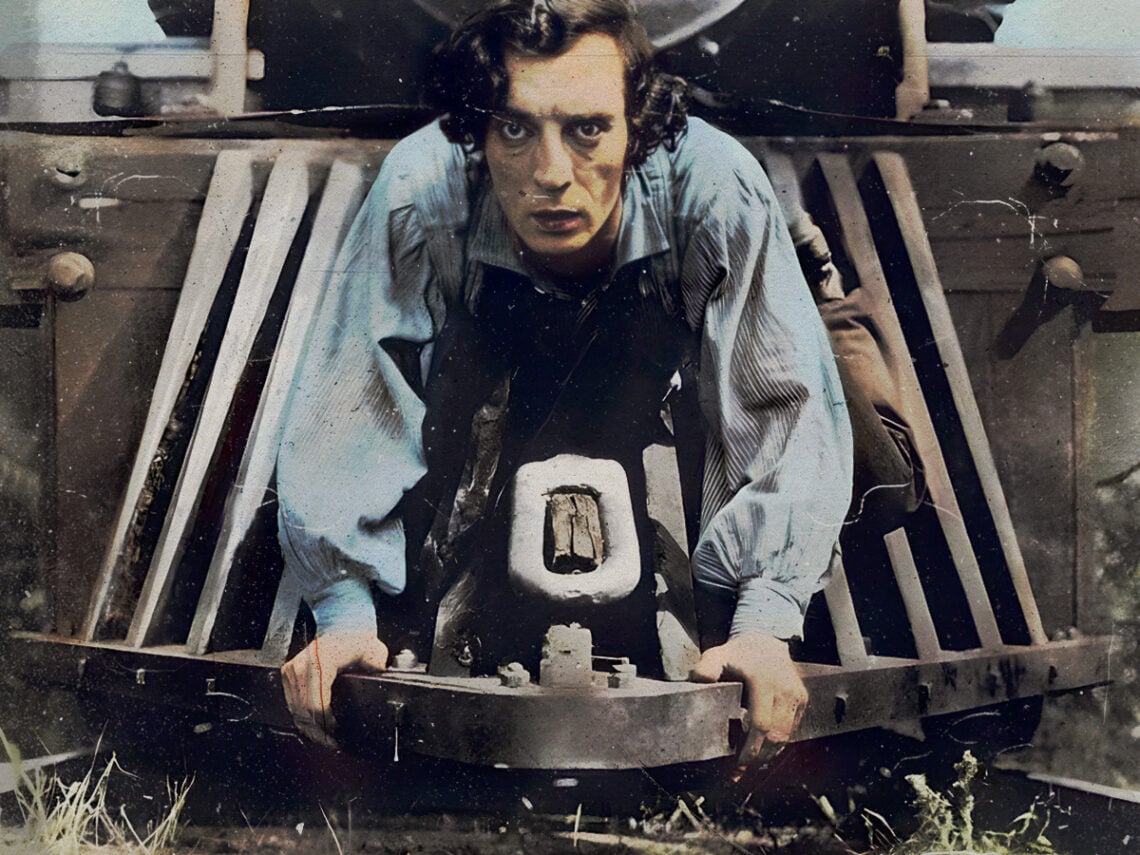
Buster Keaton’s lesser-known role as a ‘gag-consultant’

Not even the most famous and influential performers in history are immune from poor financial decisions and dwindling star power, which reduced the once-mighty Buster Keaton to being a ‘gag man’ for a string of productions following the downturn of his own career.
Throughout the 1920s, the actor and filmmaker changed the face of cinema and inspired generations to come through the likes of Sherlock Jr, The General, Steamboat Bill Jr, and The Cameraman. Using pioneering camera techniques with which to capture his signature death-defying antics, it’s not a stretch to call Keaton cinema’s first full-blown action superstar.
He’d maintained great autonomy throughout that period, but signing a contract with MGM in 1928 turned out to be the beginning of the end. Despite being warned that his independence would be taken away from him, he inked the deal anyway and was then reduced to little more than an innocent bystander as producers and executives shaped the direction of his filmography.
Keaton no longer had creative input; his salary for each production was pre-negotiated, with every aspect of any feature planned well ahead in advance. As he reflected in his autobiography, it wasn’t the way he wanted to work. “At my studio, they would have the characters I wanted in ten minutes. But not MGM,” he said. “You had to requisition a toothpick in triplicate. I just stood there, and everybody is hassling.”
The studio wanted him for his name value and star power, not his filmmaking prowess before personal and professional woes saw him sink even further into the mire. Keaton drank heavily, battled depression, and declared bankruptcy, and by the late 1930s, he’d been reduced to crafting comic material for other performers.
Among his projects were the Marx Brothers’ At the Circus, where he butted heads with the siblings because their styles were so different, as well as the 1944 musical Bathing Beauty and 1949’s In the Good Old Summertime, but it was a waste of an icon who still thought they had more to give, but hadn’t been afforded the chance to show they could give it.
Keaton even requested an exemption from income tax on account of his low earnings, with his position as a lowly gag consulted for the studio he believed ruined his career, rendering him barely above the breadline, even if his own fiscal mismanagement had played its part.
It wasn’t where he wanted to be – or saw himself considering everything he’d already accomplished beforehand – but everybody has to try and make ends meet one way or another, and that remains true of a game-changing figure like Keaton. He’d fallen a long way down the ladder, but it remained commendable that he refused to let go of the rungs entirely.
