


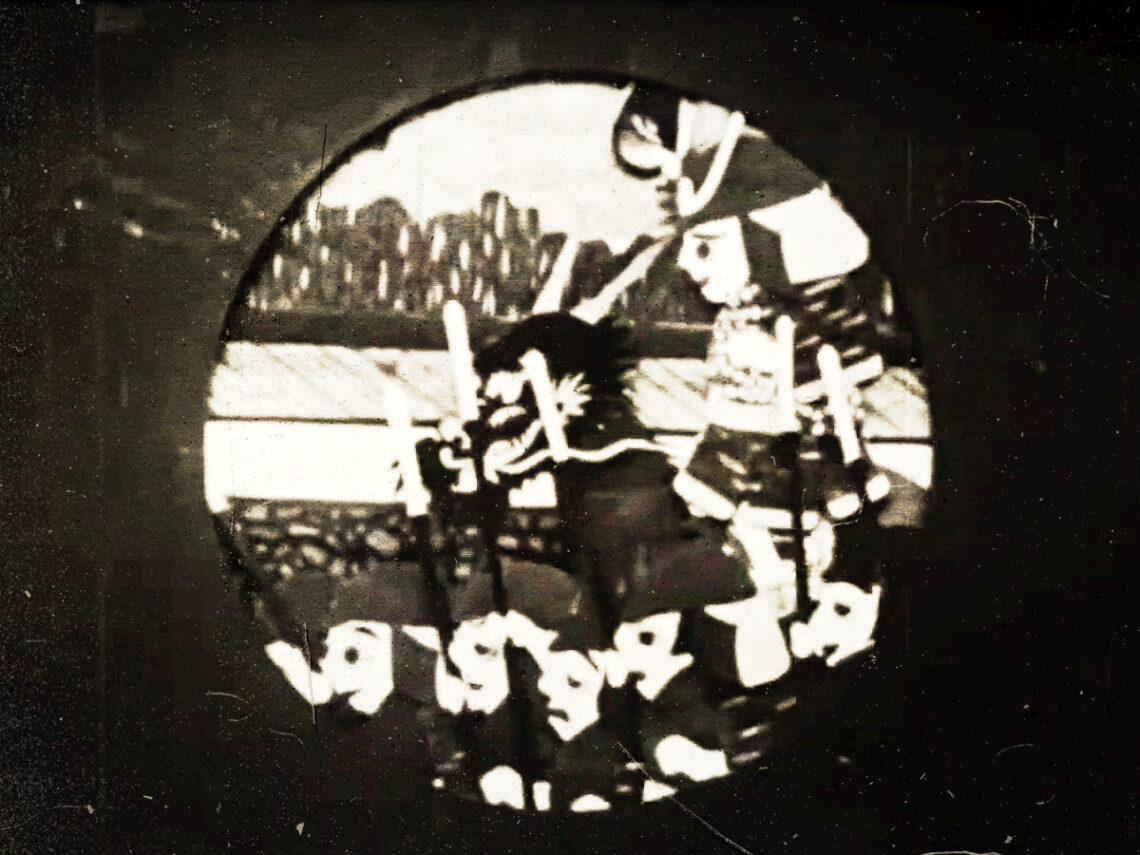
‘Burglars of Baghdad Castle’: early Japanese animation

While different parts of the world have developed their own traditions of animation, it’s Japan who has emerged as the dominant cultural force in the domain. Anime is more popular than ever, constantly transcending cultural barriers and garnering massive followings around the world. Modern anime is built on the foundations of an extensive artistic legacy that dates back to the early 20th century, with its precursors going even further back.
Anime pioneers like Hayao Miyazaki and Hideaki Anno have become household names due to the unimaginable levels of popularity that the medium has enjoyed in recent years. However, the origins of anime rarely receive the same amount of attention as contemporary hits like One Punch Man and Makoto Shinkai’s works. That is obviously unfortunate since the rich history makes you appreciate anime so much more.
Drawing inspiration from various Japanese art forms like handscroll paintings, shadow puppetry and street theatre, Japanese animation started becoming a proper form in the 20th century. Legendary figures like Noburō Ōfuji helped animation evolve into an incredibly effective medium of storytelling, establishing the medium as a real alternative to live-action filmmaking. One of the most interesting examples of Ōfuji’s talent is his 1926 film, The Burglars of Baghdad Castle.
Widely cited as the first animated project that used Chiyogami, The Burglars of Baghdad Castle is a strange parable about a man named Dangobei who is seen as the apotheosis of laziness. Surviving as a petty pickpocket, he becomes more ambitious when he falls in love with a princess. Dangobei embarks on a bizarre journey, fighting dragons and befriending spirits while overcoming each impossible obstacle that life throws his way.
This early incorporation of paper cutouts is undoubtedly charming, working within the robust framework of traditional Japanese aesthetics and storytelling. From the elemental mechanics of the fight scene with the dragon to the archetype of the heroic rise that it follows, it’s obvious that The Burglars of Baghdad Castle exists at the beginning of a lineage that countless modern anime projects continue to propagate.
Like many early silent films, the narrative takes a backseat to the sheer will of the auteur, who pushes the limits of the medium to create new forms of artistic expression. The Burglars of Baghdad Castle is no exception, featuring exceptional technique and important precursors. Many, including Miyazaki, have complained that contemporary anime is deviating from Japanese aesthetics and becoming more of a globalised cultural commodity. If that’s the case, Ōfuji’s work is the perfect example of what true Japanese animation looks like.
Watch the film below.
