


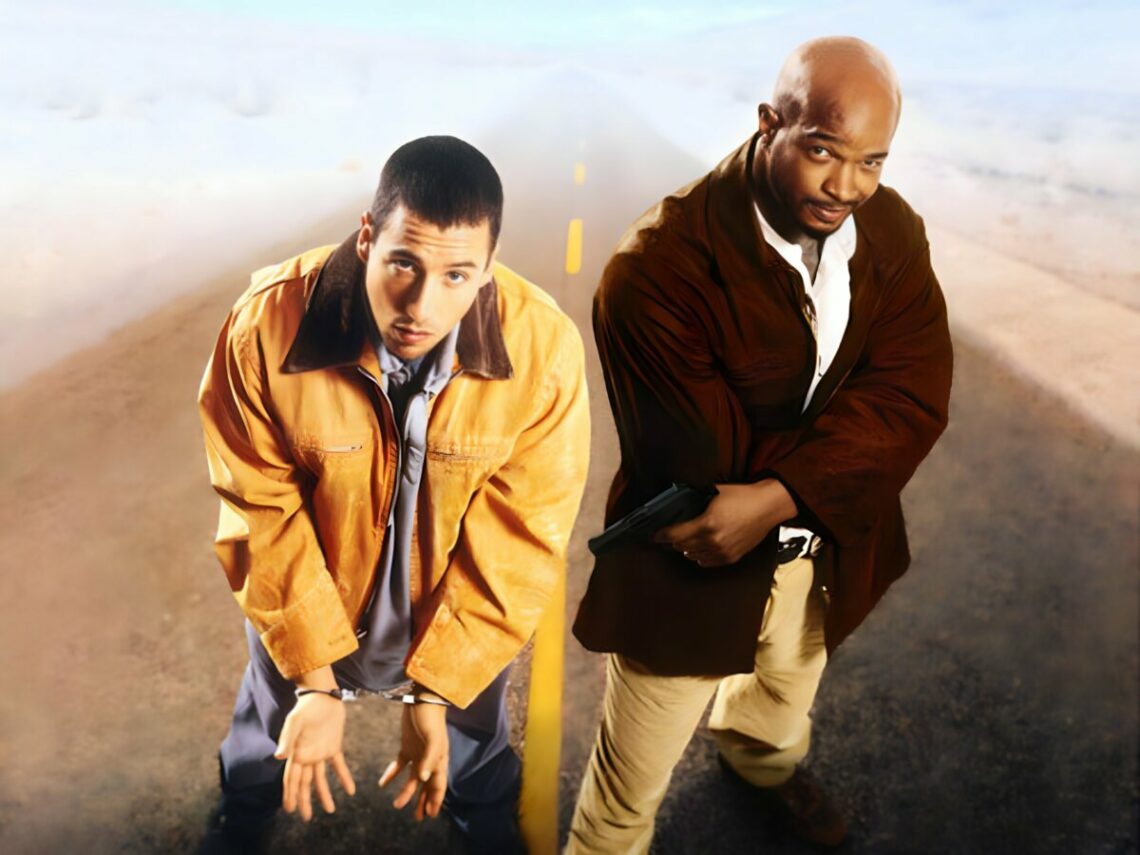
‘Bulletproof’: the one and only action movie of Adam Sandler’s career

There’s plenty of evidence out there to remind people that Adam Sandler is an excellent dramatic actor when he ditches his tried-and-trusted schtick in favour of getting serious, but one example was more than enough to underline why action stardom was never in his future.
The early-to-mid 1990s was a strange time for Sandler, both personally and professionally, one that did ultimately set him on the path towards the A-list. Having broken through as a member of the Saturday Night Live cast in 1990, he notched a couple of cult classics on his belt very early when his third and fourth feature film appearances came in Coneheads and Airheads.
After ditching his fondness for cranial monikers, 1995 proved to be pivotal for Sandler when he was fired from SNL in the very same year Billy Madison was released. His next movie after that was Happy Gilmore, and suddenly, he was one of mainstream American comedy’s leading lights. In an attempt to stretch his wings a little, the star determined that the odd couple buddy caper should be the next port of call, which led him into the arms of Damon Wayans for Bulletproof.
The two had concocted a plan to co-star in an action flick in 1994 when Wayans hosted SNL, but it was readily apparent that running and gunning wasn’t Sandler’s strongest suit. In Bulletproof, he plays dim-witted criminal Archie Moses, who works for James Caan’s drug lord Frank Colton. He is none the wiser than his close friend Rock Keats, who is actually undercover cop Jack Carter.
He accidentally shoots Carter in the head, but when his testimony is needed to bring Colton to justice, the two embark on a cross-country road trip to the courtroom with nefarious forces in hot pursuit. Effectively, Moses is Sandler doing what he usually does by playing a belligerent and idiotic man-child, except this time, he gets into fistfights, car chases, and gunfights and drops the occasional F-bomb for good measure.
It’s basically every substandard Lethal Weapon knockoff rolled into one, which took a pounding from critics and under-performed at the box office. In the limitless multiverse, maybe there’s a world where Sandler became an action hero, but in this one, Bulletproof was all anybody needed to know without a shadow of a doubt, he wasn’t cut out for it.
To further burnish its negative reputation, the Gay & Lesbian Alliance Against Defamation decreed Bulletproof to be “one long overblown punchline” for its “hackneyed anti-gay stereotypes” to offer an indication of how it repeatedly scraped the bottom of the barrel in an attempt to turn gay panic into a comedy goldmine in the uber-macho world of action cinema.
Besides the procession of quips that have aged terribly, there’s nothing whatsoever on a screenwriting, artistic, visual, creative, or performative level that distinguishes Bulletproof from any of the other formulaic ‘bickering partners’ movies that have swamped multiplexes since the 1980s, other than the novelty of seeing Sandler starring in it.
Director Ernest Dickerson admitted to DVD Talk that he’d “like to just erase that whole experience” from his filmography, too, alluding to “some situations that happened that in retrospect maybe I could have handled them a little differently if I had been a little smarter about it”. The two situations may not be connected, but Bulletproof was nonetheless left at the mercy of a studio who decided to deviate so far from Dickerson’s vision that he’d rather forget he even helmed the thing.
Following his ill-fated sojourn into shoot ’em up cinema, Sandler didn’t appear on-screen at all in 1997, but when he returned the following year, he was right back in his wheelhouse with The Wedding Singer and The Waterboy. The year after that, he founded his Happy Madison Productions company and made himself an even bigger star than ever before, with Bulletproof largely swept under the rug as his solitary – and abysmal – attempt at leading the line in an actioner.
