


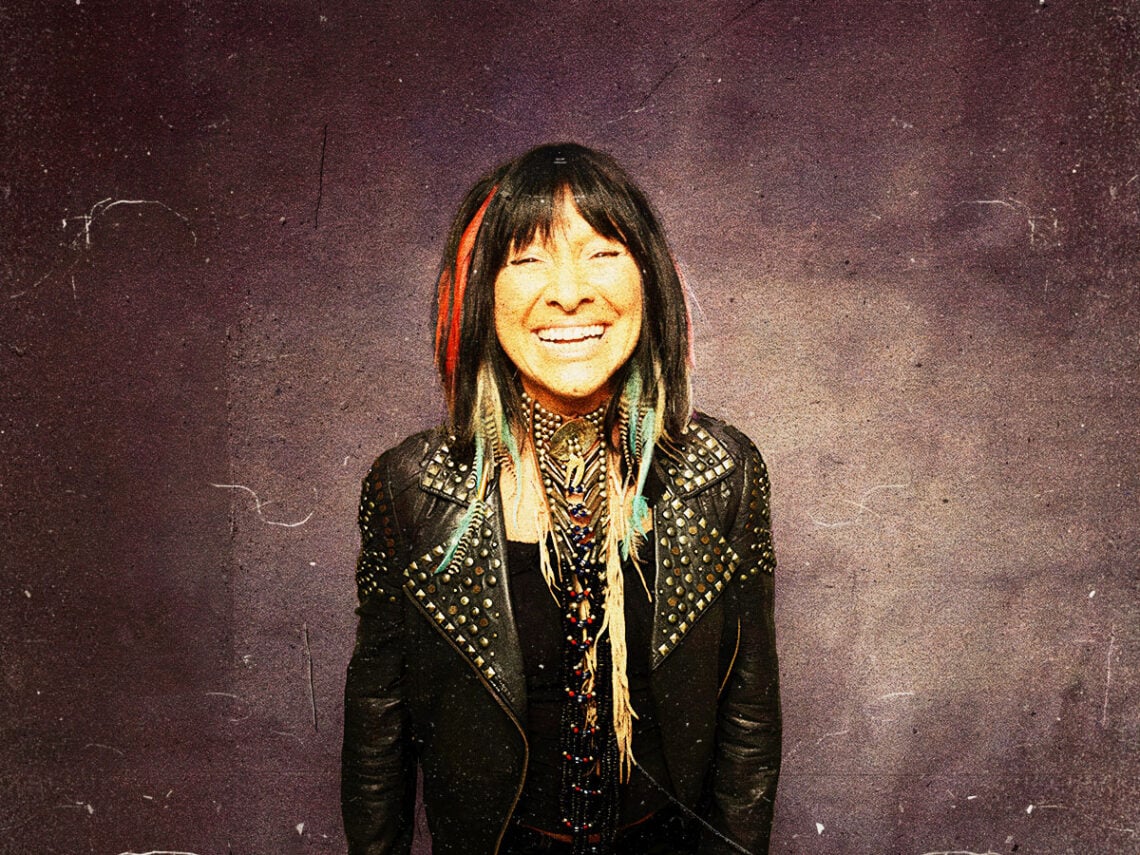
Buffy Sainte-Marie responds to questions about native heritage

Academy Award-winning Canadian singer-songwriter Buffy Sainte-Marie has responded to questions regarding her native heritage.
In an upcoming episode from the Canadian Broadcasting Corporation’s docuseries The Fifth Estate, the true nature of Sainte-Marie’s ancestry will be investigated. In a new post titled ‘My Truth as I Know It’, Sainte-Marie has shared her knowledge of her heritage.
“Last month, the Canadian Broadcasting Corporation, contacted me to question my identity and the sexual assault I experienced as a child,” Sainte-Marie wrote. “To relive those times and revisit questions I made peace with decades ago, has been beyond traumatic. But I know I owe it to those I love, and those who support me, to respond.”
“What I know about my Indigenous ancestry I learned from my growing up mother, who was part Mi’kmaq, and my own research later in life,” she added. “My mother told me many things, including that I was adopted and that I was Native, but there was no documentation as was common for Indigenous children born in the 1940s.”
“Later in my life, as an adult, she told me some things I have never shared out of respect for her that I hate sharing now, including that I may have been born on ‘the wrong side of the blanket’,” she continued. “This was her story to tell, not mine.”
Sainte-Marie went on to detail her cultural adoption by Emile and Clara Piapot of the Cree First Nation as a young adult. Sainte-Marie was previously thought to have been born on the Piapot 75 reserve in the Qu’Appelle Valley, Saskatchewan, and later relocated to an American couple as a part of what is known in Canada as the “Sixties Scoop”, where Canadian authorities took indigenous children and placed them in white families.
“I have always struggled to answer questions about who I am. For a long time, I tried to discover information about my background,” Sainte-Marie wrote. “Through that research what became clear, and what I’ve always been honest about, is that I don’t know where I’m from or who my birth parents were, and I will never know. Which is why, to be questioned in this way today is painful, both for me, and for my two families I love so dearly.”
“My Indigenous identity is rooted in a deep connection to a community which has had a profound role in shaping my life and my work. For my entire life, I have championed Indigenous, and Native American causes when nobody else would, or had the platform to do so,” she also wrote. “I am proud to have been able to speak up for Indigenous issues. I have always tried to bridge gaps between communities and educate people to live in love and kindness.”
Sainte-Marie also claims that the investigation from The Fifth Estate questions her claim of being sexually assaulted as a child. “Speaking about my experience is difficult, and although I have shared privately, I have rarely done so publicly. I’ve spoken up because I know others cannot, and to have this questioned and sensationalized by Canada’s public broadcaster is appalling.”
The upcoming episode from The Fifth Estate has not specifically named Sainte-Marie as its investigative subject, only describing the person as an “icon”. Sainte-Marie, who is best known as the first Indigenous Oscar winner for co-writing the song ‘Up Where We Belong’ from the 1982 film An Officer and a Gentleman and recently retired from live performances, has identified herself as the subject.
Read Sainte-Marie’s full statement down below.

Never Miss A Beat
The Far Out Music Newsletter
All the latest music news from the independent voice of culture.
Straight to your inbox.