


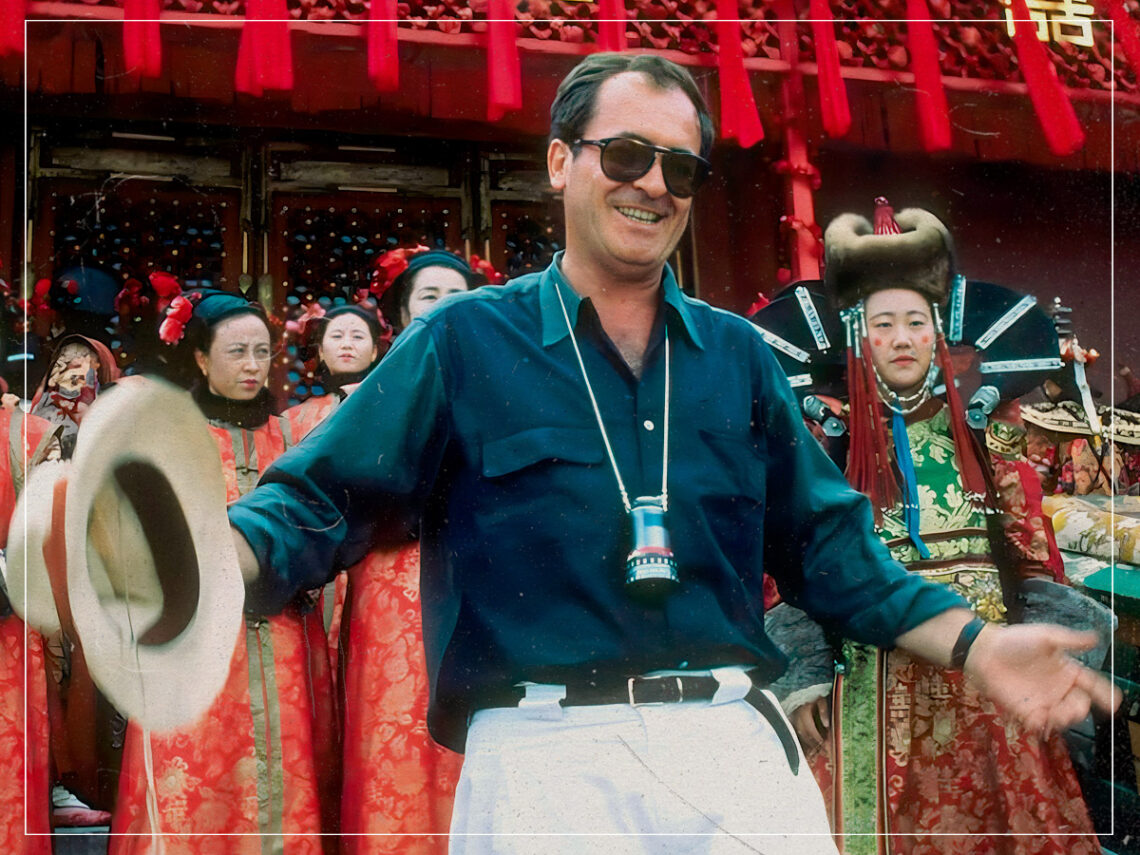
“I need a utopia”: how Buddhism shaped Bernardo Bertolucci

For most film fans who have only had one or two interactions with the fascinating filmography of Bernardo Bertolucci, it’s almost impossible to separate his legacy from the cultural impact of Last Tango in Paris. Almost the first name on everybody’s list whenever controversial erotic movies are discussed, the 1972 work generated extensive media discourse about its depiction of sex and violence.
It’s hard to imagine that Bertolucci as someone guided by Buddhist principles, but that’s precisely what happened in the latter half of his career. Having garnered serious attention throughout the 1970s as one of the most exciting names in world cinema, the Italian auteur’s skill was recognised by many, and so was his reportedly large ego. In fact, it was the driving force behind some of his artistic as well as personal decisions during that period.
Reflecting on those years in a conversation with The Washington Post, Bertolucci admitted: “I don’t think I am an egomaniac like I was in the ’70s.” He claimed he was a changed man, and that was reflected in the choice of cinematic subjects in his work. That interview was part of the press campaign for his 1993 film Little Buddha, a far cry from the debauched excesses of Last Tango in Paris.
Based on a screenplay by Rudy Wurlitzer and Mark Peploe, the film revolves around the efforts of Buddhist monks who try to find the reincarnated spirit of a legendary Buddhist teacher. Their search leads them to a boy from Seattle, who they believe is the vessel for the great soul they have been trying to locate.
Bertolucci’s fascination with Buddhism came as a result of the collapse of his other belief systems, particularly his revolutionary dreams that faded away as the world raced past the 1960s and the ’70s. In the interview, he explained that Buddhism was almost like the logical conclusion of the beliefs he harboured before he found it.
The filmmaker explained: “I found there was no contradiction between this religion and what I already believed in. It gives me another way to be allowed to have dreams. The dreams you are no longer allowed to have with socialism. Maybe… I need a utopia. I also like the idea of karma because it is very much Freudian: You know, you are the writer of your own karma. Freud says we are the writers of our destiny too – anything we do, it’s our unconscious which dictates.”
Although it might have led to some changes in Bertolucci’s thought process, his adoption of Buddhism is still strikingly Western and even came across as misguided at times. He declared that it was an alternative to therapy, incorporating Buddhist teachings to soothe his own fears and anxieties instead of practising real spirituality.
Bertolucci added: “Buddhism is good therapy, fantastic therapy, for all the monumental egos we have in the West. In my case, I think I should spend more time with the rinpoches because they really help me save lots of money in tranquilisers…. Three years with the rinpoches, you know. It’s like 20 more years with a shrink.”
The result of his interest in Buddhism, Little Buddha, wasn’t particularly interesting either because it was mostly seen as a downgraded version of The Last Emperor, which did a lot more with a similar narrative. Watch the trailer for Little Buddha below.
