


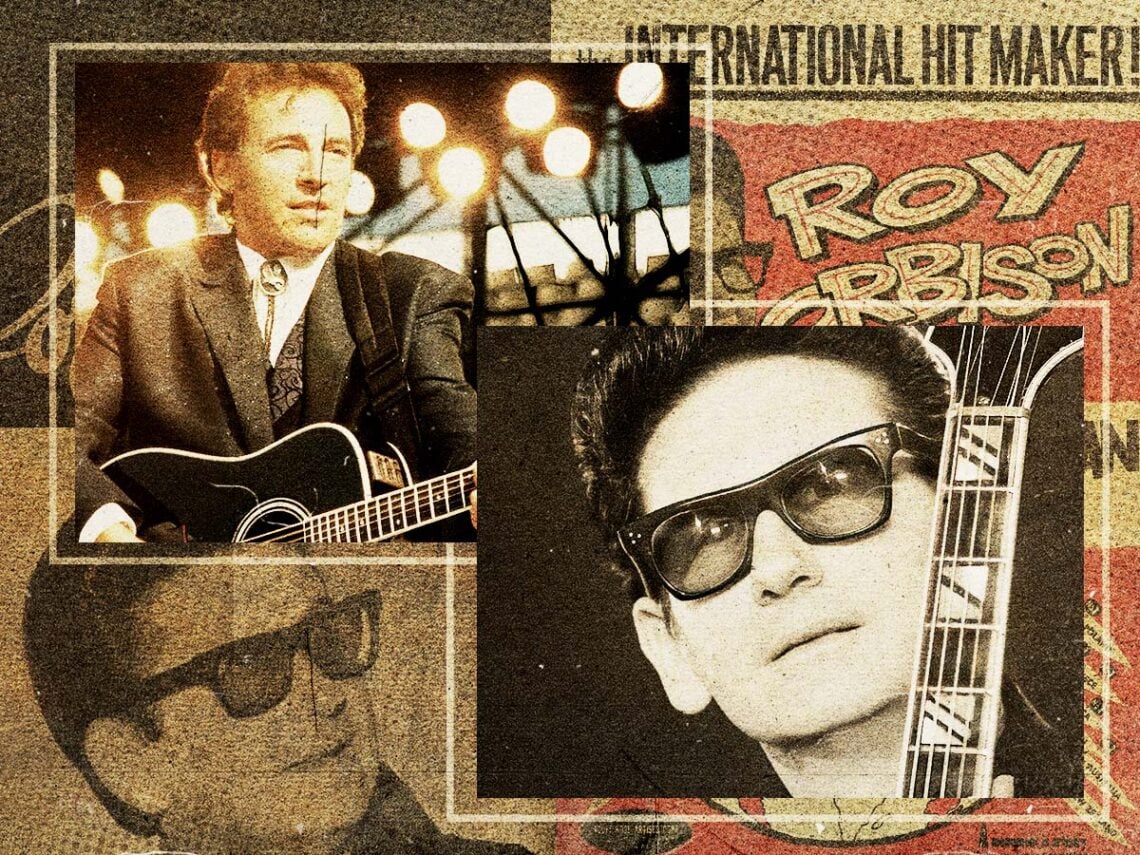
Bruce Springsteen on how Roy Orbison changed music forever: “His arrangements were complex”

In his time, Bruce Springsteen has waxed lyrical about various musical greats spanning numerous eras. This follows him honing his talent in the 1960s, a time when fans didn’t have to look far to find figures now classed as music’s definitive movers and shakers. Whether it be The Beatles, The Rolling Stones or even Marvin Gaye, some of the most influential musicians of all time have made an indelible impact on the New Jersey native by virtue of him being born at the right time.
Accordingly, since his formative years as an artist, Springsteen has been deeply ensconced in the ways of proper songwriting. It has, of course, been the undeniable key to his success. There’s no mucking around with the Telecaster-wielding bard, it’s all about the song, and Springsteen does everything in his power to deliver his message most clearly, both sonically and lyrically. Of course, this makes a lot of sense, as one of the artists he cherishes most is the late Roy Orbison, who always poured himself into his work.
Whilst Roy Orbison is most famous for his deep voice, iconic sunglasses and quiff, he was truly a pioneer of popular music. Orbison crafted complex, thought-provoking songs that contained much more weight than anyone else on the charts. In addition to this stylistic innovation, Orbison also conveyed vulnerability in many of his most important pieces, a total inversion of the masculinity associated with the day’s rock ‘n’ roll stars.
When listing his 25 greatest heroes for Rolling Stone in 2014, it was noted that Springsteen would lay in bed and listen to Orbison’s Greatest Hits before he recorded his 1975 hit album Born to Run. Then, attention turned to a moment when Springsteen outlined his long love for Orbison in more detail.
When inducting Orbison into the Rock and Roll Hall of Fame in 1987, Springsteen delivered a lucid account of his idol’s work and how he changed the course of music forever. He cited how Orbison threw the handbook out and created much darker and more complex pieces than the norm. “Some rock and roll reinforces friendship and community,” he said. “But for me, Roy’s ballads were always best when you were alone and in the dark. Roy scrapped the idea that you needed verse-chorus-verse-chorus-bridge-verse-chorus to have a hit. His arrangements were complex and operatic, they had rhythm and movement and they addressed the underside of pop romance. They were scary. His voice was unearthly.”
As is well-known, Orbison had such an impact on Springsteen that he name-checked him on ‘Thunder Road’, the opener of Born to Run, with the words: “Roy Orbison singing for the lonely”. The pair would even play together a handful of times in the final years of Orbison’s life, including delivering a rendition of ‘Oh, Pretty Woman’ at the 1987 Rock and Roll Hall of Fame.
Then, on his 2014 album High Hopes, Springsteen looked to Orbison again for ‘Dream Baby Dream’. “[On ‘Dream Baby Dream’] I thought to myself, ‘How would Roy Orbison sing this song?'” he told Rolling Stone. “What made Roy’s music great is that it was so mainstream, but it had a very strange underbelly to it.”
