


‘The Cramps’ movie review: the weirdest film you will see this year

This feature debut by director Brooke H Cellars is a bizarre horror/fantasy comedy with menstruation as its central theme, and is more or less what might have resulted if John Waters had chosen to direct horror films – and if he’d had a menstrual cycle.
The film, brought about by all-female production company Warped Witch Cinema, is premiering, appropriately enough, at the Fantastic Fest, the largest genre film festival in the US, and an event that welcomes the groundbreaking or unusual in the fantasy, horror, or science-fiction categories. The Cramps can easily qualify as any, or all, of those three, but with a comedic twist. The director describes it as “a cinematic love/hate letter to those of us with uteruses”.
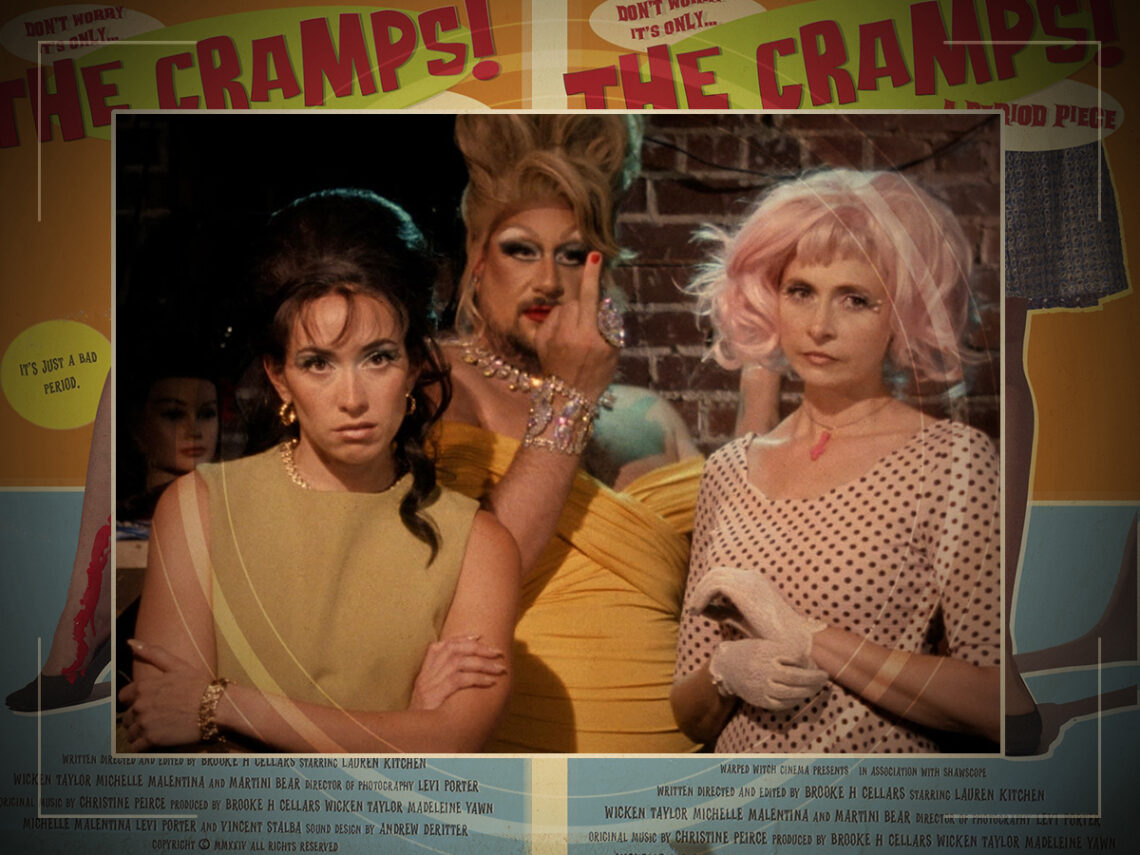
Set in an amusingly kitschy American town, circa 1960, the film is campy, absurd, and purposely gross, adorned with deliberately unrefined dialogue and a naive acting style, and descriptive character names, such as Tangerina Von Cuntley and Falcon Fireshaft. The entire cast handles the overblown camp approach consistently and well.
Insecure protagonist Agnes (novice screen actress Lauren Kitchen), cruelly dismissed by her stodgy family, is delighted to be hired by a local beauty salon. The salon staff consist of John Waters-esque broad characters, including the bearded, ostensibly female Laverne (female impersonator Martini Bear) and perky satanist Wicken (Teddy Teaberry). With an agreeable job, friends, and a new love interest, things are looking up for Agnes.
Unfortunately, she is also plagued by supernaturally horrific menstrual symptoms, which manifest in unexpected forms, from terrifying nightmares to demonic possession-level seizures to weird, violent hallucinations. She gets no help from her amusingly creepy gynaecologist (Jared Bankens), and the condition threatens to ruin her life.
As the subplots run their course, including Agnes’ uncomfortable relations with her family, and a wildly campy, life-or-death hairdressing competition, Agnes gets help and guidance from very unexpected, decidedly feminine sources. The plot becomes something of a coming-of-age story, with Agnes and several secondary characters gaining confidence and self-acceptance in many different, and always ludicrous, ways. Even as things begin to improve for Agnes, her symptoms take physical form and increase in power, possibly supernatural power, and demand her attention at the least convenient times, and often in alarming ways.
The peculiar storyline was inspired by the director’s own struggle with endometriosis, but it makes no effort to replicate reality. The film is more like an amalgam of the worries, pain, and symbol-laden unconscious of a sufferer, brought vividly to life and hitched to a mid-20th-century high school play. As Agnes’ condition takes on a life of its own, and fantasy and reality mingle, the imagery becomes more grotesque and fantastical, but also more purposeful, using special effects which are gleefully dreadful. Director Cellars has described her love of the horror genre and its “power to express the taboo, the unspeakable,” and that power is demonstrated here.
After a menses-related climax featuring an outlandish, violent altercation that leaves Carrie in the dust and hints at symbolic female vengeance, the film’s conclusion echoes its theme in a ghastly but poignant way that ties the story together. Despite the logical and consistent storyline, The Cramps is almost certainly the weirdest film you will encounter this year, but it is also, as the director suggests, “about resilience”.
