


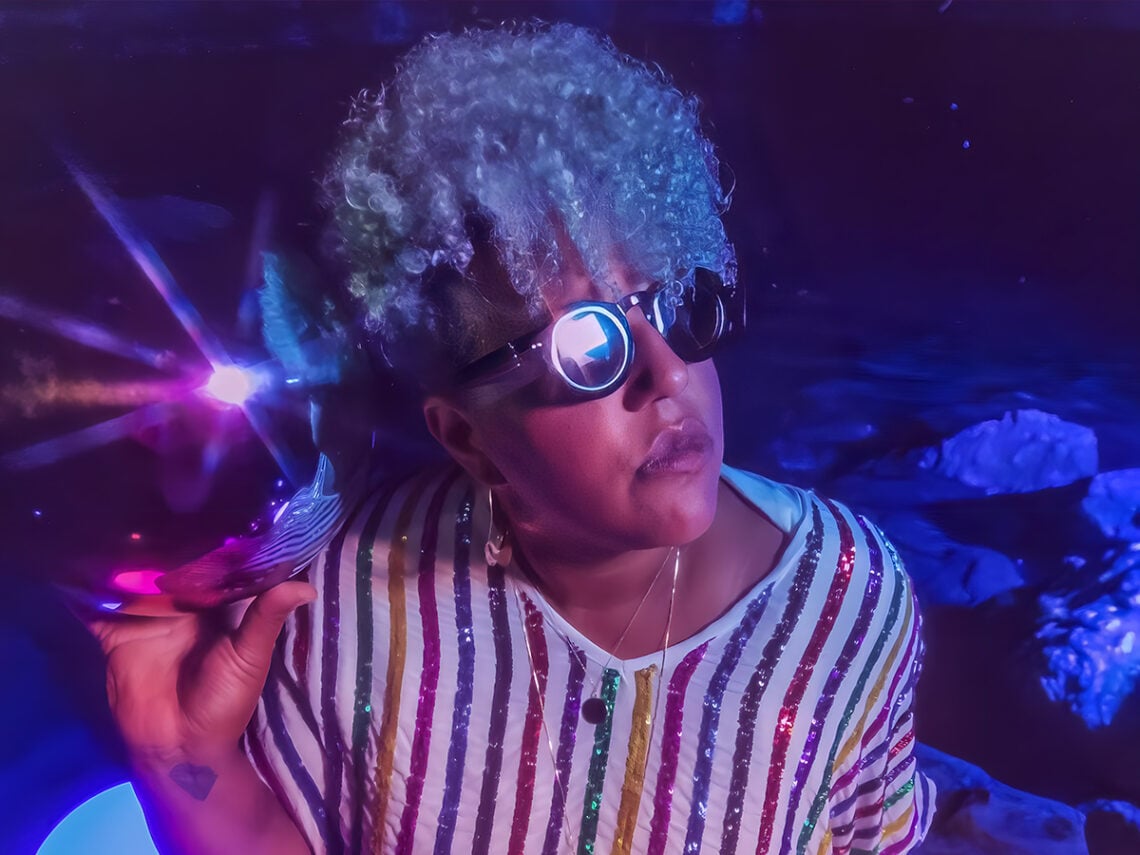
Brittany Howard recommends a jazz record to reset your “lousy” day

Brittany Howard is a woman unto her own. From being the lead vocalist, main songwriter and guitarist for Alabama Shakes to her solo albums, Jamie, released in 2019, a tribute to her late sister and this year’s full-length release What Now, Howard has embraced a multitude of genres and mastered each one on her steps towards greatness.
With What Now, Howard made the treacherous journey across rock and roots music to jazz and funk. Howard side-stepped the box that Alabama and Nashville tried to push her into, drawing inspiration from some of the most well-known black musicians. Exalting the likes of Betty Davies, Led Zeppelin, Leon Thomas and even The Fox and The Hound film soundtrack, Howard revealed that her favourite album to reset a “chaotic and lousy day” is none other than jazz pianist and harpist Alice Coltrane’s Journey in Satchidananda featuring jazz saxophonist Pharoah Sanders.
Speaking of her admiration for the 1971 album, Howard explains that “it kind of takes you on a journey… by the time you get to the end of this album, you’ve kind of been reset, and that really inspired me to figure out a way to apply that into my own music”. Known as the first of Coltrane’s personal albums, the album explores Coltrane’s relationship with Swami Satchidananda Saraswati, the Indian guru and yoga teacher who inspired a large Western following in the 1960s and 1970s.
Rejecting the idea of a home nation, Saraswati travelled the world sharing his knowledge of hatha yoga and yoga philosophy, purporting a set of beliefs that would become known as Integral Yoga. Garnering a following after his many visits to prisons and drug rehabilitation centres, Saraswati focused on interfaith understanding of spirituality. In 1991, Saraswati became the subject of sexual misconduct allegations, which led to the resignations of 12 board members that led branches of Integral Yoga Institute. Ex-members went on to form a support group, called the Healing Through Truth Network and raised awareness about sexual abuse and misconduct within the Integral Yoga community.
Coltrane’s album, however, was the subject of acclaim. Of course, it was released before the allegations levied at Saraswati. The album has been lauded for its accessibility to modal and experimental jazz music, and Sanders unique multiphonic saxophone playing serves as an inspiration for spiritual and free jazz until this day. Pitchfork described the album as paying “full tribute to the transformation that she underwent in the late 1960s—as a human being and artist”.
Emblematic of the spiritual journey Coltrane traversed following the death of her second husband, John Coltrane, the track ‘Something About John Coltrane’ is a nearly ten-minute tribute to the rhythms and themes explored by John in his own career as a jazz saxophonist. Heavily influenced by the sonic traditions of India, North Africa and the Middle East, the album is notable for its use of tanpura, an instrument similar to a simplified sitar or gourd-based instruments used to create ambience in traditional Indian music, the tanpura does not a play a melody, but instead is used as backing instrument to build on.
Cited as one of the best experimental jazz albums of all time, it comes as no surprise that it serves as inspiration for one of the leading voices in jazz music today.
