


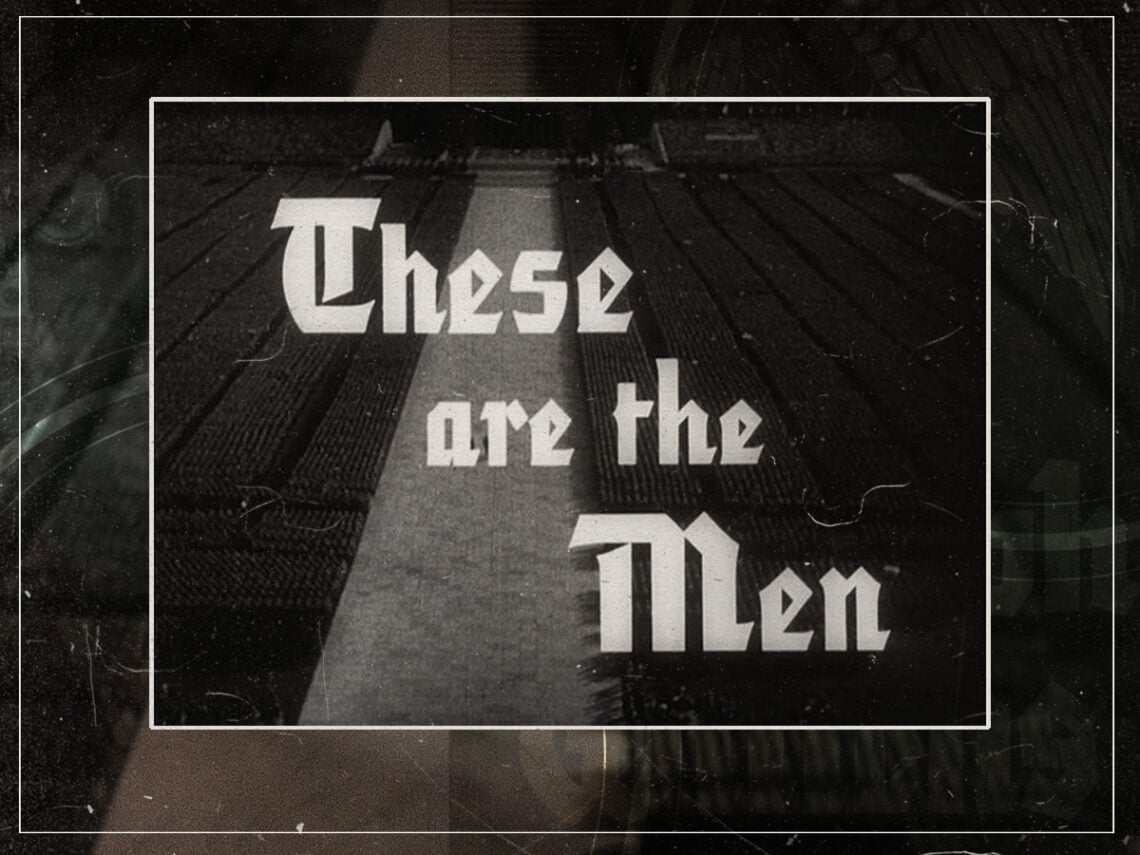
‘These are the Men’: the British propaganda movie made during WWII

As World War Two raged on, destroying countless lives and leaving citizens around the globe with long-lasting trauma, propaganda films were made in the hopes of instilling a sense of morale in the viewer.
Propaganda films differed from country to country, and the Nazis quickly saw the benefit of using the cinematic medium to spread their fascist ideology. Joseph Goebbels was responsible for sanctioning the creation of many pro-Nazi projects, helping to strengthen the party’s sense of patriotism, gain new members, and keep people enthused as the war continued on.
Meanwhile, over in the United Kingdom, the Ministry of Information commissioned movies that acted as British propaganda, with many capturing what life was like for the average household in the country and others acting as educational shorts. The MOI was formed just one day after Britain declared war on Germany, believing film to be an invaluable method of reaching the general public. Thus, over 1000 propaganda pieces were made and screened across the country, including These Are The Men, released in 1943.
The 12-minute short was directed by Alan Osbiston and poet Dylan Thomas, who worked together to make a powerful indictment of the Nazi party by reassembling footage from a Nazi propaganda film. They took clips from The Triumph of the Will by Leni Riefenstahl, which features scenes of rallies and speeches by some of the party’s most high-ranking officials.
Adolf Hitler, Goebbels and Hermann Göring are all featured, but their speeches get twisted by Thomas, who speaks over them, providing alternative lines of dialogue for the evil leaders to emphasise the pure depravity at the heart of the Nazi party and their ideology.
As images of countless saluted arms glide across the screen, Thomas says over a clip of Hitler, “I was born of poor parents. I grew into a discontented and neurotic child. My lungs were bad. My mother spoiled me and secured my exemption from military service. Consider my triumphant path to power!”. All the while, the video we see of Hitler features him maniacally gesticulating, making for a darkly comic attempt to ridicule the Nazi party’s pure evilness.
Over clips of Goebbels, Thomas explains, using a slightly different voice, that the propaganda minister became a Nazi after his attempts at becoming a writer were rejected due to Jewish editors and publishers. “Unemployed, Jew-hating, crippled, frustrated and bitter, I joined the Nazi party,” he says.
Additionally, Thomas pokes fun at Goering by saying, “After the war, I took drugs, twice was confined in a lunatic asylum as a drug addict. Then I joined the Nazi movement, helped to organise the Stormtroopers, the Gestapo, and the Secret Police.”
The film is an interesting insight into the way cinema was used as a method of propaganda. It is a rare example of a British propaganda project that attacked and ridiculed the Nazis so explicitly, depicting them as the epitome of pure corruption and cruelty.
