


Free Cinema: how British filmmaking was revolutionised in the 1950s

Before narrative cinema became the dominant mode of filmmaking, the first experiments with the medium often featured short clips of real events or people, such as a boxing match or a family gathered in a garden. At the time, audiences marvelled at these shorts, finding it unbelievable that these activities could be immortalised on celluloid and watched back over and over.
This new phenomenon proved incredibly groundbreaking, opening up a world of possibilities. However, filmmakers soon used cameras to make narrative works, such as Alice Guy-Blaché or Georges Méliès, who made movies that told entertaining stories and used costumes, props, innovative editing techniques, and required people to act. Meanwhile, travelogue movies became a popular form of cinema, with audiences now able to watch videos of foreign places for the first time. Still, narrative pictures remained dominant, with people drawn to these films in the same way they were attracted to the theatre.
Yet, in 1922, a movie named Nanook of the North was released, which has been identified as the first proper documentary, although director Robert J. Flaherty often instructed his subjects to act in certain ways, slightly bending the truth. Another film of his, Moana, was labelled by John Grierson as a “documentary,” the first instance of the word being used. From then on, more documentaries started to emerge, although these were more often than not propaganda films or newsreels.
Grierson became a vital figure in the documentary genre, rallying for its importance as an art form, believing it to be far superior to fictional narratives. He was significantly inspired by filmmakers like Dziga Vertov, who was a major figure in the development of the genre. Yet, in the mid-1950s, an ambitious crop of filmmakers emerged, unhappy with Grierson’s approach to documentary – and the Documentary Film Movement as a whole.
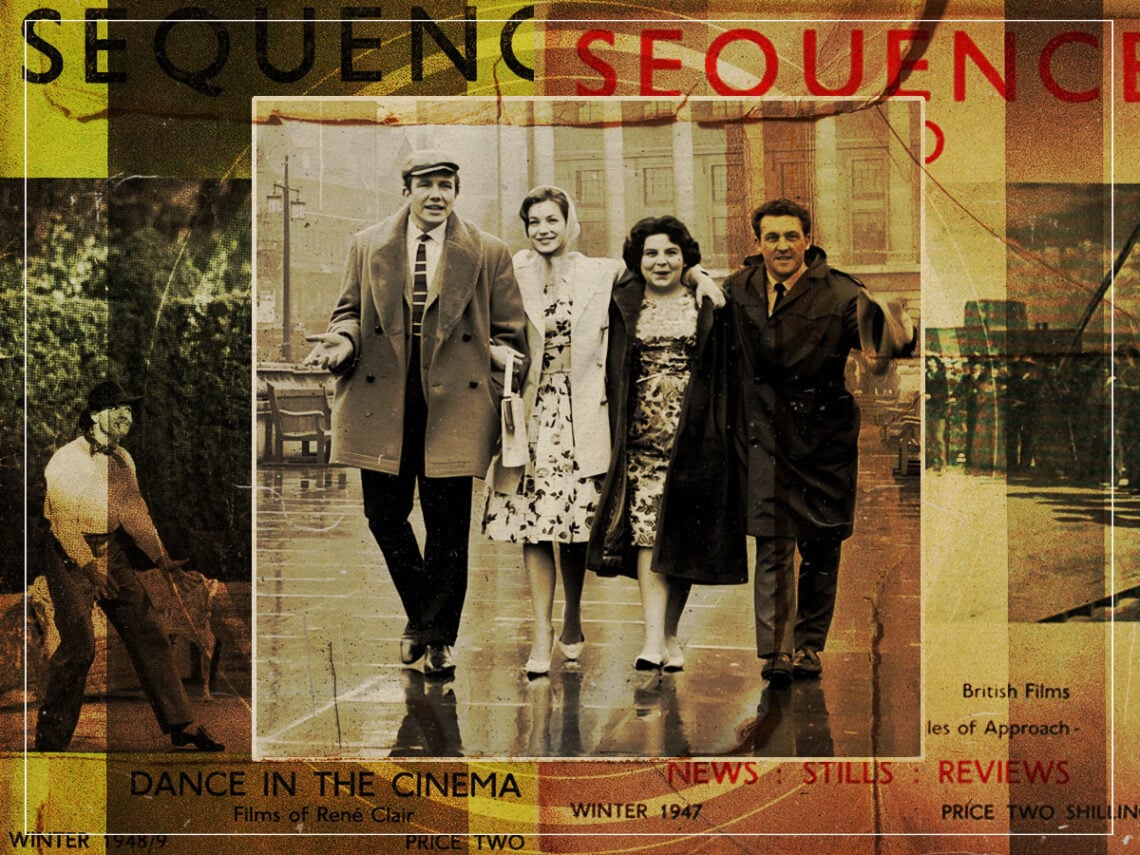
These new filmmakers wanted to rally against these older documentaries, aiming to create pieces of cinema concerned with working-class people and issues, often exposing themes such as poverty. Using naturalistic filming techniques and doing away with romanticism and voiceovers, members of the Free Cinema movement hoped to make confronting pieces of film that captured the real lives of many British people. The Free Cinema manifesto emerged in an issue of a film journal called Sequence, founded by Lindsay Anderson, Karel Reisz, Peter Ericsson and Gavin Lambert. Penned by Anderson and Lorenza Mazzetti, it wasn’t long until their ideas were being recognised by others.
Luckily, Reisz worked at the National Film Theatre as a programmer. Thus, he helped to organise a season of documentaries to be screened at the location, selecting one of his own documentary attempts, Momma Don’t Allow, co-directed with Tony Richardson, O Dreamland, made by Anderson, and Together by Mazzetti, which was actually a fictional film made in a similar style. To fund these genre-defining films, the directors largely leaned on the BFI Experimental Film Fund.
These experiments in documentary filmmaking were truly radical, offering up a considerably more down-to-earth, gritty look at British life. Anderson was the most prolific out of all of his contemporaries, creating the Oscar-winning short Thursday’s Children in 1954. Within a few years, the Free Cinema movement filmmakers started making narrative features, largely inspired by their documentary roots, often working with each other as producers and writers.
For example, Richardson released Look Back in Anger in 1959 before producing Reisz’s Saturday Night and Sunday Morning. Then, a few years later, Reisz produced Anderson’s This Sporting Life. These films became seminal entries to the British New Wave, with these works coming to be known as kitchen sink dramas. Focusing on working-class characters and hard-hitting issues from poverty to abortion – just like their documentaries – these films came to define British cinema. Subsequently, filmmakers like Ken Loach and Mike Leigh emerged a few years on, following in a similar style, and then, several decades later, directors like Andrea Arnold and Shane Meadows.
It’s hard to imagine what British cinema would look like today without the influence of the shortlived Free Cinema movement, which paved the way for social realism to flourish. Watch a clip of O Dreamland below.
