


Is ‘Bring It On’ an intersectional feminist teen classic?

The late 1990s and early ‘00s were a goldmine for lovers of rom-coms and chick flicks. A surging tidal wave of fun teen-oriented movies dominated cinemas, targeting young girls and women with stories largely revolving around the trials and tribulations of being a high schooler. Accessible, often slightly camp, and synonymous with an era of flip phones, velour tracksuits, frosty lipgloss and platform shoes, these movies remain beloved and nostalgic pieces of pop culture. But how many of them truly hold up today?
Many teen-oriented rom-coms from this era promote some questionable ideas, with the classic ‘nerd becomes beautiful when she takes off her glasses and dresses more feminine’ trope feeding into toxic patriarchal beauty standards, for starters. Many movies from this period also revolve around a teenage girl’s search for a boyfriend as her primary pursuit and personality trait or feature men getting away with questionable behaviour all too quickly. It’s hard to imagine certain films, like 10 Things I Hate About You or She’s The Man, working well if they were made today.
It was rare for these movies to feature developed black characters, too – even in supporting roles. While there were several chick flicks made up of predominantly black casts, they are hardly mentioned in comparison to titles like Mean Girls, Wild Child, Aquamarine or 13 Going on 30, all of which contain very few people of colour – or none at all.
Thus, among the countless films featuring white-blonde privileged protagonists, it is easy to forget how ahead of its time Bring It On was. Released in 2000, the movie does feature a white, blonde privileged protagonist in the form of Kirsten Dunst’s Torrance, yet the movie soon reveals itself to be an insightful exploration into white privilege and cultural appropriation. Torrance comes to terms with her own position as a comfortably upper-middle-class white girl over the course of the movie, facing issues of race and class for the first time in her sheltered life.
The film begins with Torrance becoming the head of her high school cheer team, the Torros, after ‘Big Red’, the previous captain, goes to college. With a newfound sense of power, she holds auditions for one more team member, resulting in the recruitment of Missy, a new girl who looks like the antithesis of a preppy cheerleader. She makes for a welcome addition to the team, though, with her heightened levels of social and cultural awareness proving vital to the narrative.
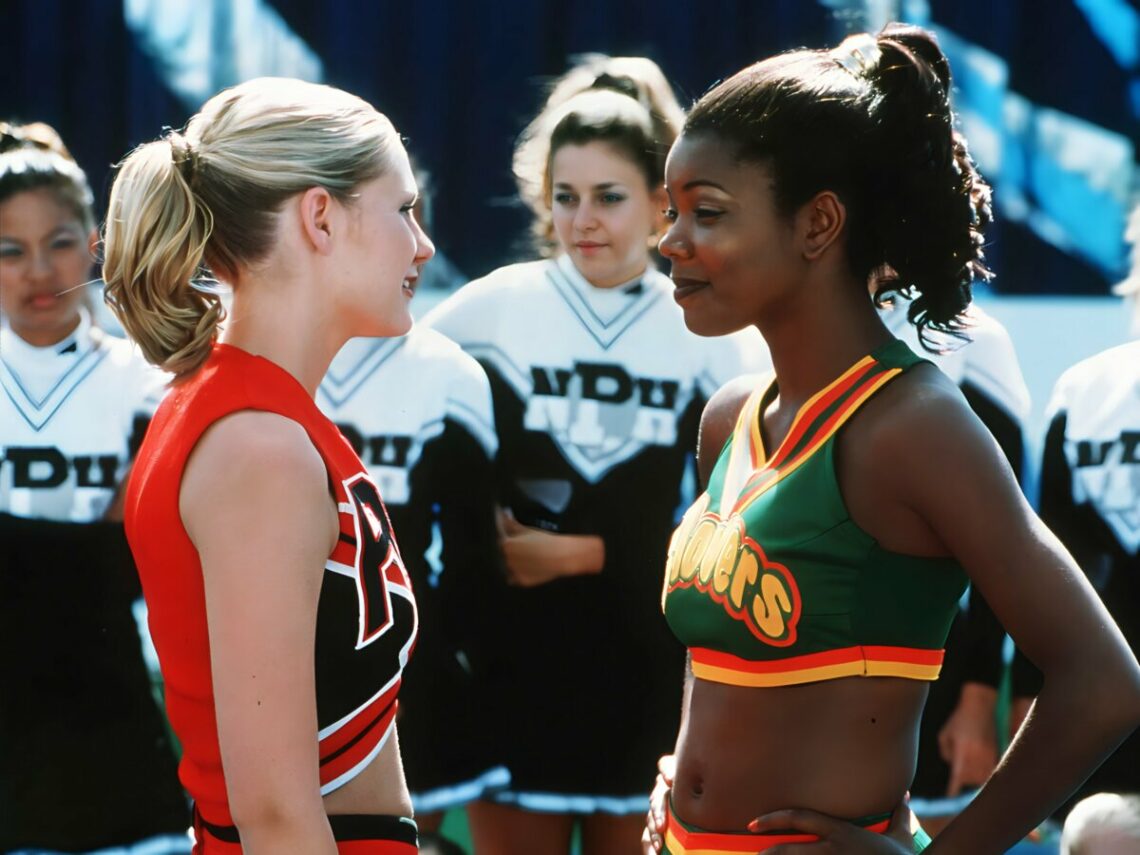
Missy soon recognises one of the team’s routines as belonging to an all-black cheerleading squad from Los Angeles – the Clovers – led by Gabrielle Union’s character, Isis. After Torrance witnesses the Clovers in action, she faces a moral dilemma. Should she keep the plagiarised routine, which Big Red had shamelessly stolen, or come up with a new one? The issue of white privilege and ignorance is instantly addressed, with most of the all-white team seeming unphased by the fact that they’ve been performing a routine taken from a working-class black team.
The girls decide to perform the routine at a game anyway, but the Clovers soon outdo them with the same choreography, expressing their annoyance with white people taking what isn’t theirs and claiming it as their own. While the movie is lighthearted and satirical, the plotline makes for a rather strong metaphor regarding cultural appropriation. There’s a moment when it appears as though the movie is going to lean into the white saviour trope, with Torrance suggesting that her rich father could pay for the Clovers to get to the nationals competition, but this is quickly subverted as Isis scoffs at the suggestion.
Instead, the Clovers fund themselves by contacting a local talk show host, leaving them ready to go head-to-head with the Torros, who have finally perfected a new routine with the help of a corrupt choreographer. The movie doesn’t easily forgive the Torros for their ignorance, and as the Clovers win the competition, Isis and Torrance treat each other with admiration and respect.
While plotlines such as these risk placing a marginalised group as nothing more than a ‘learning curve’ for white protagonists, as can often be the case with rom-coms featuring manic pixie dream girls devoid of any real substance who ‘teach men how to live’. Yet, Bring It On features fleshed-out complex characters all around, making it considerably more intersectional than the average chick flick from this era.
Of course, it was still 2000, and there are certain elements of the film that feel dated and unnecessary, such as the carelessness with which homophobic jokes are thrown about. The bikini car wash scene is also a questionable moment which feels irrevocably tied to the male gaze, and the fact that the girls are meant to be underage makes the scene feel especially uncomfortable.
Without disregarding these gripes, it is important to acknowledge that Bring It On, while not a perfect film, paved the way for more nuanced and thematically complex chick flicks in coming years. It is surprising how much of the film really holds up – although you’ll have a hard time making it through without cringing at Cliff, the faux-edgy, punk-loving love interest.
