


‘Brick’: The cult neo-noir movie that made Rian Johnson

Only a handful of modern filmmakers can claim to withhold as much originality as Rian Johnson. His reputation shines thanks to his pair of watertight Knives Out movies, the cult thriller Looper, and his latest offering, the mystery series Poker Face. An absolute master of intrigue, displaying the attention to the finer details so often missing in cinema, there’s no surprise that Johnson’s rise has been meteoric.
Whilst Johnson is currently enjoying his stock being more valuable than ever before, no one should be surprised that his career has panned out in such a way. His debut feature, 2005’s Brick, is a remarkably well-made film for a newcomer, clearly exhibiting his natural ability as an auteur. In addition, it made his love for the neo-noir and mystery genres clear, which would eventually produce his two most revered offerings; the Knives Out movies.
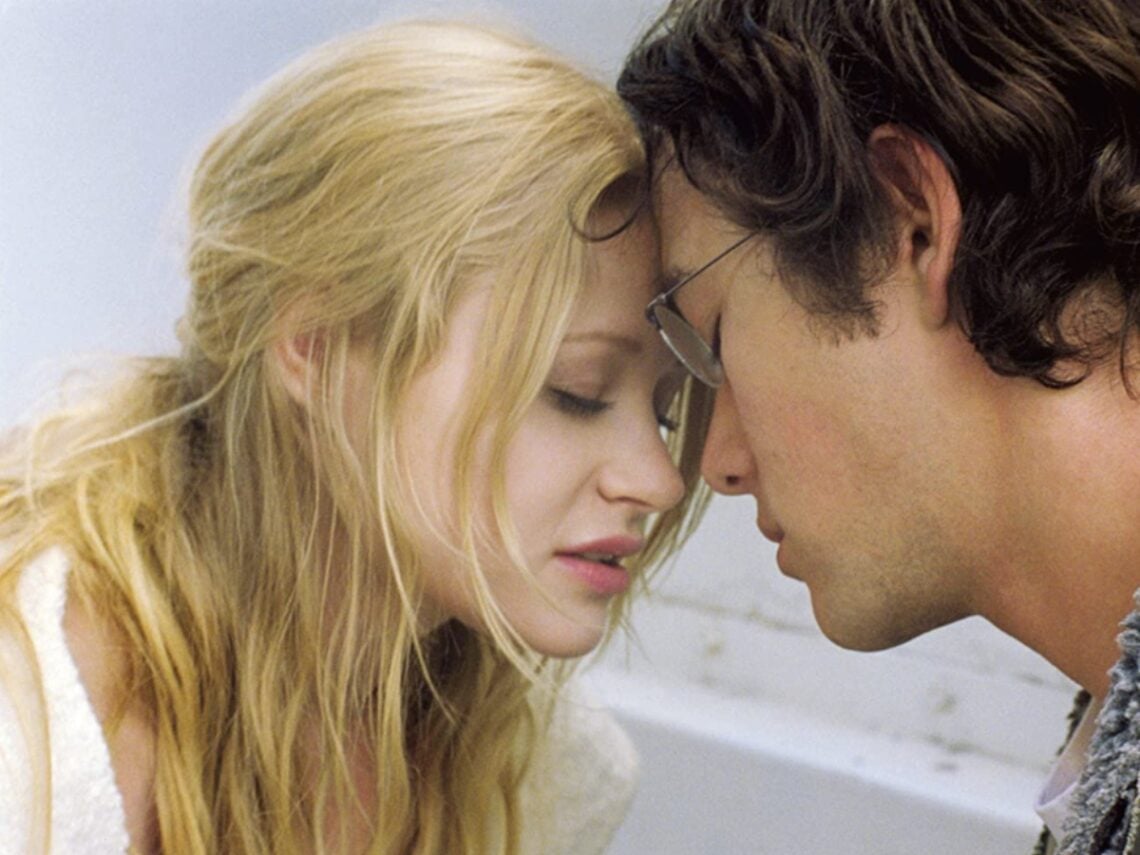
Brick is a neo-noir mystery thriller written and directed by Johnson. Starring Joseph Gordon-Levitt, Lukas Haas, Noah Segan and Emilie de Ravin, whilst there are many hallmarks of the classic mysteries and noir tales of old, Johnson paid considerable respect to the genres and opted to do something distinct. This would exhibit his brightness as a spinner of stories, with the director eventually perfecting the formula with the Knives Out project. A cult title, Brick is one of the finest mysteries made this side of the new millennium.
The film’s narrative is in the style of a classic hardboiled detective story, set in a California suburb, an environment familiar with the genre. It follows high school student Brendan as he investigates the death of his ex-girlfriend, Emily, and gradually uncovers a web of deceit involving his peers. Notably, most of the main characters are high school students, with the title referring to a block of heroin.
With the film’s narrative echoing that of the hardboiled detective stories of the Prohibition era, there’s no surprise that it borrowed heavily from the works of one of the genre’s most important and influential authors, Dashiell Hammett. Famously, Hammett was the mind behind one of the greatest mysteries of all time, The Maltese Falcon, and its appropriately timeless detective, Sam Spade. After Spade, his most famous protagonist is the detective only known as The Continental Op in Red Harvest.
Interestingly, Johnson had discovered the author’s work through an interview with the Coen brothers about Miller’s Crossing, a gangster film with a hint of mystery mixed in. Entering the world of hardboiled detectives, he first read 1929’s Red Harvest before moving on to the following year’s The Maltese Falcon and then 1931’s The Glass Key. The latter was the most significant influence on Miller’s Crossing.
Outside of hardboiled fiction, the director grew up watching detective films and film noir, and after reading Hammett’s novels, he was inspired to act on his long-held desire to create his own tale. Displaying his penchant for thinking outside the box, he realised that making another standard noir or detective film would make it yet another imitation of the greats. To circumvent this obstacle, he set his project in a high school and sought to connect it with the experience of being a teenager. Drawing on the teenage experience also imbued noir with more pulp than would be usually expected. In doing so, he created a genuinely refreshing title that set a precedent for his later works.
Johnson later told The A.V. Club of this decision in 2006: “The high-school aspect kind of happened in two phases. At first, it was just a decision to put it in a different setting, to try to capture some of that unexpectedness that I experienced reading those books. I think, at this point, we’re also familiar with the visual cues from film noir. I felt just putting it in a different setting visually might help us to not lean on our preconceptions of the genre so much, and have to re-examine the elements of it, and hopefully get hit by them in an unexpected direction. But then, once I started working with it, one of the real joys of it was how, in many strange ways, it ended up becoming very much about the experience of being a teenager for me.”
Of the initial writing process, Johnson noted: “It was really amazing how all the archetypes from that detective world slid perfectly over the high school types”.

When it was put to him that the way his film approached noir was unusual by utilising teenagers, but it still managed to connect with the adolescent experience, the director replied: “Oh, absolutely. And for me, that’s where the heart and soul of the movie lies, in capturing—in a kind of almost impressionistic way because it’s obviously not realistic—the experience of being a teenager. And the experience of that time in your life where the stakes for things that seem silly to adults really do feel like life and death”.
Johnson wrote the first draft of Brick in 1997 after graduating from the USC School of Cinematic Arts a year prior. He then spent the next six years pitching the script. At first, no one was interested, as the material was too unusual to risk with a first-time director. Up against it but not backing down, Johnson estimated the minimal amount of money for which he could make the movie and then asked friends and family for their backing. As his family were in the construction industry, they gifted him enough to encourage others to contribute. Eventually, he acquired roughly $450,000 for the budget, with production commencing in 2003.
“You have to get the script out there,” he told the Telegraph in 2006. “You give it to anyone who is interested. They may not be in the industry, but if they like it, they might pass it on to someone who might pass it on to someone who might pass it on to someone who is. Eventually – over years – we accumulated the right people to make the movie. We still didn’t have the money, though. That was the tough part.”
Of raising the final budget, he continued: “The stars lined up for us in a way. By the time we found the right people to make the movie, my family, who are in the building business, had an influx of money and were in a position to invest – not the entire amount – but at least some money, and once you get one chunk, other people are more willing to come aboard. It’s one of those cases when, if you stick around long enough, you get lucky. It had been six years of sticking around by that point.”
Remarkably, the film was shot in just 20 days, but this does not mean it was an ad-hoc production. Johnson spent much time refining the script before shooting and rehearsing with the cast for three months. He came across Joseph Gordon-Levitt in 2001’s Manic, and after meeting him, he knew he wanted to cast the budding actor. Demonstrating his tendency to revise norms, he also encouraged the cast not to watch any noir films before production, as he did not want the tropes influencing their performances. Instead, he instructed them to watch Billy Wilder comedies such as 1960’s The Apartment and other comedies such as the 1940s Cary Grant screwball, His Girl Friday.
To keep the authenticity at the maximum for Brick, particularly regarding the teenage experience depicted, Johnson shot it in his hometown of San Clemente, California, on 35mm film stock. These choices convey the headier moments of being a teenager and the abstract essence Johnson was aiming for. Additionally, most of the film is shot at San Clemente High School, which he attended. Elsewhere, a host of actual San Clemente landmarks were used, including the drain tunnel and the sign for the cross streets of Sarmentoso and Camino del Rio. Furthermore, he enlisted current students to work on the film, shooting on weekends. The cinematographer was Steve Yedlin, a film school friend of Johnson’s who had been involved with the project since scriptwriting.
Brick‘s score is another notable – and often overlooked – aspect, given that it puts a fresh twist on the essence of classic noir. Composed by Johnson’s cousin, Nathan, it features typical genre instruments such as the piano, violin and trumpet but also contains unique and invented instruments. These include the wine-o-phone, metallophone, tack pianos, filing cabinets, and kitchen utensils. Significantly, it was all recorded using just one microphone on an Apple PowerBook. As Nathan was in England during most of the production process, his score was composed almost entirely over Apple iChat, with Rian playing clips for him, which he would then write to.
Brick remains one of the most refreshing takes on film noir out there. It is a marvellous title and an exemplary case for budding auteurs. Fans of the Knives Out series will love this movie.
