


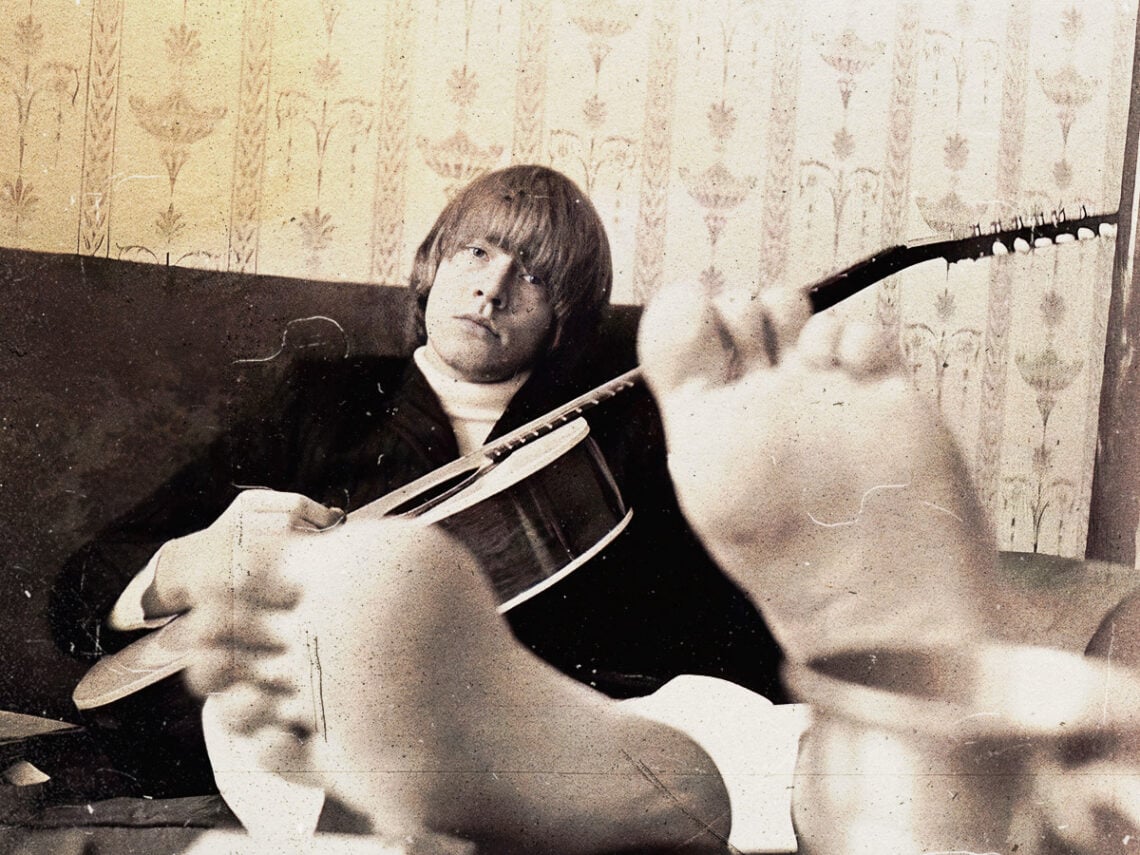
Brian Jones’ favourite Howlin’ Wolf songs: “Track five, side one”

The strange legacy of Brian Jones is one of simultaneously serving as a lauded landmark in birthing one of rock’s most successful acts yet side-stepped in the looming shadow of the band he brought about. Paraded as a tragic casualty of the turbulent 1960s and deified into an icon of cult worship, no doubt helped by The Brian Jonestown Massacre, Jones’ earnest beginnings as an ambitious artist with blues in his blood are often lost to the later episodes of his wayward disillusionment and subsequent drowning at the age of 27.
Having moved from Cheltenham to London to immerse himself in the city’s fledgling R&B scene, Jones hung out with future stars like Jack Bruce and Manfred Mann’s Paul Jones, even playing slide guitar under the moniker ‘Elmo Lewis’ with the short-lived band The Roosters, later to give a young Eric Clapton a chance to cut his teeth.
After placing an ad in Soho’s Jazz News looking for members of a new R&B group, Mick Jagger responded for vocal duties and brought along his old childhood friend and fellow Dartfordian Keith Richards who brought along with him rock ‘n roll and his love of Chuck Berry. The Rolling Stones was born.
In 2003’s According to the Rolling Stones, Richards revealed Jones’ naming of the new group when talking to a promoter on the phone: “The voice on the other end of the line obviously said “what are you called?” Panic! The Best of Muddy Waters album was lying on the floor—and track five, side one was ‘Rollin’ Stone Blues.'”
While not the only devotee to the blues, Mick Jagger was playing Muddy Waters and Bo Diddley in a garage band with friend and future Pretty Things guitarist Dick Taylor, Jones was the purist, reluctantly making space for Richards’ rock ‘n roll as a trade for his impressive guitar chops. With a deep love for Howlin’ Wolf, it’s been claimed that his two favourite cuts from the Mississippi Delta and Chicago blues pioneer were 1956’s ‘Smokestack Lightning’ and 1961’s ‘Little Red Rooster’.
Causing some concern to their manager Andrew Loog Oldham who feared the cut wasn’t ‘dancey’, The Rolling Stones under the captaining of Jones recorded their version of ‘Little Red Rooster’ as a stand-alone single in 1964, Jagger offering insight into the decision making shortly after its release: “The reason we recorded ‘Little Red Rooster’ isn’t because we want to bring blues to the masses. We’ve been going on and on about blues, so we thought it was about time we stopped talking and did something about it. We liked that particular song, so we released it. We’re not on the blues kick as far as recording goes. The next record will be entirely different, just as all the others have been.”
The ‘next record’ continued to be different each time, moving in a pop direction to the chagrin of Jones amid the growing songwriting confidence of Jagger and Richards. By Let It Bleed, Jones’ role in the group was barely official, having been privately dismissed on the eve of their North American tour in 1969.
Seeking to capitalise on the blues revival ushered by The Rolling Stones, Howlin’ Wolf toured Europe in 1964 and joined the band onstage back in America for ABC-TV’s Shindig! music show at their insistence. Reportedly somewhat aloof and disinterested in the British Invasion’s seizure of the States, it was the closest Jones and The Rolling Stones got to their idol.
