


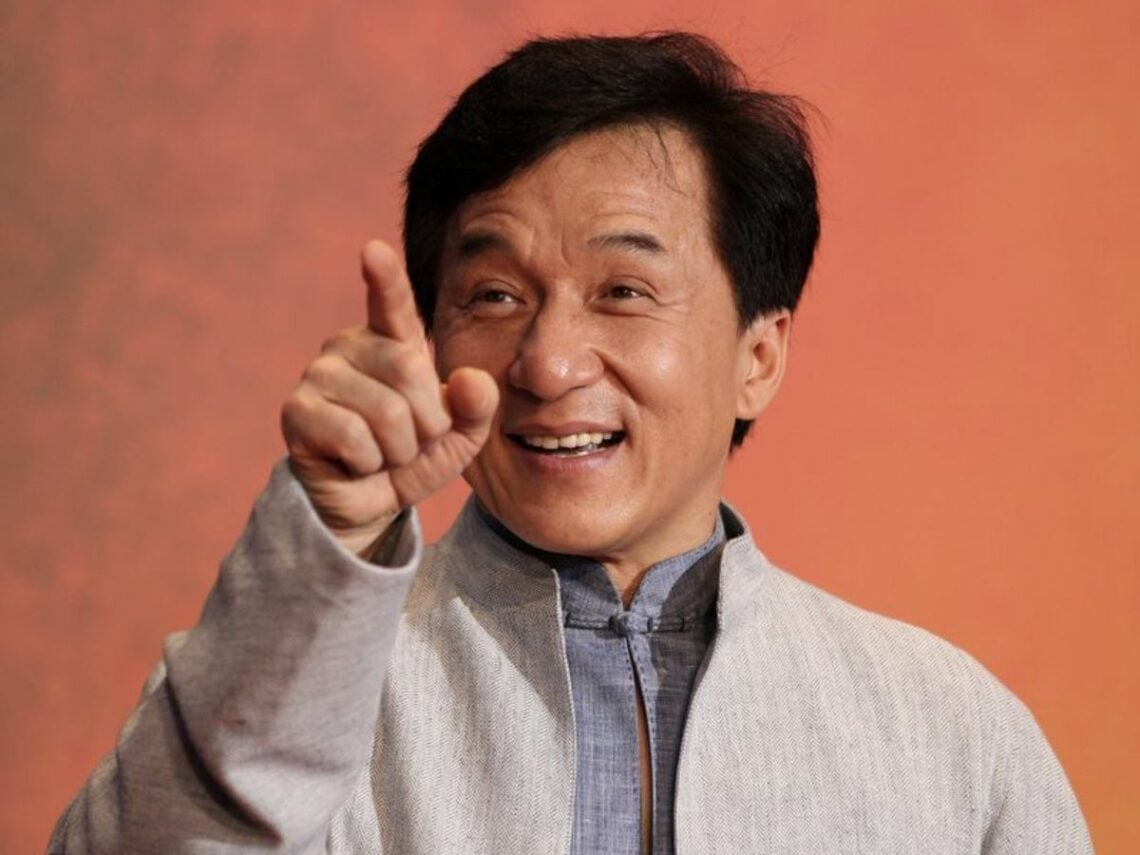
The breakthrough role Jackie Chan despised: “I hate that, the whole thing, I hate it”

By the time Jackie Chan became a Hollywood movie star in the late 1990s, he had been making action movies in his native Hong Kong for decades. He started his career as an extra and stunt double, then became an action choreographer, and finally found his calling as a leading man. Throughout the ’80s and the early ’90s, Chan starred in wildly successful action comedies such as Police Story and Armour of God. In 1998, though, he finally became a bona fide US star thanks to the first part of a buddy cop trilogy that made more than $800million worldwide. Unfortunately for Chan, it was a buddy cop trilogy that he hated with a passion.
After working with fast-talking comedian Chris Tucker in 1997’s Money Talks, director Brett Ratner had a brainwave. He had seen Chan’s cult 1995 action movie Rumble in the Bronx, which first introduced a section of the US audience to the star’s particular brand of frenetic action, death-defying stunts, and slapstick comedy, and he believed it would mesh well with Tucker’s motormouthed laughs.
The resulting movie, Rush Hour, was the story of two mismatched cops – an LA detective and a visiting Hong Kong cop – who team up to rescue the kidnapped daughter of a Chinese diplomat. The movie was an enormous hit, grossing $244m worldwide on a budget of only $33m. Two sequels followed, and to this day, when most Western audiences think of Chan, they more than likely picture him as Detective Inspector Lee.
Sadly, this has always rankled Chan. Why? Because he’s always been open about how much he hates the Rush Hour movies. You see, he has a complicated relationship with the differences between his American movies and his Hong Kong movies, and Rush Hour is the big, shining example of everything he doesn’t understand about the US market.
In 2007, Chan explained the background of his decision to make Rush Hour the first place. In essence, he was talked into it. He revealed, “I’d lost confidence in the American market. I don’t know what American audiences like. My manager begged me to do it until I proved the audience doesn’t like these kinds of movies, or they don’t like you.”
According to Chan, he was effectively a one-man show in his Hong Kong movies. When it came to shooting the action and stunts, he was an actor, choreographer, stuntman, cinematographer, director of photography, and director all rolled into one. In America, though, he didn’t have control over any of this. An exasperated Chan complained, “I hate the American system. I cannot move the table. I cannot move the dolly. I’m the stunt coordinator; I cannot put my camera angle because that’s the DP…The DP is not the action director! How can he know my angle?”
Chan also found that American movies were the inverse of his Hong Kong films in terms of how much time was dedicated to action and dialogue scenes. In America, action sequences would be allotted one day of shooting, while dialogue scenes would get five. In Hong Kong, the opposite was true. He explained, “When I’m making an action film in Asia, three months for a five-minute fight scene. Dialogue, one day. It’s totally different.”
The martial arts genius also admitted that he simply didn’t understand why Rush Hour was funny. For example, he had no clue what was going on in the popular scene where he and Tucker sang the classic Edwin Starr song ‘War’ while bobbing their heads. He didn’t know the song and simply had to rely on Tucker to teach him the lyrics, insisting that it would be funny in the final edit. When he saw the scene, Chan confessed to thinking, “That’s it, my career is finished.”
It was to Chan’s eternal shock, then, that Rush Hour became such a big hit. He chuckled, “I go back to Asia, I tell all my friends how I hate the American system, and I hate Rush Hour. Boom, I get a phone call, big success.”
While the popularity of Rush Hour still baffles Chan to a certain extent, he has admitted that it probably all boils down to cultural differences. In 2002, he told Crosswalk magazine that he began to realise, “Okay, I still have Chinese mind. I have ‘hometown’ mind. I don’t get American culture or American dialogue.”
Chan subsequently altered his mindset when working in the US, deciding to trust co-stars like Tucker and Shanghai Noon’s Owen Wilson to take care of him. He smiled, “I realise, okay, anything I think not funny, means it’s funny.”
