


‘Breakfast at Tiffany’s’: Proof that one bad character can ruin a nearly perfect movie

Breakfast at Tiffany’s has become synonymous with Audrey Hepburn. Posters of her in the first and greatest little black dress, elbow-length gloves, and diamonds adorn countless walls around the world, and it has become the single most defining look of her career. Truman Capote, who wrote the book on which the film was based, envisioned Marilyn Monroe as the personification of his high-class call girl, Holly Golightly, but it was Hepburn who made it her own. Decades later, few characters in cinema history are as recognisable or iconic.
Released in 1961, the film had to tone down certain elements of Capote’s story to pass censorship. Holly Golightly is an ambiguously wealthy socialite, while the narrator is drawn to her as a love interest rather than a gay friend. Despite these alterations, however, the film still manages to explore a dark emotional and romantic territory, even if it never quite gets to the heart of it. These days, it is a classic because of Hepburn’s effervescent performance and Givenchy’s costume design. Funny, dark, and often heartbreaking, Breakfast at Tiffany’s remains one of Hepburn’s greatest films.
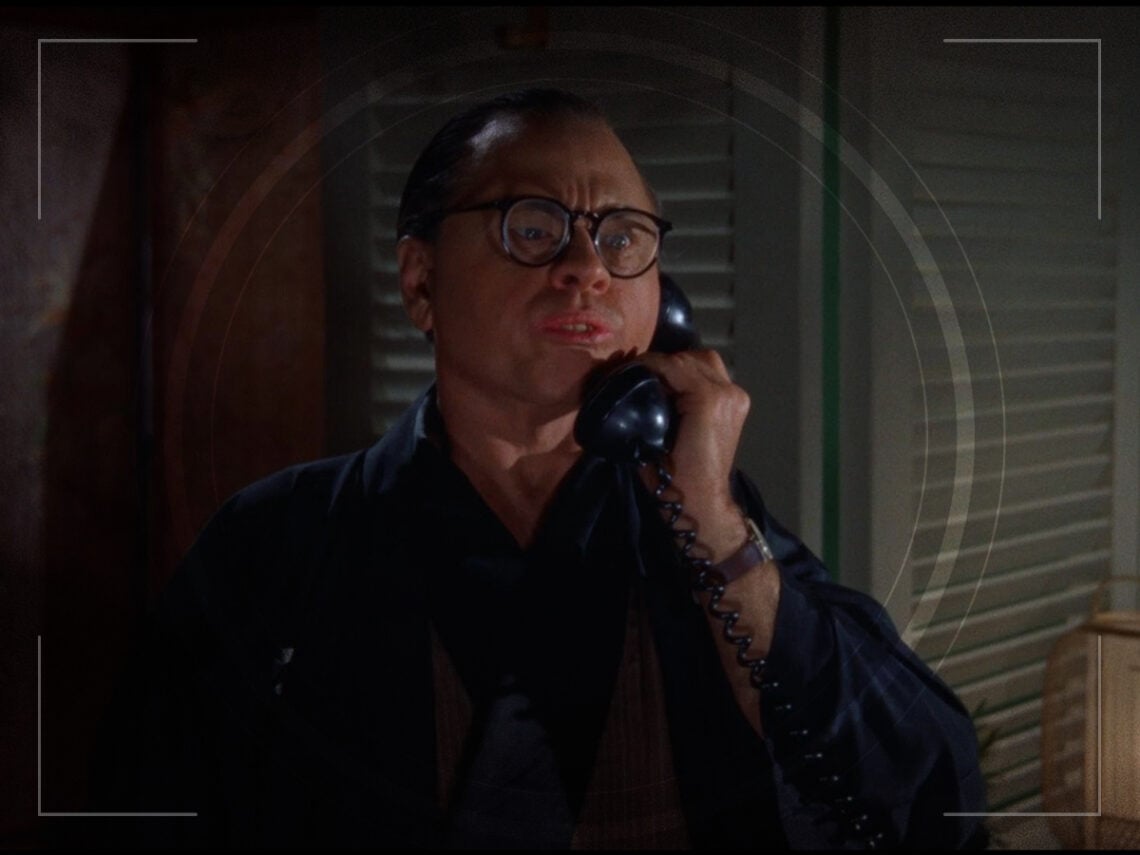
However, for those of us who love it, there is one elephant in the room that, like childbirth, is convenient to forget but impossible to ignore when it’s happening. For whatever reason (racism), director Blake Edwards decided that he simply had to cast white actor Mickey Rooney in the role of Holly Golightly’s Japanese neighbour, Mr Yunioshi. Rooney wore yellowface for the part and a prosthetic mouthpiece, and spoke in what he must have believed was an excellent approximation of a heavy Japanese accent.
According to screenwriter George Axelrod, Edwards was insistent that Mr Yunioshi be expanded into a more prominent character than he was in Capote’s novella. As a result, not only is Rooney’s performance mind-blowingly offensive even by the basement scraping standards of 1961, but he appears at random throughout the film, shoe-horned in as comic relief in a way that interrupts the flow of the film and is always an unwelcome surprise.
Edwards had a dismal track record of putting white actors in brown and yellowface. In the 1968 film The Party, Peter Sellers plays an actor from India named Hrundi V Bakshi. The only saving grace is that unlike Mr Yunioshi, the character’s ethnicity is not the butt of the joke, but it is still hard to watch a white British actor caked in brown makeup and dark eyeliner speaking with a thick “Indian” accent. Throughout the Pink Panther series, which Edwards directed, there are also copious racist punchlines about characters of colour.
There is no question, though, that Mr Yunioshi is the most egregious. What is so galling about it is how superfluous he is as a character. He could so easily have been excised entirely without altering the plot, allowing the film to live on as one of Hepburn’s greatest vehicles without the big fat asterisk that has haunted it ever since.
Edwards later claimed that he wished he could go back in time and cast a Japanese actor for the role, but he ignored the obvious alternative. In 2022, Channel 5 did, in fact, screen the film without any of the Mr Yunioshi scenes, and audiences not in the know were no doubt none the wiser. Not surprisingly, most modern trailers for the movie omit him entirely as well.
